
The Venice Biennale 2026 runs from May 9 to November 22, 2026 (vernissage May 6–8 for accredited professionals only). The exhibition is currently open to the public and runs without interruption through its November 22 closing date. The full-price ticket is €30, the 3-day pass €40, the week pass €50. Reduced rates: €20 for over-65s and Venice residents, €16 for students and under-26s. The Giardini and Arsenale open at 11am–7pm (May 9–September 27, last admission 6:45pm) and 10am–6pm (September 29–November 22, last admission 5:45pm), closed Mondays except five exceptions. The Arsenale stays open until 8pm on Fridays and Saturdays (May–September). The 61st edition, titled « In Minor Keys » and curated by Koyo Kouoh, features 100 national participations including 7 countries exhibiting for the first time. Buy tickets online at labiennale.org (+€0.50 booking fee) to skip queues that can exceed one hour on weekends. Allow a full day per venue: plan at least 2 days for Giardini + Arsenale, 3 days if you want to include free collateral events in the neighborhoods.
The 61st Venice Biennale Arte promises to be the art event of 2026. Under the title « In Minor Keys, » conceived by the Cameroonian-Swiss curator Koyo Kouoh who passed away suddenly in May 2025, the exhibition takes over the Giardini, the Arsenale and more than 30 venues across the city, from May 9 to November 22, 2026. According to the official Biennale website, the 2026 edition features 100 national participations, including 7 countries exhibiting for the very first time. This guide gives you everything you need to know before you go: tickets, opening hours, neighborhoods to explore, pavilions not to miss, and practical tips for a stress-free, queue-free visit.
Venice Biennale 2026 tickets: official prices and where to buy
All 2026 prices and how to skip the queues
Official tickets for Venice Biennale Arte 2026 are available exclusively at labiennale.org. A €0.50 booking fee applies to all online purchases — a negligible cost compared to the time saved by avoiding on-site ticket queues. According to VeniceForU, queues can exceed one hour on May and June weekends.
Official 2026 price list
- Full price — €30 (single entry to both venues)
- Reduced — Over 65s and Venice residents — €20
- Students and Under 26 — €16
- Children under 6 — free
- 3-day pass — €40 (3 consecutive days)
- Week pass — €50 (7 consecutive days)
- Groups (10 to 25 people) — adults €20, university students €15, school students €10
Visitors with disabilities can obtain the reduced rate (€20) exclusively at the Infopoints, on presentation of documentation. The ticket is valid for a single admission to each exhibition space, even on non-consecutive days, according to the official Biennale regulations. If you plan to visit the Giardini and Arsenale on different days, the 3-day pass at €40 is the best value.
Venice Biennale 2026 opening hours: everything you need to know
Giardini and Arsenale hours, closing days, extended evening hours
The Giardini and Arsenale operate on two seasonal schedules, according to the official Biennale website:
- May 9 to September 27: 11am–7pm (last admission 6:45pm)
- September 29 to November 22: 10am–6pm (last admission 5:45pm)
- Arsenale only, Fridays and Saturdays (May 9 – Sep 26): extended hours until 8pm
- Closed on Mondays, with exceptions: May 11, June 1, September 7, November 16, 2026
The exhibition is busiest on weekends and during the first weeks of May, according to Tuscany Now & More. Weekdays are recommended for a more relaxed visit. The October–November period is particularly popular: fewer crowds, pleasant cool temperatures, and the Biennale Musica taking place October 10–24, 2026, enriching the cultural program even further.
The Giardini della Biennale: the historic heart of the exhibition
Restored Central Pavilion, 29 national pavilions, architecture garden
Accessible from the « Giardini Biennale » vaporetto stop on lines 1 and 4.1, the Giardini della Biennale is the historic birthplace of the exhibition since 1895. The Central Pavilion, built in 1894 and expanded several times, reopened in May 2026 after major renovation works, according to Wallpaper*. It hosts the main exhibition « In Minor Keys » by Koyo Kouoh.
Surrounding the Central Pavilion stand 29 permanent national pavilions in a vast leafy park, forming a unique architectural promenade: each building is a national « artistic embassy, » some designed by the greatest architects of the 20th century. According to the Nomads travel guide, the Giardini offer an unparalleled experience — a succession of micro-museums in a garden, with resident cats and sculptures dotting the lawns.
To make the most of the Giardini, plan a full day. Arrive at opening time on a weekday to enjoy the spaces before the crowds build up, and finish with the Central Pavilion, typically the most crowded. The Greek pavilion (Andreas Angelidakis, « Escape Room »), Austria (Florentina Holzinger, « Seaworld Venice ») and the United States are among the most anticipated of this edition.
The Arsenale: Venice’s former naval forge turned cathedral of contemporary art
Immersive installations, industrial naves, Forte Marghera included
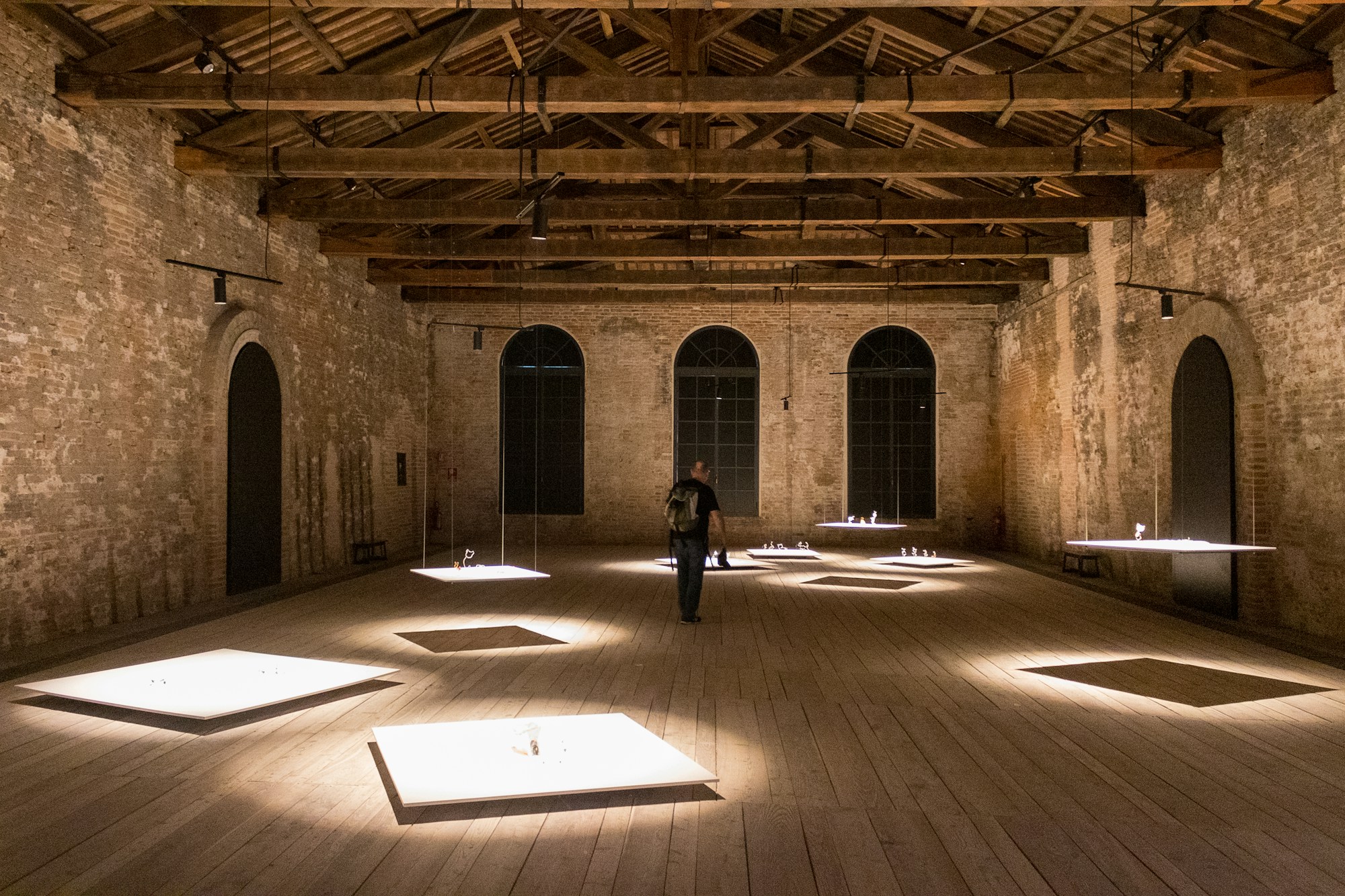
The Arsenale di Venezia is the industrial sibling of the Giardini. Built from the 14th century to house the shipyards of the Venetian Republic, this complex of long red-brick naves now hosts gigantic installations and immersive artworks that the more classical spaces of the Giardini could not contain, as noted by Idealista. The space is physically demanding — wear comfortable shoes.
In 2026, the Arsenale also hosts numerous National Participations, including India (« Geographies of Distance: remembering home, » 5 artists after an absence since 2019), Morocco (Amina Agueznay with « Asǝṭṭa, » first participation in the Arsenale) and the Bahamas (posthumous dialogue between John Beadle and Lavar Munroe), according to Sotheby’s. Forte Marghera, on the mainland in Mestre, also hosts Special Projects included in the Biennale ticket since 2018.
To fully enjoy the Arsenale, arrive early on a weekday — many visitors find the site slightly less crowded in the first hours of the day. On Fridays and Saturdays, hours are extended until 8pm, allowing an evening visit in a different atmosphere.
National pavilions not to miss at the 2026 Biennale
100 countries, 7 first-time participations, highlights of this edition
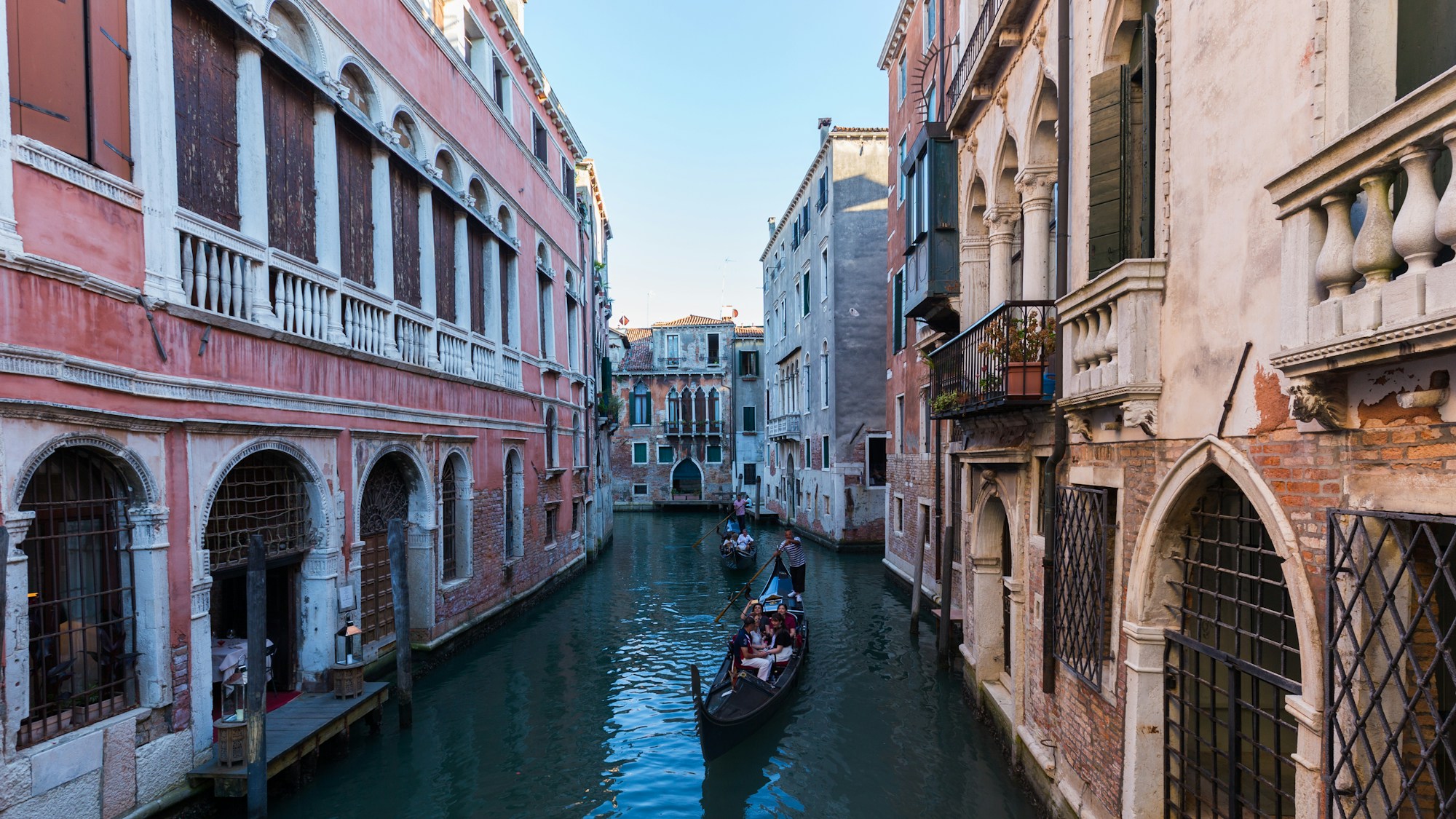
With 100 National Participations, including 7 countries exhibiting for the very first time (Guinea, Sierra Leone, Somalia and El Salvador, among others), the 2026 Biennale is a record-setter for geographic inclusion. Pavilions installed outside the official venues — in palaces, churches and spaces throughout the city — are mostly completely free of charge, according to Idealista.
The 5 most anticipated pavilions in 2026
- Greece: Andreas Angelidakis — « Escape Room, » an immersive dive inspired by Plato’s Cave (Giardini)
- Austria: Florentina Holzinger — « Seaworld Venice, » a collaborative performance about water and the lagoon (Giardini)
- India: 5 artists — « Geographies of Distance: remembering home, » first participation since 2019 (Arsenale)
- Morocco: Amina Agueznay — « Asǝṭṭa, » first participation in the Arsenale, craft practices as living archives
- Bahamas: John Beadle & Lavar Munroe — « In Another Man’s Yard, » intergenerational posthumous dialogue (Arsenale)
Collateral events and neighborhoods: the Biennale beyond the official venues
31 free collateral events across Castello, Dorsoduro, Cannaregio
Beyond the official venues, Biennale Arte 2026 includes 31 Collateral Events officially recognized by La Biennale di Venezia but independently organized in remarkable locations throughout the city, according to Universes.art. These exhibitions are the best way to discover Venice beyond the usual tourist circuits.
Key neighborhoods and their highlights
- Dorsoduro (art and university) — Palazzo Cavanis: « Aghrab Idrāk » by VCUarts Qatar; Palazzo Rocca Contarini: Bangkok Art Biennale Foundation (20 Southeast Asian artists); Magazzini del Sale: Nalini Malani, a « chamber of thought » on women and conflict
- Cannaregio (authentic local life) — Palazzo Mora: « Gaza – No Words – See the Exhibit » by the Palestine Museum US. Morning fish market, bacari and cicchetti on the Fondamenta della Misericordia
- Castello (around the Giardini) — Venetian craftsmen’s workshops (marble workers, gilders), Querini Stampalia Foundation, Via Garibaldi with its local bars
- Giudecca (residential Venice) — Quiet galleries, Palladio’s Il Redentore church, accommodation and restaurants 20–30% cheaper than in San Marco, unique panoramic view of the skyline
Dorsoduro is to Venice what Soho is to New York: the Peggy Guggenheim Collection, Pinault’s Punta della Dogana, emerging art galleries, and the Zattere for one of the finest sunset promenades. During the Biennale, Campo Santa Margherita, animated by Ca’ Foscari University students, is the ideal spot for a reasonably priced spritz. According to Lonely Planet, prices are twice as low as on the Riva degli Schiavoni.
Practical information for your trip to Venice
Stay connected from the moment you land at Marco Polo. Instant activation, no need to buy a data plan in a shop.
From €4.50Comprehensive coverage for your Venice stay: medical expenses, trip cancellation, lost luggage. 10% off via our link.
From $1.87/dayFrequently asked questions about the Venice Biennale 2026
Should you book Venice Biennale tickets in advance?
Yes, it is strongly recommended to buy your tickets online at labiennale.org before arriving in Venice. Queues at ticket desks can exceed one hour on May and June weekends. The booking fee is only €0.50 — a negligible cost to avoid the wait. Tickets are valid for a single admission per venue, even on non-consecutive days.
How many days do you need to visit the Venice Biennale 2026?
A minimum of 2 days is needed to visit the Giardini and Arsenale at a reasonable pace (one venue per day). Allow 3 days to add selected collateral events in the neighborhoods. Art enthusiasts planning to also visit Forte Marghera and off-site pavilions will need 4 to 5 days. The 3-day pass (€40) offers the best value for a complete visit.
What is the tourist tax in Venice in 2026?
Venice applies a €5 per person access fee (over 14 years old) on 60 days in 2026, between April 3 and July 26. Visitors staying at least one night in Venice are exempt. In May, taxed dates coincide with the Biennale opening: May 1, 2, 3, 8, 9, 10, 15, 16, 17, 22, 23, 24, 29, 30, 31. Offenders risk a fine of €50 to €300. To pay or register for free (residents, workers), visit cda.ve.it.
How do you get to the Giardini and Arsenale from Venice airport?
From Marco Polo airport, take the Alilaguna Blu line directly to the « Arsenale » stop. From Santa Lucia station, take vaporetto lines 1 or 4.1 to the « Giardini Biennale » or « Arsenale » stops. The journey takes about 20 to 30 minutes from the city center. Avoid private taxis during the Biennale period — prices are high and water traffic jams are frequent on May weekends.
What is the theme of the Venice Biennale 2026?
The 61st Venice Biennale Arte is titled « In Minor Keys. » The title borrows from musical language to explore quiet registers, marginalized narratives and the less dominant tonalities of our time. Conceived by Koyo Kouoh, the Cameroonian-Swiss curator who passed away suddenly on May 10, 2025, the exhibition was maintained by La Biennale di Venezia to preserve her original project. It aims at a « radical reconnection with the natural habitat of art in society: the emotional, the visual, the sensorial. »
Are the Venice Biennale collateral events free?
Yes, the vast majority of the 31 official collateral events are completely free. These exhibitions are independently organized in palaces, churches and cultural spaces throughout the city. It is the best way to discover neighborhoods like Dorsoduro, Cannaregio or Giudecca while enjoying a quality artistic program, without spending an extra euro.
When is it best to avoid crowds at the Venice Biennale?
Avoid the opening weekend (May 9–10, 2026) and May–June weekends, which are the busiest. Weekdays, especially arriving at opening time, offer a much more relaxed experience. The October–November period is ideal: fewer tourists, pleasant cool temperatures, with the Biennale Musica taking place October 10–24. It’s also the last chance to see the exhibition before it closes on November 22.
How to visit the Biennale on a tight budget?
To manage your budget: choose the 3-day pass (€40) rather than two separate tickets (€60); stay in Mestre (40–50% cheaper than Venice, 20 minutes away by bus) or in Cannaregio (the most affordable sestiere); focus on the free collateral events in authentic neighborhoods; eat at local bacari (cicchetti €1–2 each) rather than tourist restaurants; take advantage of free national museum entry on the first Sunday of the month.
What guided tours are worth booking alongside the Venice Biennale?
Two types of tours pair exceptionally well with the Biennale. First, a half-day Murano and Burano boat excursion (from €44): the Venetian lagoon islands are a natural extension of a Biennale trip and offer a complete break from the crowds of the Giardini. Second, a small-group walking tour through Dorsoduro, the Basilica dei Frari and the Rialto Bridge (from €34, no private booking needed): ideal for visitors who want to explore the neighborhoods hosting the free collateral events with a knowledgeable local guide. Both are instantly confirmed, easy to book online, and complement the Biennale visit without duplicating it.
Is the Venice Biennale 2026 open right now?
Yes. The 61st Venice Biennale Arte has been running continuously since May 9, 2026, and stays open seven days a week except Mondays (with five named exceptions) until it closes on November 22, 2026. Opening hours are 11am–7pm through September 27, then 10am–6pm from September 29 to closing, with the Arsenale extending to 8pm on Fridays and Saturdays through late September. Once the exhibition closes on November 22, all national pavilions and collateral events shut down until the next edition in 2028 — visitors who missed a summer trip still have the full October–November window, which also tends to be quieter.
Sources
- La Biennale di Venezia — Official information 2026
- La Biennale di Venezia — Prepare your visit
- Universes.art — Venice Biennale Arte 2026 guide
- Idealista — Dates, tickets and program Biennale 2026
- Sotheby’s — National pavilions to watch 2026
- Wallpaper* — Venice Biennale Arte 2026 guide
- Tuscany Now & More — Insider’s guide to the Biennale
Plan your Venice trip with Pixidia
Find traveler-verified itineraries to organize your Venice stay around the Biennale: how many days, which neighborhoods, which restaurants and accommodation to avoid the crowds.
Explore Venice itineraries