
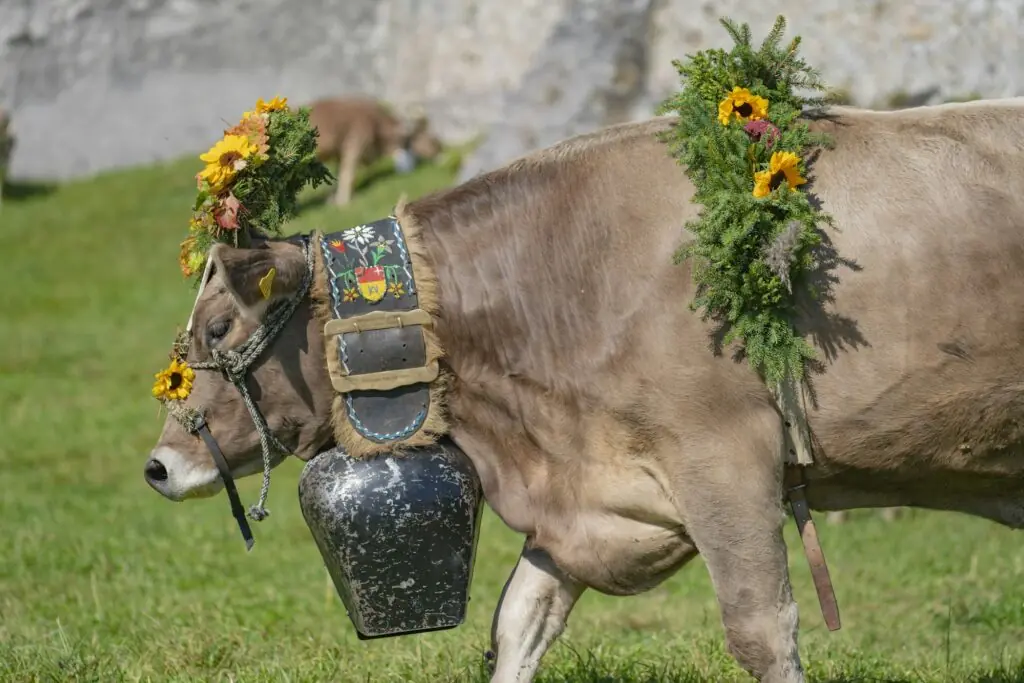
The 2026 Almabtrieb in Bavaria and Tyrol runs from 4 September to 17 October, peaking on the weekends of 12-13, 19-20 and 26 September. These cattle descents, where decorated herds come back down to the valley barns, are free in most villages (€8 at Reith im Alpbachtal, under-12s free). Dates are confirmed late, depending on the weather: check with the local tourist offices. For a first visit, aim for Mittenwald on 20 September or the Wildschönau on 19 September, both reachable by train from Munich.
Every autumn, hundreds of thousands of cattle come down from the alpine pastures to the valleys, dressed in flower crowns, ribbons and big bells. This homecoming — the Almabtrieb — is one of the most iconic traditions of the German-speaking Alps. In 2026, the Bavarian and Tyrolean season runs from 4 September (the goats of the Verpeilalm in the Kaunertal) to 17 October, with the heart of the season on three weekends: 12-13, 19-20 and 26 September. Here is the village-by-village calendar, the traditions worth knowing and the smart ways to watch without a car and without breaking the bank.
What is the Almabtrieb?
The descent from the alpine pasture, a festival as old as the Alps
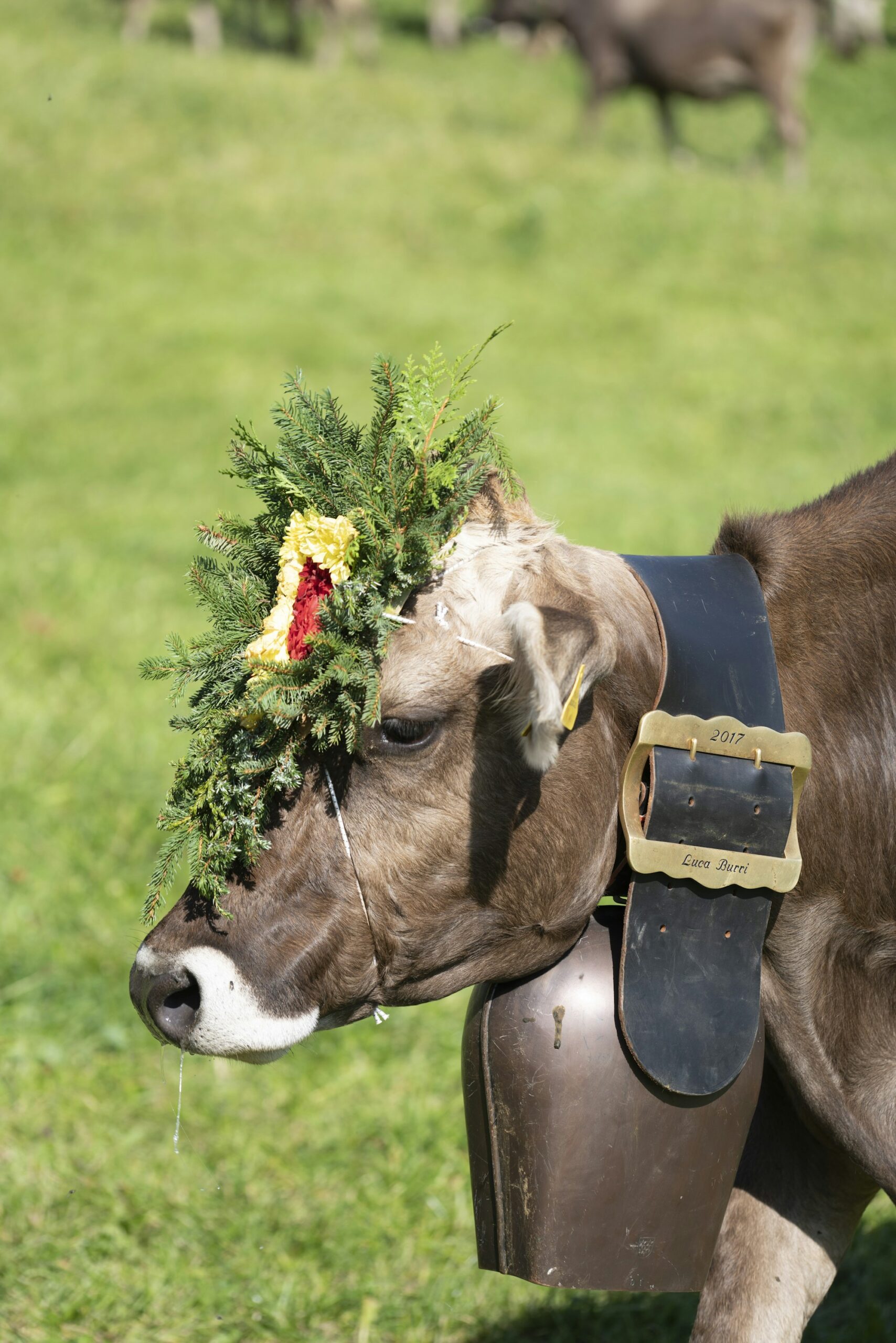
The Almabtrieb (« driving down from the alpine pasture ») is the autumn return of livestock from the high pastures to the valley barns, after around 100 days of summer grazing. It is the opposite of the Almauftrieb, the spring ascent, which is not celebrated in Germany or Austria. The word changes by region: in the Allgäu it is called Viehscheid, a term that precisely describes the sorting of the mixed herds at the Scheidplatz, where each farmer reclaims his own animals at the end of the day. The Swiss equivalent (Alpabzug, Désalpes) is a cousin, outside the scope of this guide. The tradition dates back to the Bronze Age, and the traditional window runs between St Bartholomew’s Day (24 August) and Michaelmas (29 September), extended to mid-October according to Wikipedia and austria.info.
The scale is huge: around 500,000 cattle graze the Austrian Alps every summer, nearly 110,000 of them in Tyrol alone, which counts some 2,100 alpine pastures. Bavaria manages about 1,400, with close to 53,000 cattle in 2022 according to Bayern Tourismus. In the Allgäu, around 30,000 young cattle come down every autumn to some thirty municipalities, drawing at least twice as many visitors as animals, according to allgaeu.de. Alpine and Mediterranean transhumance has been inscribed on UNESCO’s intangible cultural heritage list since 2019, a list extended to ten countries in December 2023; alpine farming also features on Bavaria’s intangible heritage register, as UNESCO Austria notes.
Highlights
- Whole villages in party mode: brass bands, farmers’ markets, regional specialities
- Animals are decorated only if the summer passed without accident: the finery is a report card for the season
- A living, ecological tradition: summer grazing slows reforestation and protects against avalanches
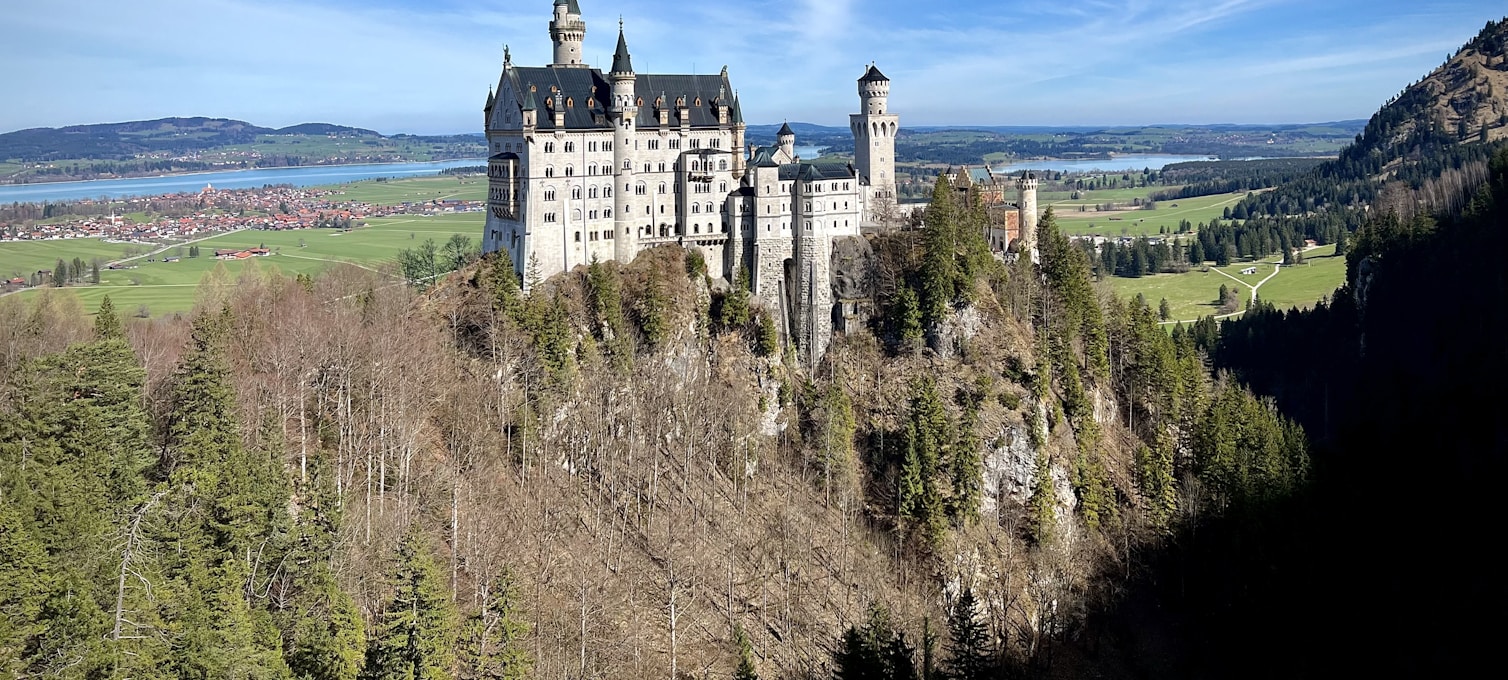
Fancy extending the alpine experience around your descent weekend? From Munich, the most-requested day trip in the Bavarian Alps leads to the castles of Neuschwanstein and Linderhof: a small-group day out, ideal to pair with the Almabtrieb at Mittenwald or in the Allgäu, two hours from the Bavarian capital by train.
The 2026 calendar in Bavaria: Viehscheid from the Allgäu to the Berchtesgaden Alps
The Allgäu opens the season, Mittenwald steals the show
In Bavaria, it all starts in the Allgäu, where the season opens on 11 September: Oberstaufen brings around 1,000 cows down from 8.30 am at the Scheidplatz, Schöllang (Oberstdorf) around 700 young cattle from four pastures led by the flower-decked Kranzkuh, and Balderschwang, Germany’s most isolated village (1,044 m), around 220 cattle. Bad Hindelang follows on 10 or 11 September with nearly 900 head from five pastures, a tradition documented since 1794; sources differ for 2026 (mid-September is the safe bet), as festivalsindeutschland.de and denkinger-pr.de note. The following week rolls on with Buching on 14 September (provisional, the only handshake handover of animals), Nesselwang on 15-16 September, Gunzesried on 17, Wertach on 18, then the big Immenstadt rendezvous on 19 September: around 800 animals from seven pastures, bell drawing and market.
In the Alpenwelt Karwendel, Wallgau celebrates as early as 5 September, Krün on 19 September (whatever the weather), and Mittenwald on 20 September offers the most spectacular procession in Upper Bavaria: the herd parades through the old town of painted facades (Lüftlmalerei) and arrives around noon at the Festwiese Riedboden for the Almfest, with free entry. Further east, the Berchtesgadener Land schedules the Stoißer Alm on 19 September (animals decorated at 1 pm, arrival around 4 pm at the Seiberstadt hiking car park) and Piding on the weekend of 19-20 September. And the showstopper is Königssee: around thirty cows from the Saletalm and Fischunkelalm pastures are ferried across on flat « Landauer » boats (about a one-hour crossing) — the only cattle descent on water in the whole Alpine arc — and its date is never published, according to festivalsindeutschland.de.
Dates to remember
- 11 September: Oberstaufen (~1,000 cows), Schöllang (~700), Balderschwang (~220)
- 19-20 September: Immenstadt, Krün, Stoißer Alm, Piding, then Mittenwald on the 20th (the most spectacular)
- 26 September: Haldenwang and Haslach (Oy-Mittelberg), the Allgäu’s last big Viehscheid
- Early-mid October: Königssee by boat (date revealed on site); Schleching/Raiten on 10 or 17 October
The 2026 calendar in Tyrol: three weekends not to miss
From the Kaunertal to the Kufsteinerland, the season plays out over three weekends
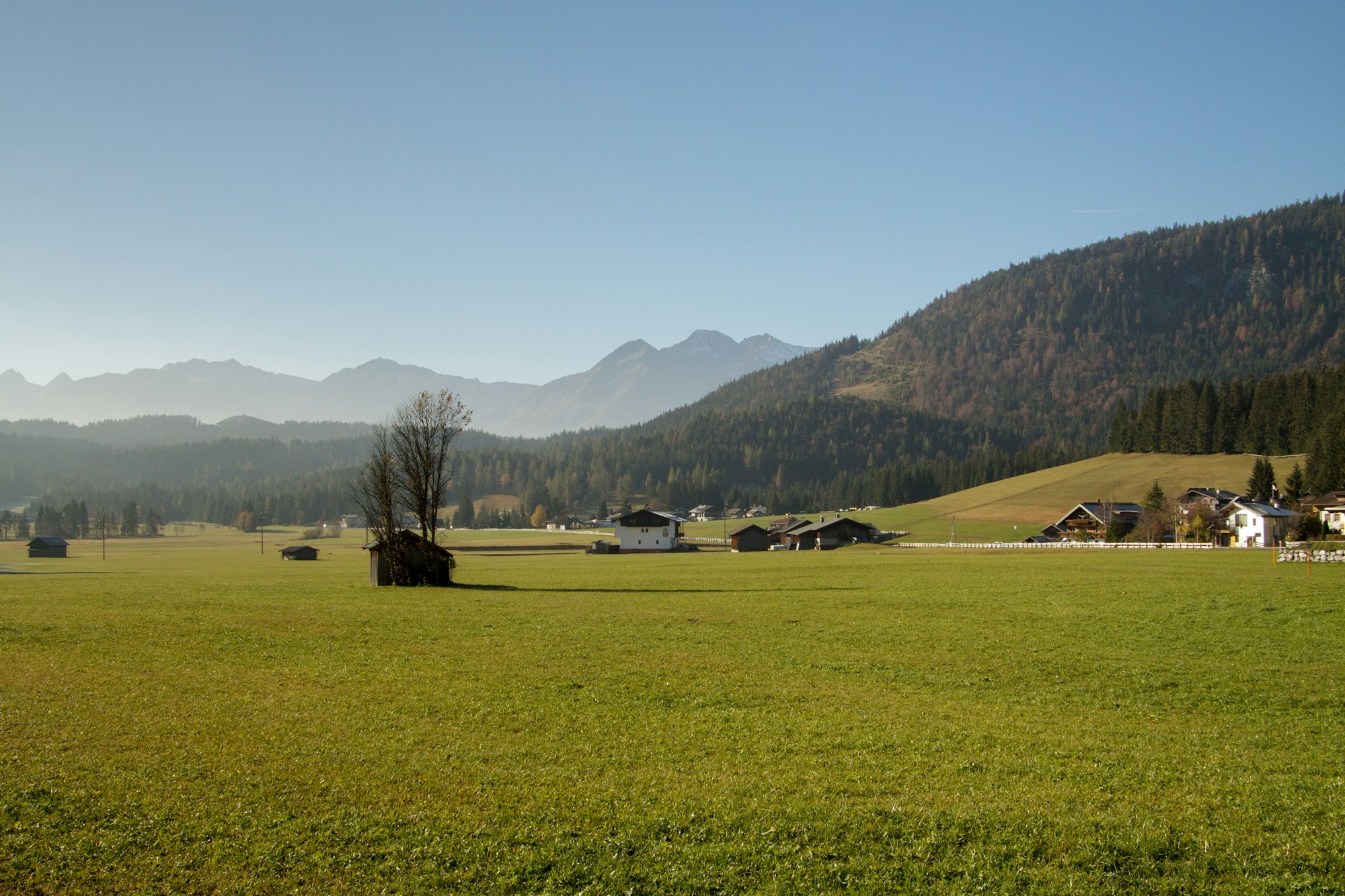
Tyrol opens the season on 4 September with the goats of the Verpeilalm in the Kaunertal, followed on 5 and 6 September by the pastures of Falkauns, Nasserein and Gepatsch. The first big weekend, 12-13 September, brings together Kramsach (Alpbachtal), Ried im Oberinntal (from 2 pm at the Lindenplatz), Telfes im Stubai (alphorn from the Stubaier Alphornbläser at 3 pm), Pfunds (cows and horses, farmers’ market), Jerzens in the Pitztal (descent at 2 pm, Kirchtag on the 14th) and the villages of the Tannheimer Tal, Jungholz, Grän and Nesselwängle, according to tyrol.com and Presse Tirol.
The 19-20 September weekend is the busiest of the season. On the bill: Reith im Alpbachtal, one of Tyrol’s biggest Almabtriebs (start 10 am, parade around noon, entry €8, under-12s free); Fulpmes in the Stubaital, free, farmers’ market from 11 am and animals around 12.30 pm; Söll under the Wilder Kaiser, free; Leutasch on the Seefeld plateau, arrival around noon at the Kirchplatzl; Auffach in the Wildschönau, free 10 am-6 pm with over 500 animals and 46 pastures at around 2,000 m; Kirchberg, Westendorf (17-19 weekend) and Angerberg (19 or 20 September depending on the source), in the Kitzbüheler Alpen; Landl at Thiersee from 19 to 26 September. On Monday the 21st, Tannheim closes the ball with a three-day descent and nearly 1,000 m of elevation change, one of the finest in the region.
26 September holds its own programme: a second Almabtrieb at Reith im Alpbachtal (a different procession), Hopfgarten, Kelchsau and Itter in the Brixental (GREEN EVENT TIROL label, public transport required), Gerlos in the Zillertal for its 30th edition (pedestrianised main street, 30 exhibitors, Noriker horse teams) and Zell am Ziller (10 am-5 pm). Finally, October stays alive: Pillerseetal on the 3rd, Mayrhofen around the 6th (to be confirmed), and the grand finale on 10 October at Ebbs (Kufsteinerland), where 2.5-year-old Haflinger stallions come down from the Hengstalm in a ceremony that has kept a natural-herd breeding going since 1947, according to tyrol.com.
The three-weekend rhythm
- 12-13 September: Telfes, Ried, Jerzens, Pfunds, Kramsach, Nauders
- 19-20 September: Reith im Alpbachtal, Fulpmes, Söll, Leutasch, Wildschönau, Kirchberg, Westendorf, Angerberg, Landl
- 26 September: 2nd Reith, Hopfgarten, Kelchsau, Gerlos, Zell am Ziller, Wörgl
- 10 October: the Haflinger stallion descent at Ebbs, the grand finale
Traditions and celebration: crowns, bells and Kässpatzen
Reading the finery, tasting the party
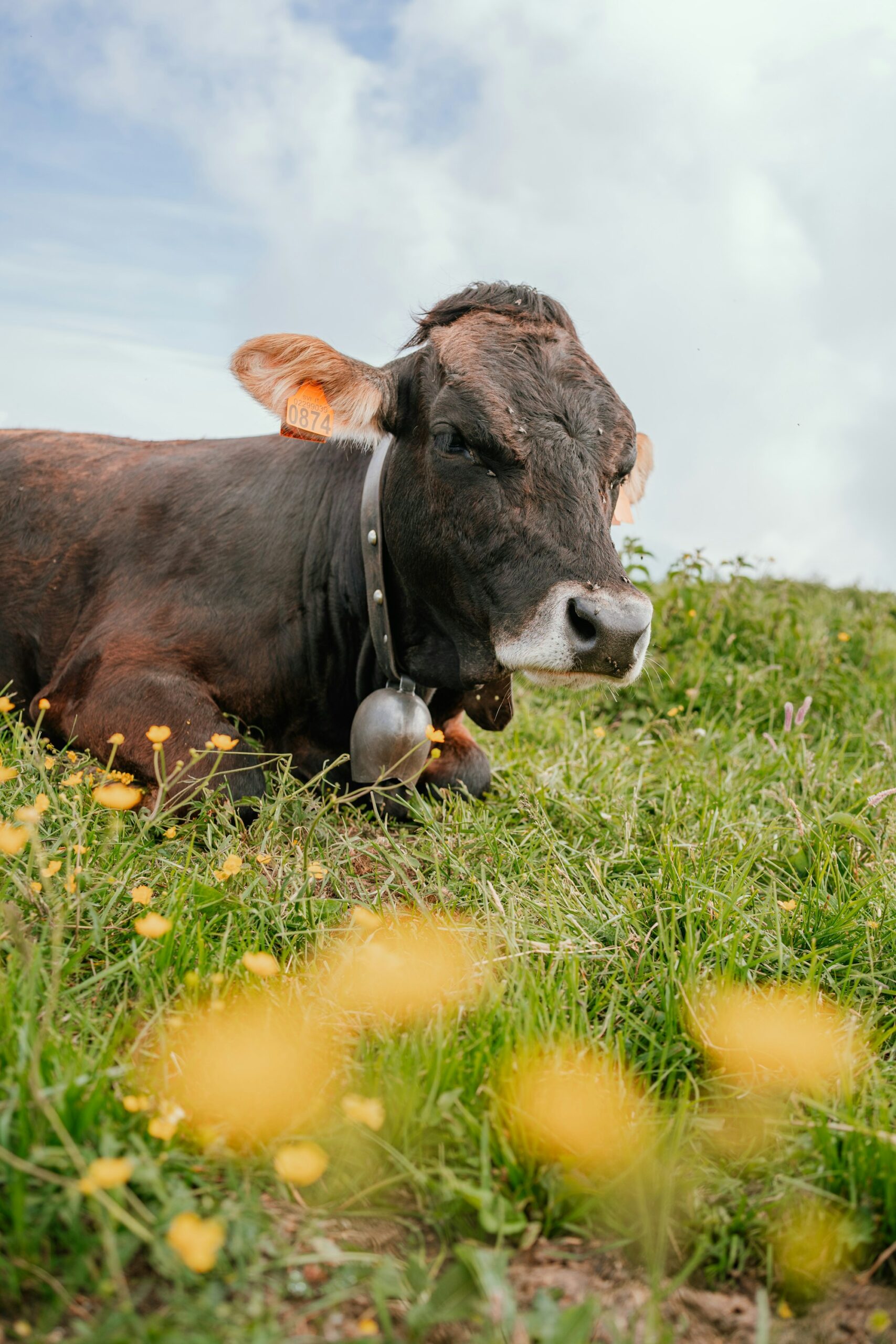
The cows’ finery, the Aufkranzen, follows a precise code: the Kranzkuh, the lead cow, wears the finest crown, often adorned with a cross (divine protection) and a mirror (to ward off evil spirits), as Austria-Forum describes. A black ribbon woven into the crown (the Klagbüschel) marks a bereavement in the family or on the pasture. In the Berchtesgadener Land, cows wear the Fuikl, monumental headdresses of spruce branches bent into arches, decorated with dyed shavings and paper flowers: 30-40 hours of work each, with the making traditionally starting on 24 August. In Tyrol, the Almboschen mix branches, flowers, ribbons and paper, among the most spectacular finery in the Alps. The night before, in the Wildschönau, the Gru-Nacht still gathers shepherds and farmers’ wives for the last night on the pasture, around the Melchermus cooked over the fire, according to Presse Tirol.
On the food side, the Almfeste serve the classics: Kässpatzen (cheese spätzle with fried onions), Kiachln (lard doughnuts), Zillertaler Krapfen (fried potato-and-cheese pastries), smoked bacon, farmhouse bread and alpine cheeses aged all summer. In the Wildschönau, finish with a Krautinger, a turnip schnapps. Brass bands (Blasmusik), alphorn players, Schuhplattler dancers and whip-crackers liven up the day, often paired with the Kirchtag, the consecration feast of the local church. Foodies extend the weekend at the Almkäseolympiade in Galtür (26 September, €18), where over 100 pastures from five countries present their cheeses. To understand the whole alpine cheese circuit, also read our dossier on Europe’s cheese routes.
To taste by the roadside
- Kässpatzen and Kiachln, the two pillars of Bavarian Almfeste
- Zillertaler Krapfen, at Zell am Ziller and Gerlos on 26 September
- Krautinger, the Wildschönau’s turnip schnapps
- Alpine cheeses (Allgäuer Bergkäse, Sennalpkäse), cheaper at the festival than in the shops
Where to see the finest descents: our pick and the smart spectator’s habits
First time, long weekend or grand finale: pick your camp
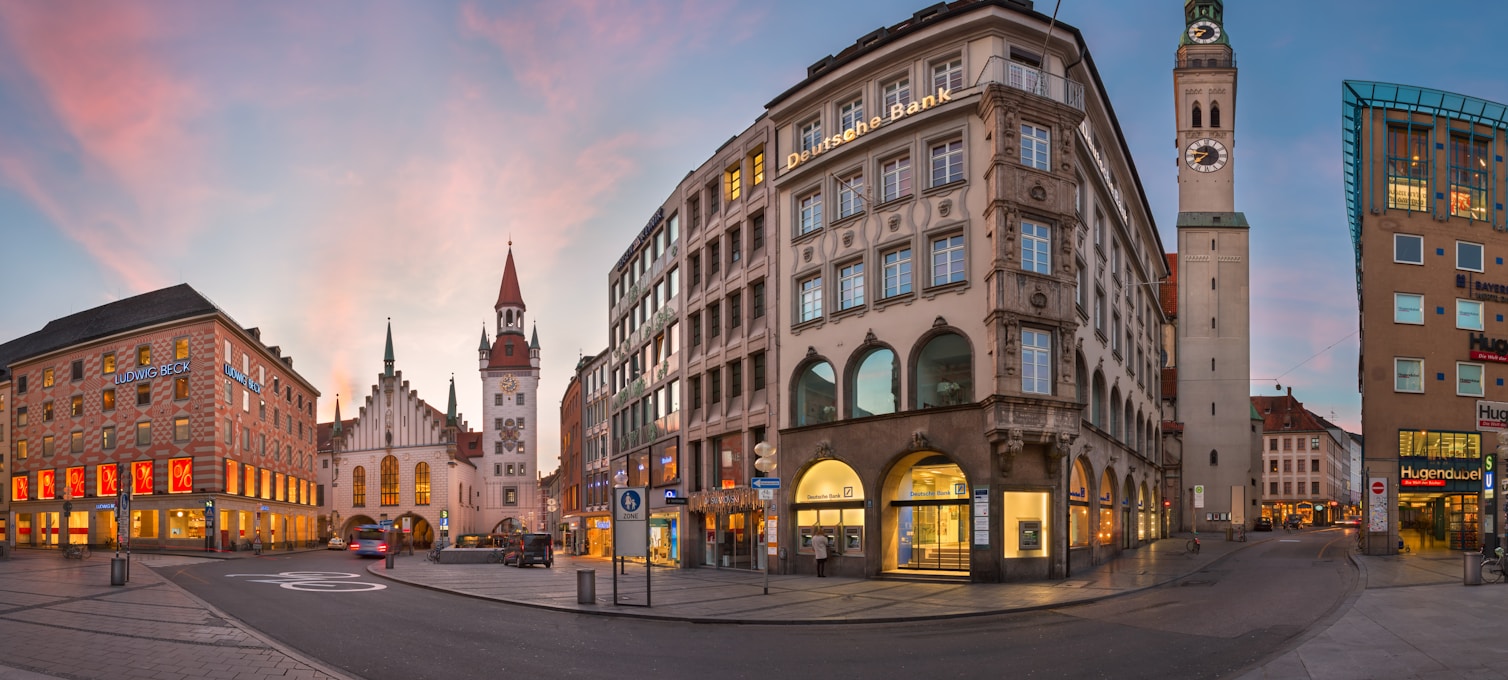
If you only see one: Mittenwald, 20 September — a procession through a frescoed old town, free entry, direct train from Munich (about 1h45). For raw authenticity, Bad Hindelang (mid-September) lines up nearly 900 head from a tradition documented since 1794, with spectators in place from 6 am. On the Tyrolean side, the biggest remains Reith im Alpbachtal (19 and 26 September, €8), the most festive the Wildschönau (19 September, free, 10 am-6 pm), and the most spectacular to close it all Ebbs on 10 October with its Haflinger stallions. Photography-minded travellers take position on a bend, telephoto in hand, and never follow the procession, advises the Moonhoney Travel blog.
Public transport is by far the simplest option: the Bayern-Ticket (€34 solo, €44-74 for 2-5 people, about £29 on the solo fare) covers Bavarian regional trains, the S-Bahn and buses, and stays valid as far as Kufstein on some lines, according to Deutschlandtarifverbund. From Munich: Oberstdorf by direct train in 2h20 (from €20-29 booked ahead, according to Omio), Kufstein in 1 hour then a taxi of about €37 to Ebbs. The car parks of the big villages are full before 8.30 am and group buses are billed €100-150: the train is also a money-saver. From the UK, Munich is a two-hour flight (British Airways and Lufthansa from Heathrow, easyJet from Gatwick), and easyJet also flies direct from Gatwick to Innsbruck (about 2h05, three times a week in September, fares from around £44), which puts the whole Tyrolean calendar within easy reach. compare flight prices to Munich or Innsbruck; and if Oktoberfest (19 September-4 October) falls on the same dates, combine both, with our pick of 10 premium Oktoberfest experiences.
The smart spectator’s habits
- Arrive before 8.30 am at the big villages, and stand by the roadside, never in front of the animals
- Never cut through the procession: cattle do not behave like a parade
- Confirm the date a few days ahead with the tourist office (some are never confirmed)
- Have a plan B in the same valley: several villages descend on the same weekend
Practical info: connectivity and insurance
A cross-border Munich, Allgäu and Tyrol trip deserves an eSIM that covers both countries: Airalo’s Europe eSIM works in 40+ countries, Germany and Austria included, from about €4.50. Installed in minutes, no physical SIM needed.
From ~€4.50Descent dates depend on the weather and cancellations happen: insurance covering trip cancellation and mountain medical costs is reassuring on a September weekend. SafetyWing’s Nomad Insurance covers Austria and Germany, with a 10% reader discount through our link.
From $56 / 4 weeksTo pick the right eSIM for your needs, see our 2026 travel eSIM comparison.
Frequently asked questions
When is the 2026 Almabtrieb in Bavaria and Tyrol?
The season runs from 4 September to 17 October 2026, peaking on the weekends of 12-13, 19-20 (the busiest) and 26 September. Village dates are announced by the tourist offices but confirmed late, depending on the weather. Source: Presse Tirol.
Is the Almabtrieb free?
Most descents are free: Mittenwald, Krün, Söll, Fulpmes, Leutasch, Wildschönau and the whole Allgäu charge nothing. Notable exceptions: Reith im Alpbachtal (€8, under-12s free), the Hopfgarten Tyrolean evening (€15-20) and the Almkäseolympiade in Galtür (€18). Source: Wildschönau Tourismus.
What is the difference between Almabtrieb, Viehscheid and Alpabzug?
Almabtrieb (or Alpabtrieb) is the autumn cattle descent in Germany and Austria. Viehscheid is the Allgäu word: it precisely describes the sorting of the mixed herds at the Scheidplatz, where every animal is returned to its owner. Alpabzug and Désalpes are the Swiss equivalents. The spring ascent (Almauftrieb), on the other hand, is not celebrated. Source: Wikipedia.
Can you get there by train from Munich?
Yes, and it is the best option: Munich-Mittenwald in about 1h45, Munich-Oberstdorf in 2h20 (direct train from €20-29 booked ahead), Munich-Kufstein in 1 hour with the Bayern-Ticket accepted as far as Kufstein, then a taxi of about €37 to Ebbs. The Bayern-Ticket costs €34 solo, €44-74 for 2-5 people. Sources: festivalsindeutschland.de and Omio.
Are the announced dates reliable?
No, they stay conditional: weather, grass condition and animal health can postpone or shrink a descent, and if an animal died on the pasture, the celebration is cancelled or goes ahead without finery. Some dates are never published, like Königssee. Check with the local tourist office a few days before. Source: Moonhoney Travel.
What does the flower crown on the cow mean?
It is the Aufkranzen: cows are only decorated if the summer on the pasture passed without accident or death. The Kranzkuh, the lead cow, wears the finest crown, often with a cross and a mirror. A black ribbon (Klagbüschel) marks a bereavement in the family or on the pasture. Sources: Austria-Forum and austria.info.
Sources
- tyrol.com : Almabtrieb overview in Tyrol, figures and calendar
- Presse Tirol : Almherbst 2026 in the Tiroler Oberland, season opener (Kaunertal)
- festivalsindeutschland.de : Almabtrieb & Almfest Mittenwald (20 September)
- festivalsindeutschland.de : Viehscheid Immenstadt, Bad Hindelang, Oberstaufen (Allgäu)
- festivalsindeutschland.de : Königssee Almabtrieb (Landauer boat descent)
- alpbachtal.at : Almabtrieb & Kirchtag at Reith im Alpbachtal (€8, 19 and 26 September)
- wildschoenau.com : Homecoming Festival at Auffach (free, 10 am-6 pm)
- kitzbueheler-alpen.com : Hopfgarten, Kelchsau, Itter (GREEN EVENT TIROL)
- flightsfrom.com : London Gatwick-Innsbruck direct flights (easyJet, about 2h05)
- allgaeu.de : The Viehscheid in the Allgäu (30,000 young cattle, 30 municipalities)
- UNESCO Austria : Transhumance on the intangible heritage list (2019, 2023 extension)
- austria.info : Cattle processions in Austria, traditions and figures
- Moonhoney Travel : On-the-ground tips: positioning, photography, checking dates
- Omio : Munich-Oberstdorf train (duration and prices)
- Deutschlandtarifverbund : Bayern-Ticket 2026 fares
Calendar checked in August 2026. Dates remain conditional: confirm with the local tourist offices before you travel.

Plan your trip with Pixidia
Pixidia learns how you travel and helps you build a trip that truly fits you and everyone coming along.
Open the planner