
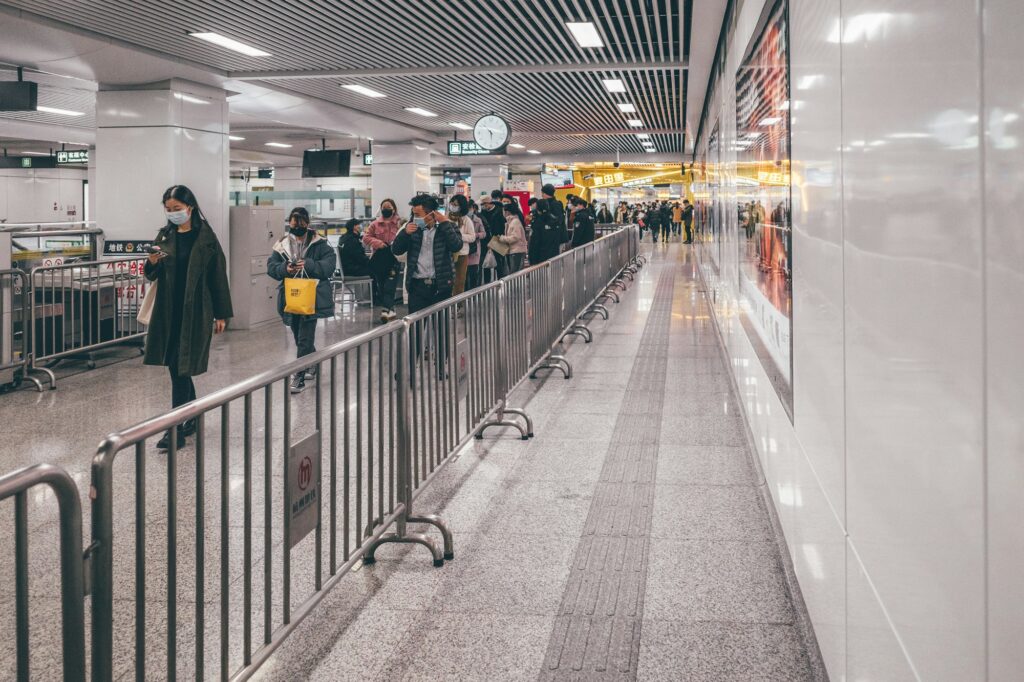
No launch date has been confirmed for ETIAS this autumn 2026. The « last quarter of 2026 » target was removed from the official EU website in July 2026, and the press is now floating 2027 — with no official confirmation. A valid passport is all that’s currently required to enter the Schengen area. What has changed, though, is the EES system: live since April 2026, it’s causing queues of several hours at some airports and Channel crossings, a situation that got worse after 6 September 2026. Check your passport and build in extra time at check-in rather than chasing an ETIAS that doesn’t exist yet.
« Do I need ETIAS to travel to Europe? » is still one of the most searched, and most misunderstood, travel questions right now. Here in autumn 2026, the answer fits in one sentence: the system still doesn’t exist, and nobody can currently say when it will. What’s actually affecting travellers this autumn is a completely different system — a very real one, and far less talked about.
What ETIAS Actually Is
An authorisation, not a visa
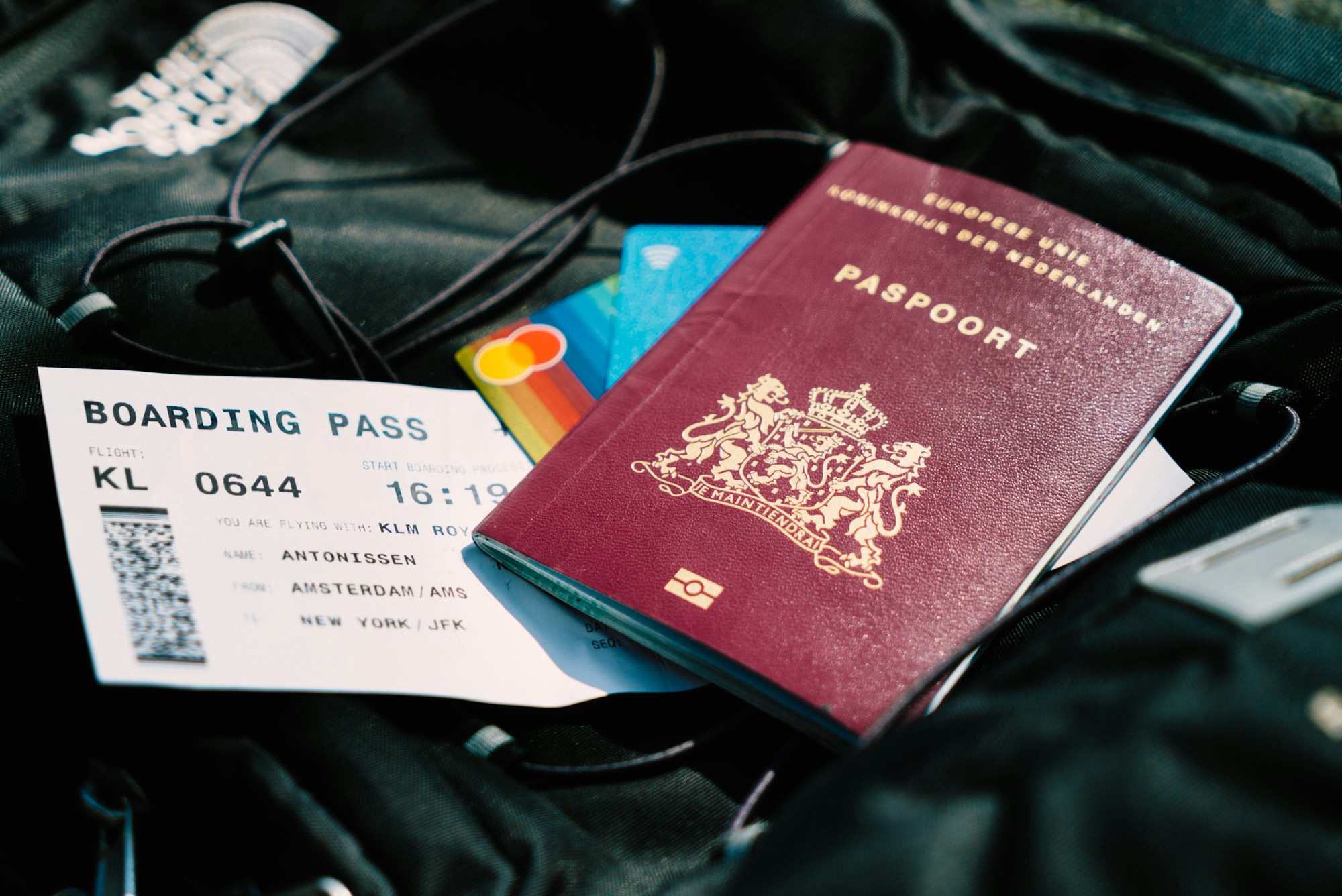
ETIAS (European Travel Information and Authorisation System) is an electronic travel authorisation, not a visa — Europe’s equivalent of the US ESTA or the UK’s own ETA. It will apply to nationals of around fifty countries currently exempt from a Schengen visa — the United States, the United Kingdom, Canada, Australia, Japan, among others — for short stays of up to 90 days in any rolling 180-day period. According to the official page of the European External Action Service, « ETIAS is not a visa. It only covers short-term stays to the 30 aforementioned countries. » EU citizens, holders of a standard Schengen visa, and residents with a residence permit aren’t affected.
The 30 countries covered are the 29 Schengen states plus Cyprus, which applies ETIAS without being part of the free-movement area in the strict sense. We already looked at this shift toward digital pre-screening with the UK’s own ETA, which became mandatory at the end of February 2026: same logic of digital pre-filtering, no consular appointment required — but two entirely separate, non-interchangeable systems.
Key points
- Automated processing, usually within minutes once the system is live
- 3-year validity (or until passport expiry), multiple entries
- One single authorisation to travel across all 30 countries covered
travel-europe.europa.eu — for whenever a date is announced, and ignore any other site claiming to already be collecting applications.No Confirmed Date: ETIAS’s Real Timeline
This is the central point of this piece, and the one most often glossed over: the « last quarter of 2026 » target, announced by the European Council on 5 March 2025 and still shown on the official site just weeks ago, was removed in mid-July 2026. The site travel-europe.europa.eu/etias now simply states that ETIAS is not yet in service and that applications aren’t being collected. According to Euronews, this follows a 17 June 2026 meeting of the eu-LISA Management Board (the EU’s technical agency), which judged a 2026 launch « no longer achievable », citing IT integration issues and the chaos triggered by the EES rollout in summer 2026.
This is at least the fourth substantial delay since the regulation was first announced in 2018: the target slipped from 2021 to May 2023, then November 2023, then mid-2024/2025, before landing on the now-abandoned last quarter of 2026. The next officially identified step is a further eu-LISA Management Board meeting in September 2026 — no exact date has been given — expected to produce a revised timeline to be passed on to the European Commission. According to Which?, a Commission spokesperson has simply said that a date would be set « once all conditions are in place », promising to announce it several months in advance. 2027 keeps coming up in the press as the most likely guess — as of today, that’s an estimate, not an official announcement.
The EU Commissioner for Home Affairs and Migration, Magnus Brunner, has pointed to a lack of resources and staff in some member states, in a letter sent to airline industry leaders, as a further factor behind the delay. On the substance, Statewatch also notes that the Commission failed to deliver the expected legal guidance on the system’s GDPR compliance on time — a point being closely tracked by the European Data Protection Supervisor.
What’s Actually Required Today: Passport and EES
The real two-item checklist this autumn
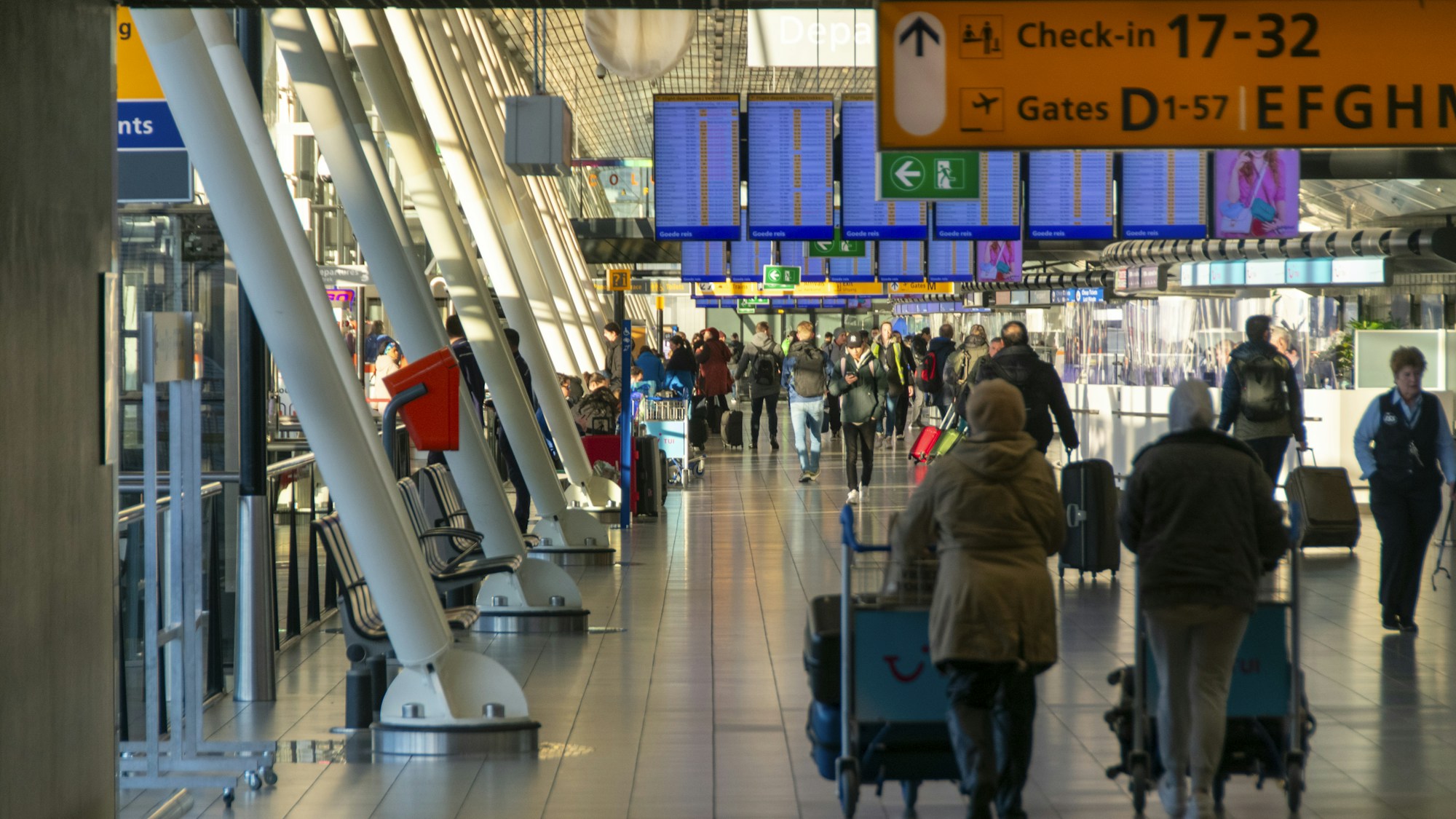
For a visa-exempt traveller heading to Europe this autumn, two things matter — and ETIAS isn’t one of them. First: a valid passport, recommended to be valid for at least 3 months beyond your planned departure date from the Schengen area and issued less than 10 years ago, according to GOV.UK’s official France travel advice. One nuance worth flagging for UK travellers specifically: GOV.UK notes that passports renewed before 1 October 2018 may carry over months from an older passport, meaning the « date of issue » can be earlier than the passport’s cover suggests — and border staff go by the issue date, not the expiry date. Our 2026 passport index breaks down these validity rules country by country.
The second, and this one’s very real: the EES (Entry/Exit System), fully operational since 10 April 2026 across the 29 Schengen countries after a phased rollout that began on 12 October 2025, as confirmed by the French Ministry for Europe and Foreign Affairs. It isn’t an online application submitted in advance: it’s a biometric registration (facial photo and fingerprints) carried out directly at the border, replacing the manual passport stamp. It’s free, automatic, and requires no advance application — except for voluntary pre-registration via the official « Travel to Europe » app, available in a limited number of countries such as Sweden or Portugal. We already covered this new biometric check when it first went live in April 2026.
Key points
- No advance registration: checks happen right at the border
- Valid for 3 years once registered, then faster processing through automated e-gates (PARAFE in France)
- « Travel to Europe » app for optional advance registration, where available
This Autumn’s Real Headache: EES Queues

The bit that actually affects your holiday this autumn
This is the most counter-intuitive part of the story: the formality actually causing problems this autumn isn’t ETIAS, which doesn’t exist yet, but EES, which is already in force. Airline industry bodies (ACI Europe, Airlines for Europe, IATA) asked the Commission to suspend EES checks at peak times this summer, with queues described as reaching « breaking point ». Ryanair’s CEO, Michael O’Leary, called the system « badly designed », according to Bloomberg. Queues averaging one to four hours, with peaks reported up to six or seven hours at around fifteen European airports, caused missed connections over the summer — a situation described by Euronews as wait times doubling since the April 2026 launch. We were already tracking these early queues back at the May 2026 bank holidays.
One detail makes this especially relevant in early September 2026: an EU rule allowed border posts to suspend fingerprint collection for up to six hours at a stretch when things got overwhelmed. That flexibility expired in early September 2026 and hasn’t been renewed, according to The Olive Press. As travel expert Jurgen Himmelmann put it in that piece: « If that flexibility disappears, the real concern is what happens when there is nowhere for the queue to go. » Since passport control isn’t the airline’s responsibility, standard flight-delay compensation generally doesn’t cover a missed connection caused by this.
For UK travellers, the crossings that matter most are the Channel routes: Eurostar at St Pancras, Le Shuttle at Folkestone, and the ferries out of Dover — all checked on French soil, since these are « juxtaposed » controls carried out by French officers on UK territory. Here, the picture has actually been a little more forgiving than at continental airports so far: as of summer 2026, full biometric capture for car and coach passengers at Dover and Eurotunnel had still not been switched on, with kiosk technology pushed back to « after the summer peak », according to The Local. St Pancras’ self-service kiosks were reported installed but not yet running. That’s no reason to relax, though: the Port of Dover’s own modelling points to queues of six to eight hours once biometric checks go fully live for cars, with its chief executive warning traffic could back up « onto the public highway for miles ». Check the latest status before travelling via these crossings specifically, since the rollout timeline keeps shifting.
Key points
- Avoid tight connections while the system is still bedding in
- Get to the airport, or the Channel terminal, early — especially for a first EES pass
- Check your travel insurance covers missed connections caused by a border check
How Much Will ETIAS Cost, and Who It Will Affect
Once the system is active — on a date that, as we’ve seen, remains unknown — ETIAS will cost €20 per person (roughly £17). The European Commission confirmed this increase on 17 July 2025, up from the €7 originally set out in the 2018 regulation, a rise justified by inflation and higher operating and cybersecurity costs for a system expected to eventually screen around 1.4 billion potential travellers, according to eu-LISA. The authorisation will be free for under-18s, over-70s, and certain family members of EU citizens exercising free movement rights. It will remain valid for 3 years or until the passport used for the application expires — whichever comes first.
It will apply to nationals of the roughly 59 countries currently exempt from a short-stay Schengen visa, regardless of how they travel (plane, but also by road, coach, train or ferry): the United States, the United Kingdom, Canada, Australia, Japan, New Zealand, as well as several Western Balkan countries (Serbia, Bosnia and Herzegovina, Montenegro, North Macedonia, Albania). One point worth clarifying: visiting Serbia or Albania themselves doesn’t require ETIAS, since those countries are outside Schengen — but their own nationals will need it to enter the Schengen area once the system is live. Ireland, on the other hand, will apply neither EES nor ETIAS: it isn’t a Schengen member and operates alongside the UK within the « Common Travel Area », as Citizens Information Ireland explains — which matters directly for anyone travelling between Britain and Ireland, since neither border check applies on that route. French overseas territories, also outside Schengen, aren’t affected either.
A transition period of around 6 months is planned once ETIAS launches, during which it will be recommended but not mandatory at the border, followed by a further grace period of roughly 6 months for travellers entering the system for the first time. Strict enforcement would therefore only kick in around 12 months after the actual launch — which, as noted, has no set date at this point. To plan a trip with confidence despite this regulatory uncertainty, our 2026 travel insurance comparison also covers what a standard policy does — and doesn’t — cover against these new border checks.
Once it is live: how to apply, processing times and how it differs from a visa
ETIAS is not open today, but the process set out in the EU texts is already known. The application will be fully online, on the official website or app: you enter your identity and passport details, answer a few security questions, then pay the €20 fee by bank card. The authorisation arrives by e-mail and stays linked to the passport you used.
The processing times announced by the European External Action Service (EEAS) depend on the case:
- automatic processing (the vast majority of cases): a few minutes;
- manual check: up to 4 days;
- additional information requested: up to 14 days;
- interview required: up to 30 days.
So once the system is live, do not apply the day before you fly: with a non-refundable flight, a wedding or a cruise, allow at least 30 days. Every traveller needs their own authorisation, children included, and a parent can fill in the form on their behalf.
Do not confuse ETIAS with a Schengen visa. The visa, for nationalities that are subject to it, goes through a consular appointment, has cost €90 for an adult (€45 for ages 6 to 12) since 11 June 2024 and takes several weeks. ETIAS only requires your passport, will cost €20 and is paid online. In both cases the stay is limited to 90 days in any 180.
Watch Out: ETIAS Scams to Avoid
The one rule to remember
Frontex has identified and publicly flagged more than 100 unofficial websites posing as ETIAS application portals, some reproducing official EU logos. « Travellers should be very cautious about those websites, as it is not currently possible to apply for an official ETIAS travel authorisation since the system is not operational yet, » said François Laruelle, Frontex’s deputy executive director, in an official statement. Concrete cases have been reported of sites charging up to €249 for a supposed « ETIAS card » sent by post — while the real system, once active, will cost €20 and be entirely online.
The only official site is travel-europe.europa.eu/etias, with a domain that must end in .europa.eu — never .com nor .org. The rule to remember is simple and self-contained: right now, no site — official or not — can issue a genuine ETIAS, because the system isn’t operational yet. Any offer to pay for « pre-registration » or « fast-track processing » for ETIAS is, by definition, a scam.
Key points
- Always check the URL ends in
.europa.eu - Be wary of any site collecting payment for ETIAS today
- Wait for an official date announcement before doing anything
Getting Ready for Your Trip to Europe
A digital SIM card valid across all 30 countries covered by ETIAS, set up before you leave, so you’re connected the moment you clear border control.
from a few euros depending on dataHandy for this autumn’s curveballs: a missed connection because of an EES queue, medical costs, or a cancellation — while you wait for an ETIAS launch date.
From $56 / 4 weeksFrequently Asked Questions
Do I need ETIAS to travel to Europe this autumn 2026?
No. The system isn’t operational yet and no launch date has been confirmed. For nationals of visa-exempt countries, a valid passport is all you need — see Which?.
What is ETIAS’s official launch date?
There isn’t one at this point. The « last quarter of 2026 » target was removed from the official EU site in July 2026. The next known step is an eu-LISA Management Board meeting in September 2026, expected to produce a revised timeline. 2027 is the guess most often floated by the press, but it isn’t official.
What’s the difference between EES and ETIAS?
EES is an automatic biometric registration carried out at the border, with no advance application, and it’s already been fully operational since 10 April 2026. ETIAS will be an authorisation to apply for online before you travel — and it isn’t active yet.
How much will ETIAS cost once it’s active?
€20 per person (about £17), up from the €7 originally planned in 2018. Free for under-18s, over-70s, and certain family members of EU citizens. Valid for 3 years or until your passport expires.
Can I apply for my ETIAS right now on a site that offers it?
No, that’s a scam. Since the system isn’t operational, no site — official or not — can issue an ETIAS today. Frontex has identified more than 100 fraudulent sites copying the official design.
Should I expect queues at the border this autumn?
Yes, potentially long ones, because of EES, which is already active. The flexibility that allowed border posts to temporarily suspend biometric checks during busy periods expired in early September 2026, which could make things worse at the busiest airports and Channel crossings.
Will ETIAS apply to the UK or Ireland too?
British nationals will need ETIAS to enter the Schengen area, just like Americans or Canadians. Ireland, on the other hand, applies neither EES nor ETIAS: it isn’t in the Schengen area and operates alongside the UK under the « Common Travel Area ».
What will happen to travellers around ETIAS’s actual launch?
A transition period of around 6 months is planned, during which ETIAS will be recommended but not mandatory at the border, followed by a grace period of roughly 6 months for travellers entering the system for the first time. Strict enforcement would only kick in around 12 months after the actual launch.
Will ETIAS guarantee entry to the Schengen area?
No. ETIAS is a pre-authorisation. The decision to let you in always rests with the border guards, who check that you meet the entry conditions: valid passport, sufficient funds, proof of accommodation, return ticket.
What if my ETIAS application is refused?
Once the system is live, you will receive a notification stating the reasons for the refusal. You can appeal to the member state that took the decision, and you can submit a new application if your situation has changed. You can also apply for a standard Schengen visa (€90) through the consular route.
Sources
- travel-europe.europa.eu/etias — Official European Union site, current non-operational status notice
- Euronews — Confirmed indefinite ETIAS delay
- Which? — Coverage of the 2026 delay and EES-linked chaos for UK travellers
- France in the United Kingdom — Official embassy guidance on travel to Europe
- eu-LISA — Reference publication on ETIAS
- Statewatch — Analysis of ETIAS’s regulatory uncertainties
- France Diplomatie — EES entry into force on 10 April 2026
- Bloomberg — The chaos caused by EES at airports
- Euronews — EES wait times doubling
- The Olive Press — End of the EES biometric suspension tolerance
- The Local — Status of the EES rollout at Dover, Eurotunnel and St Pancras
- ETIAS Europa — Confirmation of the fee rise to €20
- Frontex — Official statement on fraudulent ETIAS sites
- GOV.UK — Passport validity rules for entry into France and the Schengen area
- Citizens Information Ireland — Ireland’s status outside the Schengen area
Research and source verification carried out on 4 September 2026.

Plan your trip with Pixidia
Pixidia learns how you travel and helps you build a trip that truly fits you and everyone coming along.
Open the planner