
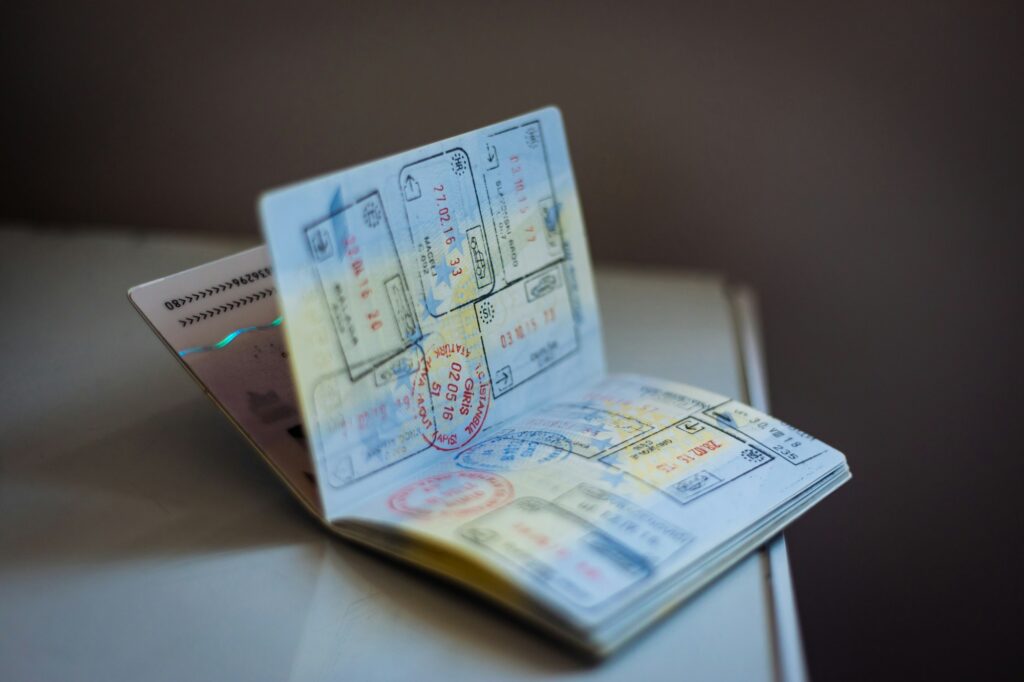
Since 4 November 2026, anyone boarding a flight to the United States must sign a CDC attestation that they have not been in the Democratic Republic of the Congo (DRC) in the 21 days before. It applies until 18 December 2026, 11:59 pm EST at the latest, unless the CDC lifts or amends it earlier.
Checked on against the official sources.
If your next flight goes to the United States, plan one more form before boarding. Since 4 November 2026, the Centers for Disease Control and Prevention (CDC) requires a signed statement of non-presence in the Democratic Republic of the Congo (DRC) from anyone boarding a plane bound for US territory, whatever their nationality. This page explains who signs, from when, how, what can stop you from boarding, and what the texts do not yet settle.
Who has to sign the attestation
Anyone who flies to the United States
The amended order, signed on 28 October 2026, replaces the word « passenger » with « person »: the requirement no longer covers only passengers but anyone who boards. The text makes no distinction by nationality. A US citizen, a permanent resident holding a green card, or a French traveller who has never been to Africa must sign as soon as their flight goes to the United States.
- Passengers on any international flight to the United States, including from Paris, Lyon, Nice or Bordeaux.
- Crew members, including on non-revenue positioning flights (« deadhead »), under Federal Register notice 2026-22211.
- Business aviation, general and private aviation, cargo flights and pre-clearance flights: the order and the notice cover them too.
- Children, each with their own attestation, signed by a parent, a guardian or an authorised representative.
- Connections: a Paris to Mexico City flight connecting in New York is covered, because the rule applies to flights that transit the United States « en route to another country ».
If your stay begins in New York, a one-day guided tour gives you a first overview of the city.

What can stop you from boarding
Counting the 21 days
The rule depends not on your nationality but on your presence in the DRC. The day you leave the country is day 0. The first full day spent outside the DRC is day 1, and boarding for the United States is allowed only from day 22. Leaving the country is not enough: you must let those 22 days pass before boarding a flight to the United States.
The table below applies this count to three DRC departure dates.
| DRC departure day (day 0) | First possible boarding (day 22) | Reading |
|---|---|---|
| 1 November 2026 | 23 November 2026 | Leaving the DRC is not enough: you must wait until day 22. |
| 15 November 2026 | 7 December 2026 | A trip planned for December can still be possible, but only after this date. |
| 20 November 2026 | 12 December 2026 | This date falls six days before the end of the order, unless it is lifted earlier. |
Source: CDC, signed order (definition of the 21-day count), checked on 7 November 2026. The boarding dates are calculated from this count.
What counts as presence in the DRC
- A stay, a transit or a trip by air through the DRC. Any physical presence counts, including a passage by air, land or sea.
- A stop at a Congolese airport. It counts even if you stay on board and do not leave the aircraft, according to Annex A of CDC form 367886-A.
- An overflight without landing. It does not count as presence, according to the same form.
For journeys by land or sea, the order does not apply: it covers only air travel to the United States.
When the rule applies, and until when
The start and end dates both matter for a trip already booked. The table sets out the official dates checked on 7 November 2026.
| Date and time | What happens | Source |
|---|---|---|
| 22 October 2026 | Initial order signed | Federal Register notice 2026-21828 |
| 28 October 2026 | Amended order signed: « passenger » becomes « person », crew members covered | Federal Register notice 2026-22211 |
| 30 October 2026 | Amended notice published in the Federal Register | Federal Register |
| 3 November 2026, 11:59 pm EST | Takes effect for flights departing from this moment | Signed order; notice 2026-22211 |
| 4 November 2026, 5:59 am (Paris) | Time equivalent in France (calculated) | Calculated from the EST time |
| 18 December 2026, 11:59 pm EST | End of the order, unless lifted or amended earlier | Notice 2026-22211 (summary); order (date) |
Sources: CDC, signed order and Federal Register, notice 2026-22211, checked on 7 November 2026. The conversion to Paris time is a calculation: the United States had switched back to standard time on 1 November.
The end time, 11:59 pm EST on 18 December, appears in the summary of the federal notice. The signed text of the order gives the date only. The order stays in force until it is lifted or amended, or until 18 December 2026, whichever comes first. No extension or change was announced as of 7 November 2026.
What to do, in order
For a trip in the next few weeks, four steps are enough. Do them before the flight date, not on the morning of departure at the counter.
- Check your itinerary. Does your flight land in the United States, including for a connection to a third country? If so, the attestation applies to you.
- Work out your time in the DRC. If you stayed in or transited through the DRC in the last 21 days, check the counting table and your first possible boarding day.
- Prepare the form. Check your airline’s page 24 to 48 hours before departure to see whether it offers the form online. If not, go to the counter with the version of the form you have read.
- Keep a copy. A paper copy or a PDF kept on your phone will save you looking for the document at the airport.
The form is in addition to the usual entry documents. If your ticket includes a connection, check the detail of the itinerary: it is the connection, not only the final destination, that triggers the attestation.
By profile
- Families. A parent, a guardian or an authorised representative may sign for a minor child, according to Africanews (4 November 2026). An extract from Milesopedia also states that a single declaration for the whole family is not enough.
- Business travellers and crew. The amended notice covers crew members, including on positioning flights. According to the press, airline requests for crew exemptions were not granted in the order signed on 28 October 2026.
- Travel with a US connection. The rule covers the connection even if you do not leave the transit airport. Check the detail of the ticket, not only the final destination.
- Travellers from Uganda or South Sudan. The attestation covers only the DRC. But another measure, the entry ban, may affect you: it is covered in a section below.
Boarding refusal: what the texts say

An airline can refuse to let you board
The order requires airlines to refuse boarding to anyone without a signed attestation. The refusal therefore rests with the airline.
However, none of the texts we read provides for a refund or specific compensation for a refusal linked to the attestation. The general rules of the US Department of Transportation (DOT) on refunds for cancellations exist, but no text we consulted confirms that they cover this specific case.
If you are refused, ask the airline in writing for the reason for the refusal and for rerouting or refund options. Keep a record of these exchanges.
Not to be confused with the entry ban
A second CDC text, separate from the attestation, bars entry to the United States for certain people who were recently in the DRC, Uganda or South Sudan: for the DRC, US citizens included; for Uganda and South Sudan, non-citizens, including green card holders. The two measures overlap on the DRC, but they do not have the same purpose.
| Measure | Who is covered | What it changes for you | Source |
|---|---|---|---|
| Non-presence attestation (amended order of 28 October 2026) | Anyone boarding a flight to the United States | To be signed before boarding, whatever your nationality | CDC, signed order |
| Entry ban (separate order, renewed in 30-day periods according to secondary summaries) | People present in the 21 days before arrival: in the DRC, US citizens included; in Uganda and South Sudan, non-citizens, green card holders included | Does not affect a traveller who has not stayed in any of these countries | CDC, returning travelers page (updated 30 October 2026) |
Source: CDC, returning travelers page, checked on 7 November 2026. The length of the renewals comes from secondary summaries, not verified in the official text.
For the DRC, the official page states that US citizens and nationals who were in the country within the past 21 days may not board a flight to the United States. For Uganda and South Sudan, non-citizens, including green card holders, are affected. US citizens coming from these two countries must pass through designated airports, such as Dulles, Atlanta or JFK, for a health screening. One secondary summary claims instead that US citizens are exempt: the official page prevails.
Some secondary summaries (EIG, Fragomen) indicate that this ban was renewed until 10 November 2026, after a last renewal on 11 October. This point is not verified in a primary text. A trip planned for mid-November therefore falls on a different deadline from that of the attestation.
What remains uncertain as of 7 November 2026
- A lifting or an extension. Nothing had been announced as of 7 November 2026. The text provides for a review depending on how the outbreak develops.
- The starting point of the 42-day retention period. The CDC documents do not agree: the order and the notice count from departure, the technical instructions from arrival.
- The text of the DOT notice reported by the press. We did not find this text in the Federal Register and could not consult it. Only the press reports it: unverified signal.
- Airline practice. A union note reported by the press describes, at one US airline, a verbal declaration to the captain for crew members. The CDC has not confirmed this.
- Data protection. A legal commentary considers that the 42-day retention conflicts with the GDPR. This is an isolated opinion, with no authoritative position behind it.
What other guides don’t tell you
Four points, drawn from the CDC and Federal Register texts, are missing or inaccurate in the guides we were able to consult, some of which we read only in extract.
- The form also exists in French, according to the CDC list. The CDC page mentions a French version (FR-AF) published in November 2026, alongside the English and Spanish ones; we did not open this file. One extract from Milesopedia says the opposite. The legal reference text remains the English one, according to the CDC attestation-order page (consulted on 7 November 2026).
- Crew members are covered, including on positioning flights. The amended notice replaces « passenger » with « person » so that crew members are covered too, including « deadhead » flights, according to the Federal Register, notice 2026-22211 (consulted on 7 November 2026).
- You tick the box yourself. Airline staff may help with data entry, but they do not sign in place of the traveller. The authorised representative ticks a separate box, according to CDC form 367886-A (consulted on 7 November 2026).
- The starting point of the 42 days is disputed by the CDC itself. The order counts the 42 days from the flight’s departure, the technical instructions from arrival. Keep the minimum period, « at least 42 days », according to the CDC attestation-order page (consulted on 7 November 2026).
What the attestation does not change
The attestation is added to your entry documents; it does not replace them. The text of the order does not mention the ESTA; the guides we read agree on this point.
Neither the order nor the form provides for an examination or a screening test.
The text we read provides for no fee linked to the attestation. Your usual travel costs still apply.
The airline keeps a copy of the attestation for at least 42 days and passes it to the US government on request.
Frequently asked questions
Do I need to sign the attestation if I leave Paris without having been to Africa?
Yes. The requirement covers anyone boarding a flight to the United States, whatever their nationality and journey. The order makes no exception for travellers who have not been in Africa. It does not apply to a flight that does not land in the United States, according to the signed CDC order.
How long is the attestation required?
Until 18 December 2026 at 11:59 pm EST at the latest, according to the summary of federal notice 2026-22211. It may end earlier, through a lifting or an amendment by the CDC, depending on how the outbreak develops. No extension or lifting was announced as of 7 November 2026, the date of our check.
What if I was in the DRC 15 days ago?
You cannot board a flight to the United States before day 22, counted from your day of departure from the DRC. Fifteen days after that departure, boarding therefore remains blocked for another week. A stop during which you stayed on board at a Congolese airport also counts as presence, according to Annex A of CDC form 367886-A.
If my flight goes through New York to reach Mexico, do I need to sign?
Yes. Federal notice 2026-22211 expressly covers people transiting through the United States en route to another country. If your ticket includes a connection in New York, the attestation applies to that flight, even if your final destination is Mexico City.
Is my Paris to Montreal flight covered?
No, if the aircraft does not land in the United States. Overflights without landing are excluded by federal notice 2026-22211. However, if the same ticket includes a connection at a US airport, the rule applies to that leg.
Can I sign for my child?
Yes. A parent, a guardian or an authorised representative may sign for a minor, according to Africanews (4 November 2026). An extract from Milesopedia states that each person must have their own attestation; the form does provide an « on behalf of » option (Attachment A).
Is the form available in French?
Yes, according to the CDC list: the attestation-order page, consulted on 7 November 2026, mentions a FR-AF version published in November 2026, alongside the English and Spanish ones. We did not open this file. The legal reference text remains English: if in doubt, it prevails.
Does the attestation replace the ESTA?
No. It is added to your entry documents, ESTA or visa. The text of the order does not address the ESTA: this point relies on the guides we read, which agree. Check your travel authorisation before departure, as you would for any flight to the United States.
Can the airline refuse to let me board?
Yes, if the attestation is not signed: the order requires airlines to refuse boarding in that case. None of the texts we read provides for specific compensation for this refusal. Ask the airline for a reason in writing and for rerouting options.
Is there a test, or any fees to pay?
No. Neither the order nor the form provides for an examination, a screening test or specific fees for the attestation. The form is a document to sign, not a medical procedure. Your usual ticket and travel formality costs do not change.
Is my data kept?
The airline keeps a copy of the attestation for at least 42 days, according to the CDC. The starting point of this period is disputed between the order, which counts from departure, and the technical instructions, which count from arrival. So keep the minimum period in mind.
Sources
- CDC, signed order (PDF) : order text, end date, 21-day count, 42-day retention.
- CDC, attestation-order page : obligation, dates, form versions.
- CDC, form 367886-A (PDF) : title, tick boxes, OMB notice, Annex A on presence in the DRC, 18 U.S.C. 1001 warning.
- CDC, returning travelers : separate entry ban, designated airports.
- Federal Register, notice 2026-22211 : amended order, effective date, end date, crew.
- Africanews, 4 November 2026 : press, represented minors.
Sources checked on 7 November 2026. Milesopedia was read only in extract. Points marked « according to the press » do not rest on an official text we read.

Plan your trip with Pixidia
Pixidia learns how you travel and helps you build a trip that truly fits you and everyone coming along.
Open the planner
How to sign, and in which language
The document to sign is CDC form 367886-A, titled « Traveler Disclosure and Attestation ». It can be completed on paper or digitally, including with an electronic signature. The traveller ticks a single box: they attest for themselves, or on behalf of a person for whom they are the authorised representative.
The form reminds signatories that a false statement exposes them to criminal prosecution (18 U.S.C. 1001): the signatory attests to having « responded truthfully ». So do not sign for another person without knowing their answers.
Source: CDC, attestation-order page, checked on 7 November 2026. The French and Spanish versions are listed on the CDC page; their files were not opened. If in doubt, rely on the English version.
The airline chooses the channel. It may offer the form at online check-in, in its app or at the counter. Several guides advise keeping a paper copy: that is a sensible precaution, not a requirement of the text.