
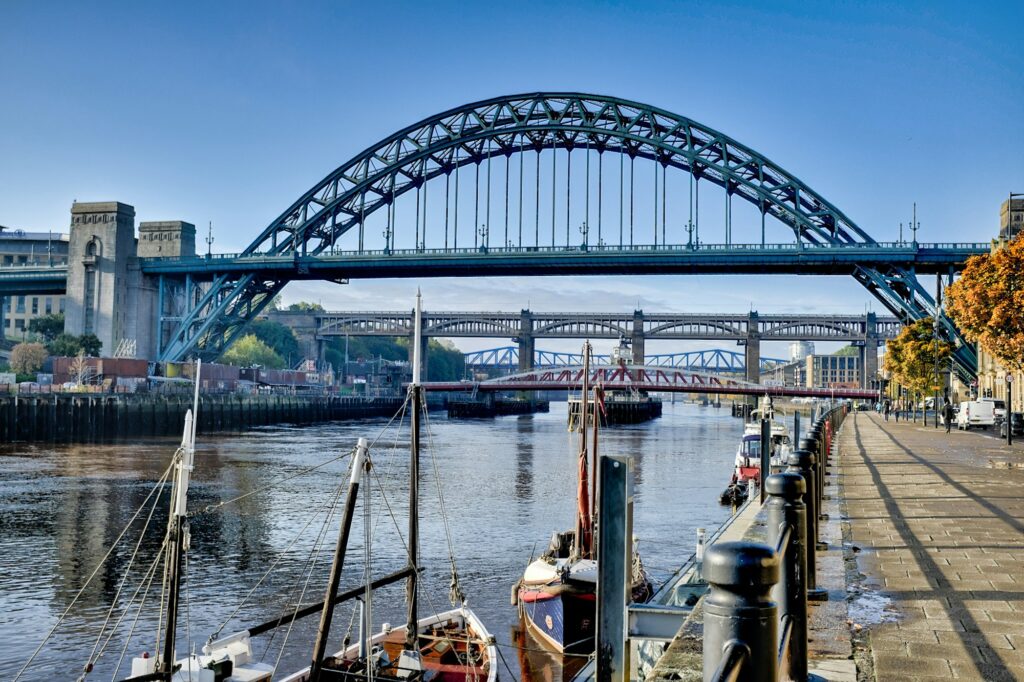
The Great North Run 2026, the world’s biggest half marathon, runs on Sunday 13 September between Newcastle upon Tyne and South Shields. New for this year: the Tyne Bridge, mid-restoration until 2028, is off-limits to spectators, and so is the start zone. Your best bet is the Quayside on either side of the bridge, Screen on the Green, or The Nook (mile 10), then heading back from South Shields on the Shields Ferry instead of a packed Metro.
Every mid-September, the Great North Run redraws the map of Newcastle, and the 2026 edition breaks with two long-standing habits. For its 45th running, on Sunday 13 September 2026, 63,000 runners set off from Claremont Road for the South Shields seafront, watched by more than 200,000 spectators along the 21.1-kilometre course. The Tyne Bridge, the race’s number-one visual landmark, is now off-limits to spectators because of restoration works, and the journey back from South Shields is worth planning ahead to dodge hours in gridlocked public transport.
1. The Great North Run 2026 at a Glance
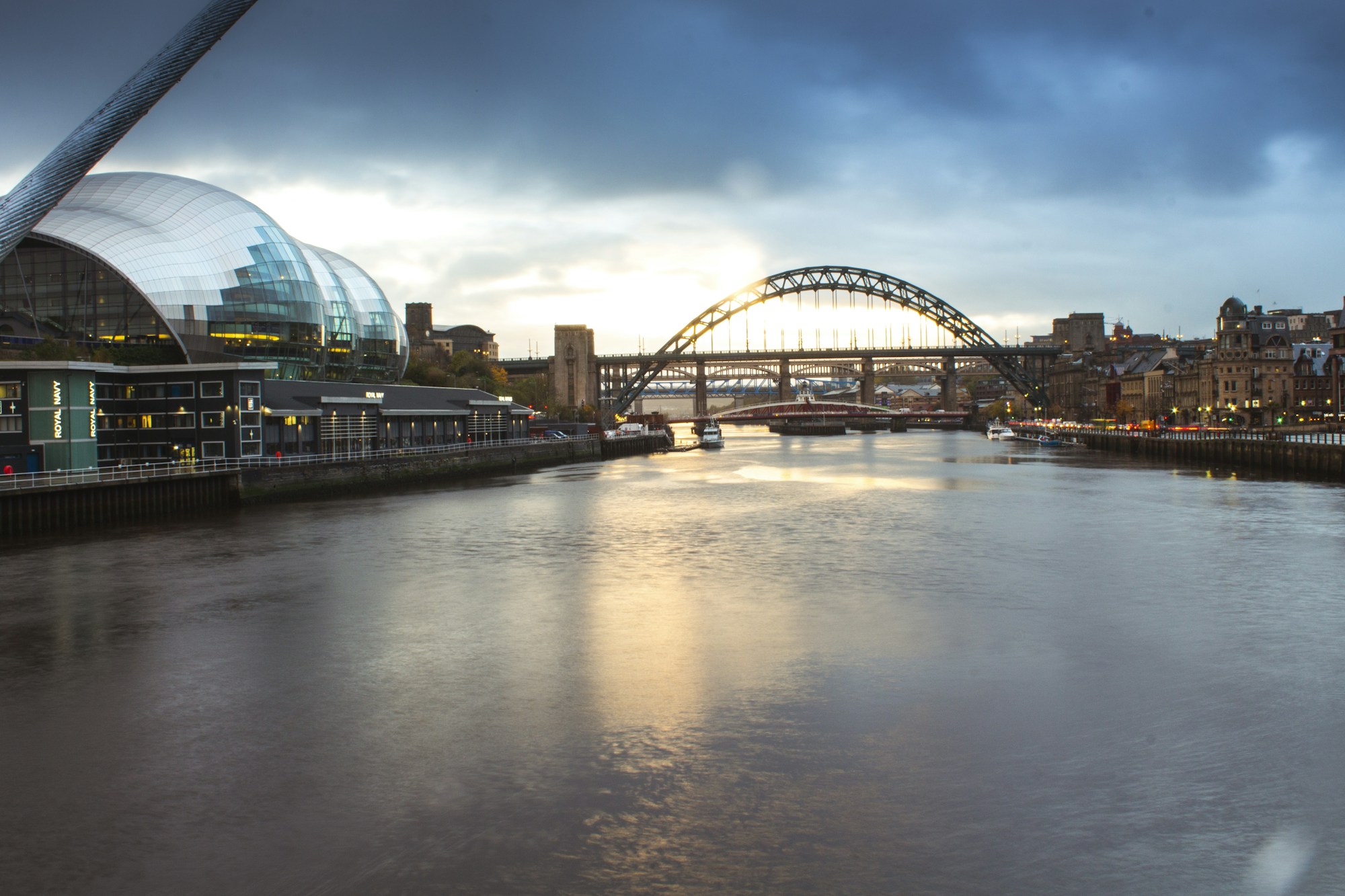
The world’s biggest half marathon turns 45
Founded in 1981 by Brendan Foster, Olympic bronze medallist over 10,000m, the Great North Run brought together 12,264 runners for its very first edition on 28 June 1981. The race has since become the world’s biggest half marathon, a record certified by Guinness World Records since 2014 with 57,000 runners on the same start line, according to Wikipedia. More than 1.4 million runners have crossed the finish line since it began.
For its 45th edition, on Sunday 13 September 2026, organiser Great Run Company is expecting a record 63,000 runners, up from 57,000-60,000 in previous years. The race is still a point-to-point course of 13.1 miles (21.1 km) between Claremont Road, near Newcastle’s Town Moor, and the South Shields seafront, with roughly 130 metres of cumulative elevation gain, rolling rather than mountainous according to runners’ guides. The live broadcast on BBC One reaches around 170 countries, according to Wikipedia.
The route runs through places steeped in local history: after crossing the Tyne Bridge at mile 1.5, runners head through Gateshead and Team Valley, then Jarrow and the climb up Marsden Bank (miles 10-11), before reaching the North Sea at mile 12. Jarrow, as it happens, is where Steve Cram grew up, 1983 world champion over 1500m, nicknamed « The Jarrow Arrow », and now the race’s BBC commentator, according to Wikipedia.
Another quirk worth knowing for this 45th edition: in 2025, the back of the medals handed to 60,000 finishers mistakenly showed a map of Sunderland, Stadium of Light included, instead of Newcastle, Gateshead and South Tyneside. Organisers apologised publicly, and Sir Brendan Foster himself admitted he’d missed the error despite reviewing the artwork, according to Sky Sports. The 2026 45th-anniversary medal, for its part, was designed with extra care by a local Newcastle artist.
Highlights
- A record turnout for 2026: 63,000 runners, a figure never reached before
- Guinness World Record for the biggest half marathon since 2014
- A full weekend: the Great North 5K on Friday, Junior & Mini Great North Run on Saturday, before Sunday’s main event
If your trip stretches beyond race Sunday, Newcastle’s historic centre is worth a guided visit in its own right, ideally on a different day: the city centre stays closed to traffic while runners come through.
2. Where to Watch: the Tyne Bridge Is Off-Limits to Spectators in 2026
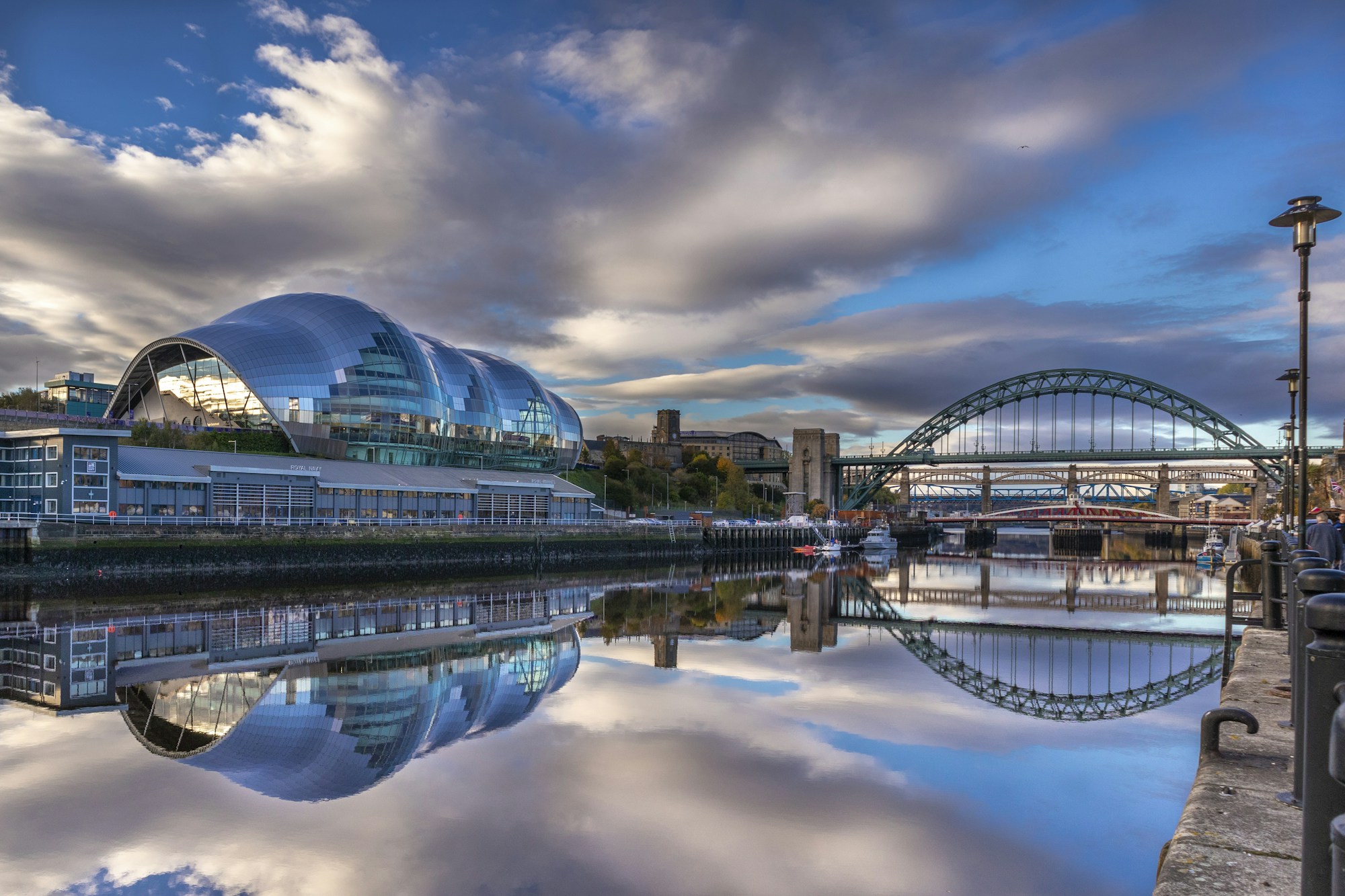
The bridge is still the race’s symbol, you just can’t stand on it anymore
The Tyne Bridge (1928) has been under major structural restoration since 2024, as part of the Tyne Bridge, Restoring an Icon programme, targeting completion for its centenary in 2028, according to the project’s official site. The direct consequence for Great North Run 2026 spectators: you can no longer stand on the bridge itself, between the two towers, the way generations of spectators did before the works started. Runners still cross it at mile 1.5, but they’re funnelled down one side only by stewards who keep the crowds from gathering, according to Tyne Bridge Restoring an Icon.
New for 2026: the start zone itself, Claremont Road and the Town Moor, is now also off-limits to non-runners. Organisers are explicitly asking spectators to stay away, according to Shields Gazette. Some older guides still recommend this spot for watching the send-off: that advice no longer holds for 2026.
The best alternative is still the Quayside on either side of the bridge. On the Newcastle side, the Quayside has a party atmosphere from early morning, with restaurants and bars to while away the wait before runners come through. On the Gateshead side, it’s less packed and gives you a clear view of the bridge’s green arch and the parade of the Tyne’s seven bridges, often with the Red Arrows flying over for the first waves. A bit further along the route, the AJ Bell Motivation Station (mile 12.4) plays messages of support from friends and family on a big screen.
To follow the race without moving along the route, head to Screen on the Green, at Old Eldon Square right in the centre of Newcastle: a big screen shows the BBC One broadcast from 10am to 2pm, with deckchairs and entertainment from 10am. It’s the easiest option if you’ve got kids with you. At the other end of the spectrum, for the most intense atmosphere, The Nook, at mile 10 on Prince Edward Road in Marsden, is a narrow street where the noise bounces off buildings on both sides: runners describe it as one of the loudest stretches in British sport, but also one of the hardest to leave quickly.
Then there’s the finish itself, on the South Shields seafront at The Leas: festive, with entertainment and food stalls on site, but also the busiest spot on the whole route and the hardest to get away from afterwards. Several guides advise against bringing young children here for exactly that reason: worth knowing before you commit, especially when it comes to planning your way back, which we cover in the next section.
Highlights
- The Quayside around the Tyne Bridge, Newcastle or Gateshead side: the best view of the runners without standing on the bridge itself
- Screen on the Green (Old Eldon Square): BBC One coverage, deckchairs, zero logistics
- The Nook (mile 10, Marsden): one of the most intense stretches of the whole race
4. Getting to Newcastle, Where to Stay, and Extending Your Trip
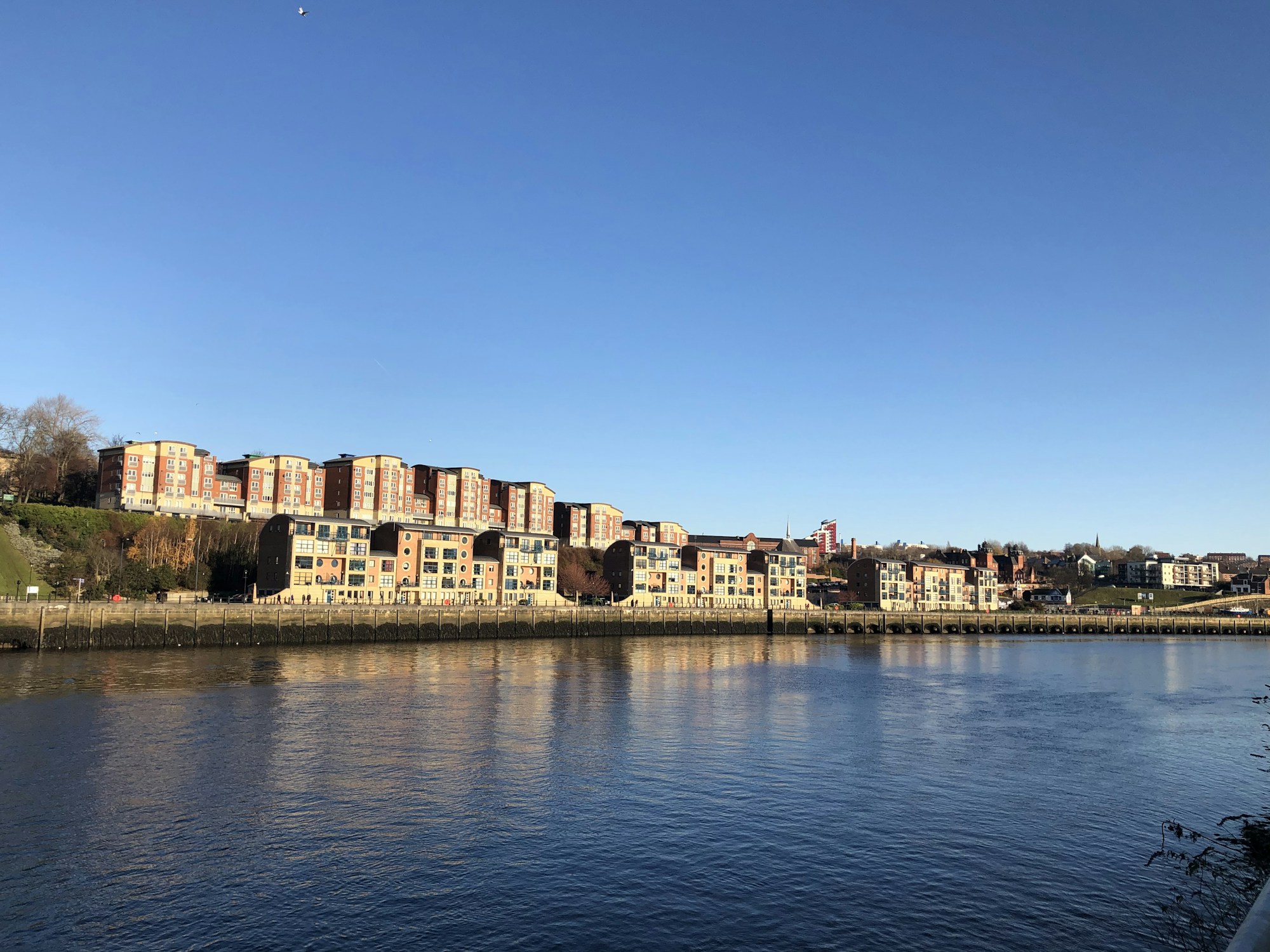
A direct train from London, a direct flight from Paris, and a hotel budget to plan for
If you’re coming from London or elsewhere in the UK, LNER runs direct trains from King’s Cross to Newcastle in around 2 hours 45 minutes to 3 hours, often the simplest option for race weekend. From continental Europe, Air France and easyJet fly direct from Paris-Charles de Gaulle to Newcastle Airport in about 1h40, with easyJet fares seen between roughly €53 and €122 depending on the period, according to easyJet. A seasonal direct route also runs from Nice, generally August to October, which happens to line up well with mid-September. Once you land, Newcastle Airport connects to the city centre in about 25 minutes on the Metro (£3.90).
On formalities, a passport valid for the whole length of your stay is required: a national ID card alone is no longer enough for UK entry. Most non-UK, non-Irish visitors also need a UK ETA (Electronic Travel Authorisation, not to be confused with the EU’s own ETIAS, still not live as of mid-2026), mandatory since April 2025 and priced at £20, for visa-free stays of up to 6 months. Apply at least a few working days ahead of travel. Our UK ETA guide covers the full process, and it applies across the whole of the UK, not just London.
On accommodation, Premier Inn rooms in Newcastle start around £65 to £70 a night in normal times, but climb sharply for Great North Run weekend: one spectator reported paying more than £230 a night in Newcastle that specific weekend, against around £100 in Darlington, about half an hour away by train. No hotel sits right at the South Shields finish, so it’s worth factoring in the journey back whatever accommodation you choose. On exchange rates, the pound was trading around €1.17 in late August 2026, up roughly 2% on the year, according to exchange-rates.org.
To extend your trip beyond race Sunday, the Angel of the North, Antony Gormley’s 20-metre steel sculpture from 1998, is a 20-minute bus ride from Eldon Square. Further north, the Hadrian’s Wall and Northumberland National Park remain a classic day trip from Newcastle, the historic starting point for this 2,000-year-old Roman frontier. If you want to go further afield, Scotland is within reach too: a whisky tasting in Edinburgh rounds out a race weekend nicely, about 1h30 by train from Newcastle.
Highlights
- Direct LNER trains from London King’s Cross, or a direct flight with Air France or easyJet from Paris CDG
- UK ETA mandatory for most non-UK, non-Irish visitors since April 2025, apply a few working days ahead
- Book early: Newcastle hotel prices climb sharply on this specific weekend
If your schedule has a spare day around race weekend, head for Hadrian’s Wall: it’s one of the most popular day trips out of Newcastle.
Practical Info for International Visitors
On weather, expect around 18°C during the day and 10°C at night in mid-September in Newcastle, with a real chance of rain (roughly fifteen rainy days a month on average) and wind, especially on the exposed South Shields seafront at the finish. A light windproof layer for that final coastal mile is never a bad idea. On local transport budget, the Pop card caps out at £5 a day and £2.50 for a single trip, against £3.20 to £5.10 for paper tickets. To stay connected without juggling a local SIM card, compare providers in our travel eSIM 2026 comparison.
Data ready the moment you land in Newcastle, no hunting for a local carrier and no SIM swap.
From $4.50 for 1GB / 7 daysYour EHIC or GHIC card covers NHS public healthcare, but not repatriation or private treatment. SafetyWing’s Nomad Insurance covers you worldwide, wherever you’re travelling from.
From $56 / 4 weeksFrequently Asked Questions
Can you watch the Great North Run for free, without a ticket?
Yes, watching as a spectator is completely free: there’s no ticketing system for standing along the public route. Only runner entry costs money, allocated by ballot, with a general-entry fee of around £68, according to Great Run.
Can you stand on the Tyne Bridge to watch the runners go by?
No, not in 2026. The bridge is under restoration until 2028 and spectators aren’t allowed to stand on it: only runners cross it, funnelled down one side by stewards. Head to the Quayside instead, on either the Newcastle or Gateshead side of the bridge, according to Tyne Bridge Restoring an Icon.
How do you get back from South Shields to Newcastle after the race without losing hours in transit?
The Shields Ferry to North Shields, a 7-minute crossing with extra sailings on race day, is the lesser-known but often fastest way to skip the crush at South Shields Metro station. Failing that, sort your transport ticket in advance (a Pop card) and expect a noticeable queue, both at the Metro and on the free Haymarket-South Shields shuttles, according to South Shields.org.
When’s the best time to book a hotel in Newcastle for the Great North Run?
As early as possible: prices climb sharply on this specific weekend, with one spectator reporting over £230 a night against under £100 on a normal week. A cheaper alternative: stay in Durham or Darlington and get the train into Newcastle in the morning, around half an hour away.
Do international visitors need a visa to come and watch the Great North Run?
Not a visa as such, but a UK Electronic Travel Authorisation (ETA) has been mandatory for most non-UK, non-Irish nationals since April 2025, alongside a passport valid for the whole length of your stay. Visa-free stays are allowed for up to 6 months, according to the UK government’s official guidance.
Is the Great North Run part of the World Marathon Majors?
No: it’s a half marathon, a format that isn’t eligible for the World Marathon Majors, which are reserved for full 42.195km marathons. It does hold a World Athletics Heritage Plaque, though, along with the world record for the biggest half marathon, certified by Guinness World Records since 2014, according to World Athletics.
What weather can you expect in Newcastle for the Great North Run?
Around 18°C during the day and 10°C at night on average, with a real chance of rain (roughly fifteen rainy days that month) and wind, especially on the exposed South Shields seafront at the finish. The weather has a reputation for being changeable from one year to the next.
Sources
- AJ Bell Great North Run (Great Run): official page for the 2026 edition
- Great North Run (Wikipedia): history, figures and records of the race
- The Great Run Company (Wikipedia): the race’s organiser
- Steve Cram (Wikipedia): local figure and race commentator
- Sky Sports: organisers’ apology after the 2025 medal mix-up
- Tyne Bridge, Restoring an Icon: official site of the restoration project
- Tyne Bridge, Restoring an Icon: closures linked to the Great North Run 2026
- Shields Gazette: the two no-go areas for spectators in 2026
- Nexus: official transport information for race day
- South Shields.org: Shields Ferry guide, times and fares
- Singletrackworld: advice from regular race spectators
- easyJet: direct flights Paris-Newcastle
- GOV.UK: official UK ETA application guidance
- exchange-rates.org: pound sterling / euro exchange rate
- World Athletics: Heritage Plaque awarded to the Great North Run
Research conducted on 23 August 2026.

Plan your trip with Pixidia
Pixidia learns how you travel and helps you build a trip that truly fits you and everyone coming along.
Open the planner
3. How to Get Back from South Shields Without Losing Hours in Transit
The Shields Ferry: the option most visitors don’t know about
With more than 60,000 runners, their friends and family, and 200,000-plus spectators all flowing out at once onto a road network that’s largely closed, the journey back from South Shields is the logistical friction point most documented by regular race spectators. South Shields Metro station, on the yellow line of the Tyne and Wear Metro, about a 20-minute walk from the finish line on The Leas, absorbs most of the crowd: extra services run, but access to some stations can be temporarily restricted at peak times, according to Nexus, the Tyne and Wear transport authority. Free shuttle buses between Haymarket and South Shields run all day, but queues lengthen noticeably right after the first waves of runners finish.
The real alternative, still under-used by visitors, is the Shields Ferry. This crossing between South Shields and North Shields takes just 7 minutes, with extra sailings on race day, generally from around 7:45-8:45am until roughly 6pm, for £2.60 one-way adult fare (£1.60 with a Pop card), according to South Shields.org. Up to three children aged 11 and under travel free with a paying adult, and bikes go on board for free too. One tip shared on the Singletrackworld forum sums it up in one line: rather than fighting the crush at South Shields station, take the ferry over to North Shields, then catch the Metro from a station that’s far less packed.
A dedicated transport wristband for the Great North Run, available to buy online, covers the Shields Ferry, regional buses (Tyne and Wear, Northumberland, County Durham) and Northern trains between Sunderland and Newcastle, built specifically to smooth spectators’ journey home. On the phone network side, several accounts report congestion in the finish area from the sheer number of people connected at once: better to fix a meeting point in advance than rely on a last-minute call or text. As for driving, it’s strongly discouraged on the day itself: only one road serves South Shields that day, according to a first-hand account shared on Singletrackworld.
Highlights