
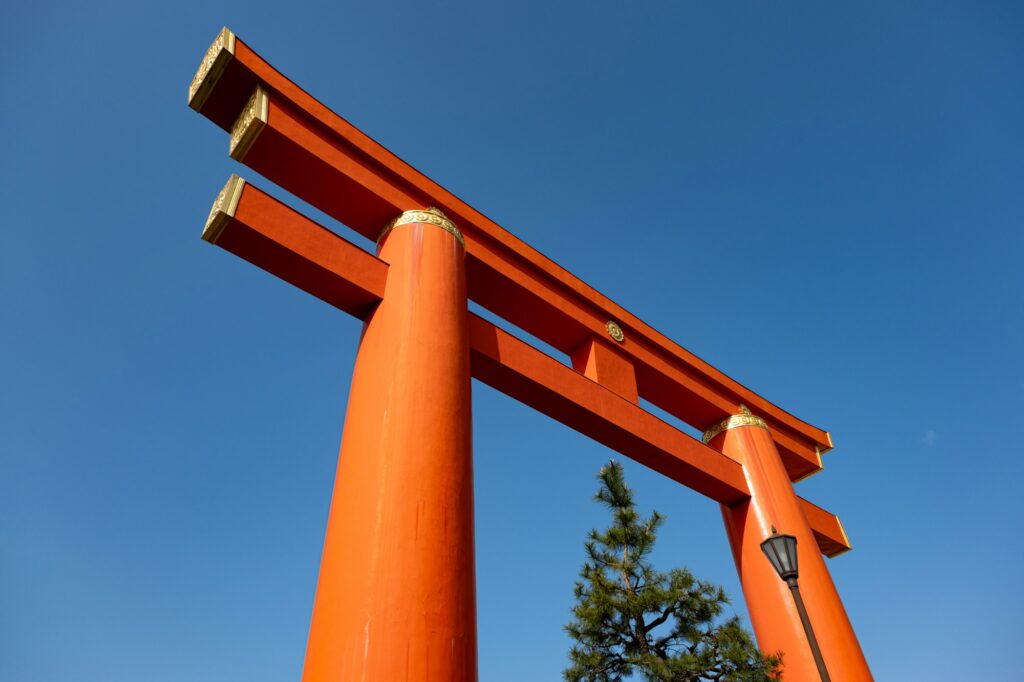
Jidai Matsuri 2026 takes place on Thursday 22 October in Kyoto. The parade of 2,000 participants in period costume sets off at noon from the Kenreimon Gate of the Imperial Palace and reaches Heian-jingu around 2.30pm, after roughly 4.5 km. You can watch for free from the pavement, or sit down for ¥5,000 to ¥15,500. If it rains, it moves to 23 October, and is cancelled if the 23rd is also unsuitable. Arrive an hour early.
Jidai Matsuri is unlike any other big Kyoto festival. There are no towering floats as at Gion Matsuri and no noisy street party: it is a slow, quiet procession in which local residents walk in costumes recreated from historical records. You watch history run backwards, from 1868 to the founding of the capital in 794. The real question is not whether to go, but where to stand so you are not on your feet for three hours. Here are the timings at each point along the route, paid and free spots compared, and a plan B if the weather turns.
What exactly is Jidai Matsuri?
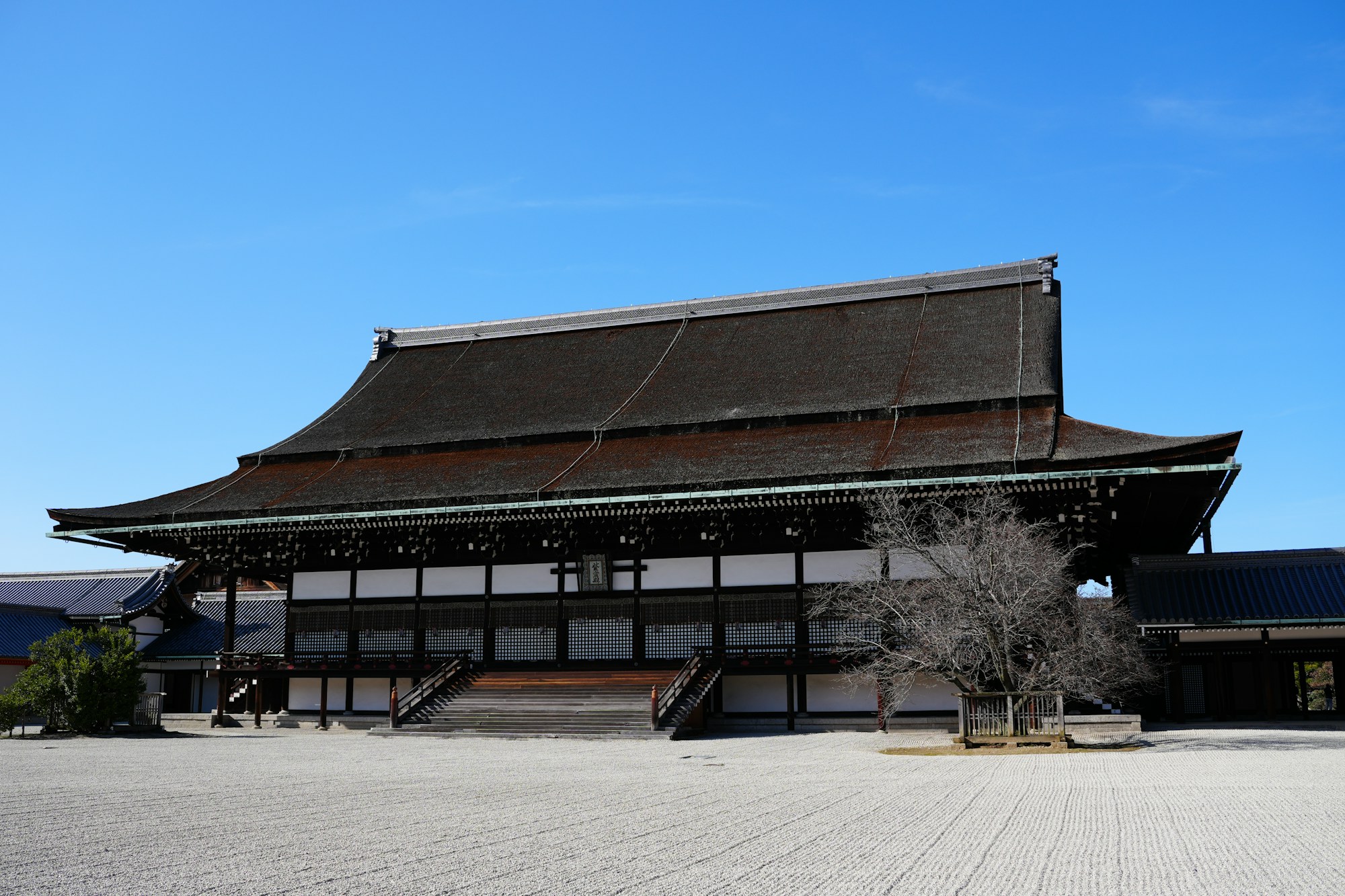
The “Festival of the Ages” at a glance
Jidai Matsuri (時代祭) is one of Kyoto’s three great festivals, alongside the Aoi Matsuri in May and Gion Matsuri in July. Every 22 October, about 2,000 participants in 20 groups and 8 eras cross the city, with around 70 horses and some 12,000 period costumes and objects, in a procession roughly 2 km long, according to Japan Guide. 22 October marks the date the capital, Heian-kyo, was founded in 794.
One common misconception: this is not a thousand-year-old ritual. The first parade took place in 1895, the year of the capital’s 1,100th anniversary and the inauguration of Heian-jingu. Kyoto, which lost its status as capital when the emperor moved to Tokyo in 1868-1869, was reasserting its identity. The participants are local residents, organised by neighbourhood and trade under the Heian Koshakai association.
What sets it apart
- A parade you read backwards: the Meiji Restoration leads the way, the Enryaku era (the founding of the capital) closes it.
- Museum-grade costumes: armour, twelve-layer court kimonos, ox-drawn carts, mounted archers.
- Smaller crowds than Gion: a free front row is still possible in many places, according to the local outlet Honmamon Kyoto.
The eight eras, in parade order
- Meiji Restoration (1868): the Yamakuni-tai fife-and-drum band opens the procession, a handy audio cue that it is coming.
- Edo (1603-1868): daimyo processions and women of Edo.
- Azuchi-Momoyama (1568-1603): the age of Nobunaga and Hideyoshi.
- Muromachi (1336-1573).
- Yoshino: the Southern Court, with Kusunoki Masashige.
- Kamakura (1185-1333): mounted archers (yabusame) from the Jonan group.
- Fujiwara: court ladies of the late Heian period, including Murasaki Shikibu, Sei Shonagon and Ono no Komachi.
- Enryaku: the era of Emperor Kanmu, founder of the capital.
Two phoenix palanquins (hoiren) close the parade. They carry the spirits of Emperor Kanmu and Emperor Komei, the last emperor to have lived in Kyoto, who was enshrined there in 1940. If you want to compare with the other two great festivals:
| Festival | Date | Nature | Atmosphere |
|---|---|---|---|
| Aoi Matsuri | 15 May | Court procession, about 500 participants | Refined, dignified |
| Gion Matsuri | July (parades on the 17th and 24th) | 33 monumental floats | Spectacular, very busy |
| Jidai Matsuri | 22 October | Living history, about 2,000 participants | Contemplative, thinner crowds |
For a fuller look at the July festival, read our guide to Gion Matsuri in Kyoto. And don’t mix it up with the Jidai Matsuri in Tokyo (Asakusa, in November): that is a different event.
Date, times and route of the 2026 parade
According to the Kyoto City Tourism Association, the parade takes place on Thursday 22 October 2026. It is not a public holiday, so crowds are lighter than at a weekend, but commuter traffic around Karasuma is still heavy. The procession leaves the Kenreimon Gate at 12:00 noon and the head of the parade is due at Heian-jingu around 2.30pm. The route is about 4.5 km: Kenreimon, Sakaimachi Gate, Marutamachi-dori, Karasuma-dori southbound, Oike-dori, Kawaramachi-dori, Sanjo-dori and Sanjo Ohashi bridge, then Jingu-michi to the great torii.
Passing times at each point
| Point on the route | Head of the parade passes |
|---|---|
| Kenreimon Gate (start) | 12:00 noon |
| Sakaimachi Gate (Kyoto Gyoen) | about 12:15pm |
| Karasuma Marutamachi | about 12:30pm |
| Karasuma Oike | about 12:50pm |
| Kawaramachi Oike | about 1:20pm |
| Kawaramachi Sanjo | about 1:30pm |
| Sanjo Ohashi bridge | about 1:40pm |
| Start of Jingu-michi | about 2:10pm |
| Heian-jingu (finish) | about 2:30pm |
These times are for the head of the procession. According to the official figures, it takes about 2 hours for the whole parade to pass a fixed point. Some blogs mention five hours: that is the length of the group’s whole journey, not the time you will spend in front of one spot.
In the morning, rituals take place at the shrine and then in front of the Palace (Gyozaisai offerings around 10:30am, visible from the park). They are barely open to the public, if at all, and the exact times vary by source, so don’t build your day around them.
Where to stand to see the parade
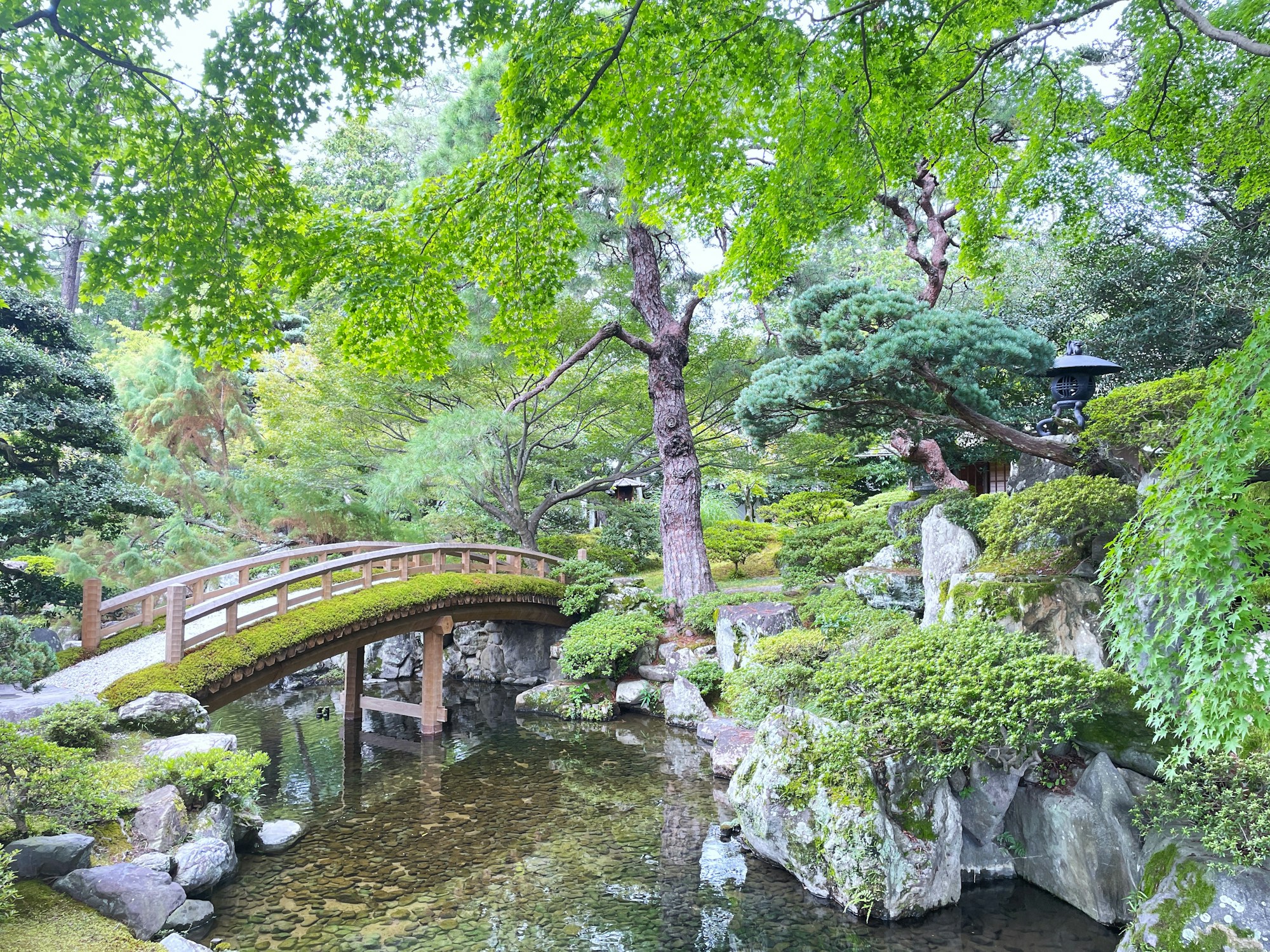
The best free spots
You can watch the parade for free from the pavement along the whole route, with no ticket or booking. These are the spots recommended by local sources (Honmamon Kyoto, SelfGuide Japan, Kanpai).
- The participants’ waiting area in Kyoto Gyoen (before noon): the performers gather more than two hours before the start. You see costumes, horses and ox-drawn carts up close, in a calm setting. It is the best spot for photographers.
- Behind the paid rows in Gyoen: less comfortable, but the view is still very decent.
- Oike-dori: an avenue about 50 m wide, with broad pavements and the metro close by. The west end, on the Karasuma side, is quieter than the east end.
- Sanjo Ohashi bridge: a view with the Higashiyama hills in the background.
- Jingu-michi: the final straight to the great red torii of Heian-jingu, less crowded than the centre according to SelfGuide Japan.
Arrive at least 1 hour before the parade passes (2 hours if you want to take photos), and no later: French-language sources say 1.5 hours. Bring water and a snack, as stalls are rare along the route. Add a warm layer: temperatures drop below 15 °C around 3.30pm, according to Rojico. Sort out the toilets beforehand, as queues are long in the Gyoen.
The three paid seating zones compared
The Kyoto tourism association offers about 6,800 numbered seats, all reserved, with an official guide and a commemorative map. They are spread over three zones. The “which zone for which visitor” reading below is an editorial synthesis that cross-checks the official timings and travel-blog feedback, not official data.
| Criterion | Kyoto Gyoen | Oike-dori | Jingu-michi |
|---|---|---|---|
| Seats | about 4,100 | about 1,400 | about 1,300 |
| Head of parade passes | 12:00 noon | about 1:20pm | about 2:20pm |
| Setting | Park, gravel, trees, Kenreimon Gate | Big city avenue | Avenue leading to the Heian-jingu torii |
| Access | Marutamachi or Imadegawa metro | Karasuma Oike metro (2 lines), easiest from the station | Tozai line or Keihan Sanjo, then a walk |
| Best for | The most choice, free afternoon | Easy access, middle of the route | The finale in front of the shrine |
Is it worth paying for a seat?
For: you sit down, you don’t wait two hours on your feet (the real cost of going free), you are certain to see the parade, and wheelchair spaces exist at Gyoen and Oike at the same price. It is also more comfortable for children. Against: the chairs are lined up without a raised platform, so a tall neighbour can block your view. You don’t choose your exact spot within the zone. Umbrellas are banned even when seated, so a poncho is essential if it rains. On Tripadvisor, some travellers rate the seat “not worth it” because the view from the street was good, while others find the parade a little monotonous.
Our take: pay if you are travelling as a family, if you don’t want to stand and wait, or if you want the English commentary on the Otenmon-mae seats. Otherwise, arrive early and stay free.
A two-stage plan for viewing
The head of the parade takes about 2.5 hours to reach Heian-jingu. On paper, you can watch the start at Marutamachi around 12:30pm, then take the metro (Karasuma line, then Tozai) to catch the finish on Jingu-michi around 2:20pm. It is doable, but platforms and pavements are packed, and no official guide recommends this route. The safest option is still to pick one spot and stay put for the two hours the parade takes to pass.
Booking a seat: prices and pitfalls
| Seat type | Front row | 2nd row and beyond |
|---|---|---|
| General (Gyoen, Oike, Jingu-michi) | ¥7,500 (about €41) | ¥5,000 (about €28) |
| Manabi (Gyoen, Japanese commentary on your smartphone) | ¥10,500 (about €58) | ¥8,500 (about €47) |
| Otenmon-mae (Jingu-michi, commentary through loaned earphones) | ¥15,500 (about €86) | ¥13,500 (about €75) |
Conversions are approximate (about ¥181 to €1 in September 2026): recalculate them when you pay. For Otenmon-mae seats, the commentary is advertised in English (and Japanese), and the official English page also mentions Chinese: check the official seating page.
Where and how to buy
- 2026 timeline: an early lottery from 10 to 17 July (new this year), then general sale open since Tuesday 8 September at 10am, Japan time.
- Ticket Pia online (registration required, Google Pay listed on the English page) or Seven-Eleven with code P 661-579.
- Maximum 9 tickets per purchase. Seats are allocated in order of request, with no choice of position.
No public source gave stock levels as of 28 September, so don’t assume seats are or aren’t left, and check directly on Ticket Pia. Japanese blogs point out that the best seats, in the front row at Gyoen, go at the lottery or on the first day of sale.
As a curiosity, The Mitsui Kyoto hotel sells seats in front of the Otenmon gate at ¥18,000 per person, reserved for its guests and limited to 21 people, according to the hotel’s website.
Getting there, where to stay and budget
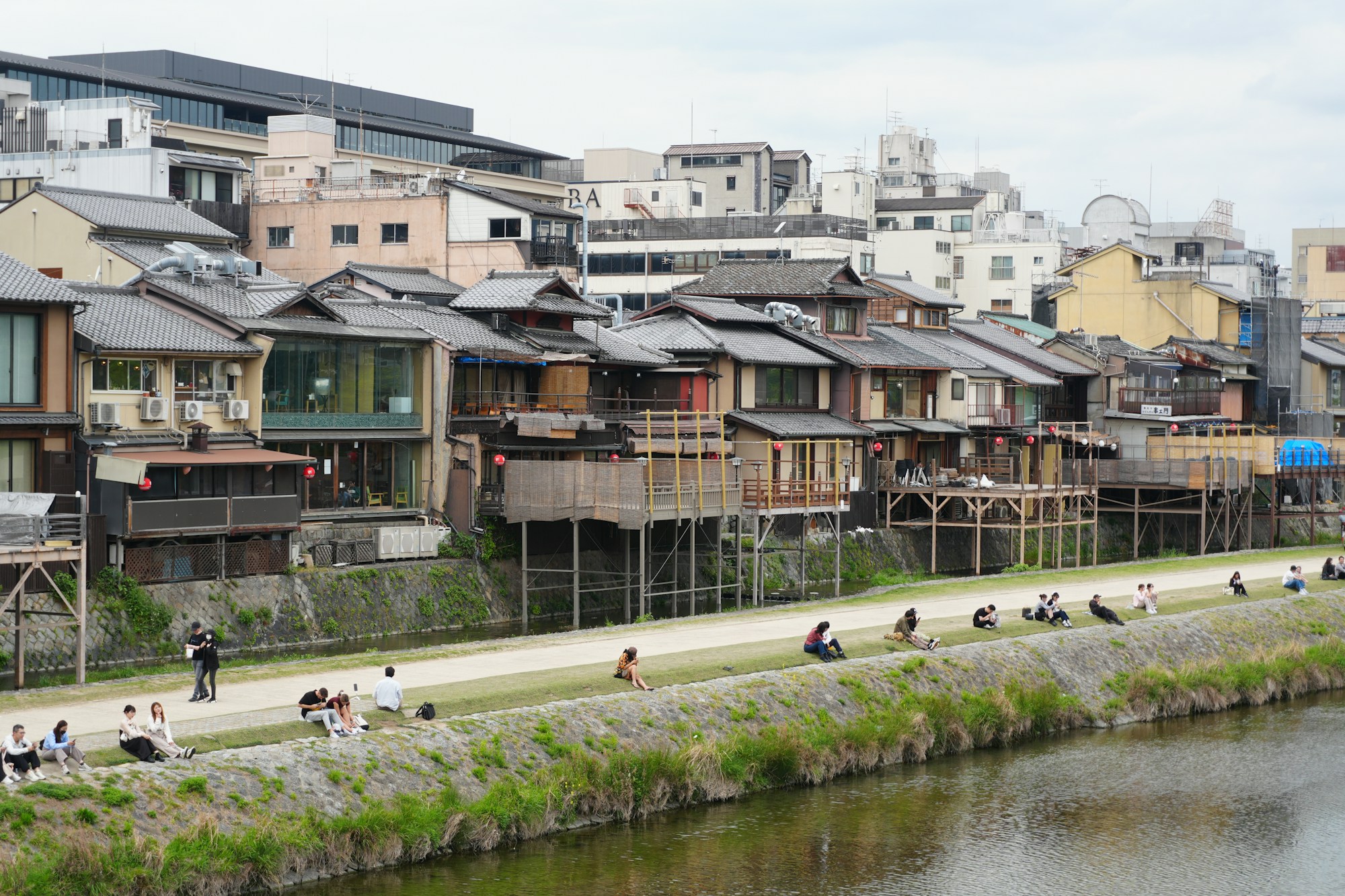
Metro and walking, nothing else
From Kyoto Station, take the Karasuma metro line (station K11): Karasuma Oike is about 5 minutes away for ¥220, with a train roughly every 10 minutes. For the start, get off at Marutamachi (5 minutes’ walk from the Gyoen) or Imadegawa. For the finish, take the Tozai line towards Keage or Jingu-Marutamachi, about 10 minutes’ walk from Heian-jingu, or the Keihan line to Sanjo (about 15 minutes’ walk). Buses and cars are heavily disrupted in the centre (Karasuma, Oike, Kawaramachi): exact restrictions could not be verified as of 28 September, so stick to the metro and walking.
Indicative budget for the day
- Without a seat: about ¥440 for a return metro trip from the station, plus a snack. Allow ¥1,500 to ¥2,500 in all (about €8 to €14).
- With a standard seat: add ¥5,000 to ¥7,500 (about €28 to €41).
- Heian-jingu’s Shin-en garden after the parade: ¥600 per adult, ¥300 per child (about €3 and €1.50). The shrine grounds themselves are free.
For accommodation, the centre (Karasuma, Kawaramachi) and Okazaki (near the finish) are the most convenient. In late October, expect around ¥14,000 to ¥24,000 a night mid-range, according to Japan Activity, and book 4 to 6 months ahead. Kyoto’s accommodation tax was raised on 1 March 2026: from ¥200 a night below ¥6,000 up to ¥10,000 from ¥100,000.
For entry to Japan, British citizens can get a visa on arrival for tourism for up to 90 days, and your passport must be valid for the length of your stay, according to GOV.UK. Check the rest of the preparation in our complete Japan 2026 guide (in French) and the summary of changes for tourists (in French).
The evening, and plan B if the weather blocks you
Kurama no Hi Matsuri, the fire festival the same evening
On the evening of 22 October, the Kurama no Hi Matsuri, the fire festival of Kurama village north of Kyoto, also takes place. It is free, with no seating and a dense crowd. Based on the 2025 edition (recheck for 2026), the bonfires start around 6pm, the torches in front of the Sanmon gate around 8pm, and the last Eizan train leaves around 11.25pm. SelfGuide Japan advises leaving the parade around 2pm to reach Kurama around 4pm. The 1-day Ee Kippu pass costs ¥1,200 (the Japan Rail Pass is not valid on it). It is a genuine choice: either you stay in Kyoto after the parade, or you head up to Kurama. It is not suitable for young children.
If the parade is postponed or cancelled
The postponement is decided around 7am. Plan a buffer day, or a plan B: the Heian-jingu garden and the Okazaki museums, or an experience that extends the theme of costume and tradition. A tea ceremony in a kimono, for example, can be booked independently of the parade. For the city’s other big event of the season, see our guide to Gozan no Okuribi in Kyoto.
Practical info before you go
Get your map, your Ticket Pia tickets and the morning weather update as soon as you land, without hunting for a local SIM card.
Activate before you leaveMedical costs, and more depending on the plan you choose: worth having for a trip booked months in advance. Check the terms before you buy.
Online quoteFrequently asked questions about Jidai Matsuri 2026
When is Jidai Matsuri 2026?
Thursday 22 October 2026. The parade leaves the Kyoto Imperial Palace at noon and reaches Heian-jingu around 2.30pm. In case of rain it moves to 23 October, and is cancelled if the 23rd is also unsuitable, according to the Kyoto City Tourism Association.
How long does the parade last?
About 2 hours for the whole procession to pass a fixed point. The head of the parade takes about 2.5 hours to travel from the Palace to the shrine.
Do you need to book to see Jidai Matsuri?
Not to watch from the street, which is free. Yes for seats (from ¥5,000 to ¥15,500), on sale since 8 September 2026 through Ticket Pia or at Seven-Eleven. Check availability directly, as it was not known on 28 September.
Where can you stand for free to watch the parade?
The participants’ waiting area in Kyoto Gyoen before noon, western Oike-dori, Sanjo Ohashi bridge or Jingu-michi. Arrive at least an hour early, two if you want to take photos.
How much do the paid seats cost?
¥5,000 from the second row and ¥7,500 in the front row (about €28 and €41). Manabi seats cost ¥8,500 and ¥10,500, Otenmon-mae seats ¥13,500 and ¥15,500.
What happens if it rains on 22 October?
The parade moves to 23 October, and is cancelled if the 23rd is also bad. The decision is announced around 7am on the morning itself. Tickets stay valid on the 23rd with no refund, and are only refunded if the parade is cancelled.
How do you get to the parade from Kyoto Station?
Take the Karasuma metro line to Marutamachi (start) or Karasuma Oike, about 5 minutes for ¥220. For the finish, take the Tozai line towards Keage or Jingu-Marutamachi, then walk about 10 minutes.
Can you see Jidai Matsuri and Kurama no Hi Matsuri on the same day?
Yes, but it is demanding. SelfGuide Japan advises leaving the parade around 2pm to reach Kurama around 4pm. The last Eizan train left around 11.25pm in 2025: check the 2026 timetable.
Is Jidai Matsuri suitable for children?
Yes, especially from a seat: the parade is slow and quiet. Watch out for the wait and the cold late in the day.
Do British visitors need a visa for Japan?
Not in advance for tourism: British citizens can get a visa on arrival for up to 90 days, according to GOV.UK. Your passport must be valid for your whole stay.
Sources
- Kyoto City Tourism Association, seating: date, prices, sales calendar, rules
- Kyoto City Tourism Association, news of 6 July 2026: early lottery
- Japan Guide: procession figures
- e-Kyoto: history and running order
- Honmamon Kyoto: free viewing spots
- SelfGuide Japan (in French): viewing tips and Kurama
- The Mitsui Kyoto: hotel seats
- GOV.UK, Japan travel advice: typhoon season
- GOV.UK, Japan entry requirements: visa on arrival for British citizens
- Time Out Tokyo: 2026 foliage forecast
- Japan Activity: accommodation and weather in October
Information checked on 28 September 2026. Programme, times and availability may change: cross-check with kyoto.travel on the morning of 22 October.

Plan your trip with Pixidia
Pixidia learns how you travel and helps you build a trip that truly fits you and everyone coming along.
Open the planner