

2026 is undoubtedly the best year of the decade to travel to Norway. The Sun is at the peak of its activity cycle — the highest in eleven years according to NOAA — which multiplies the chances of witnessing spectacular northern lights against a backdrop of snow-covered fjords and fishing villages. Two weeks is enough to travel from the Arctic Circle to the south-western fjords, from Tromsø to the Lofoten Islands, passing through the UNESCO World Heritage Geirangerfjord. Here is the complete, sourced and illustrated itinerary for an unforgettable journey through Norway.
1. Tromsø: the northern lights capital
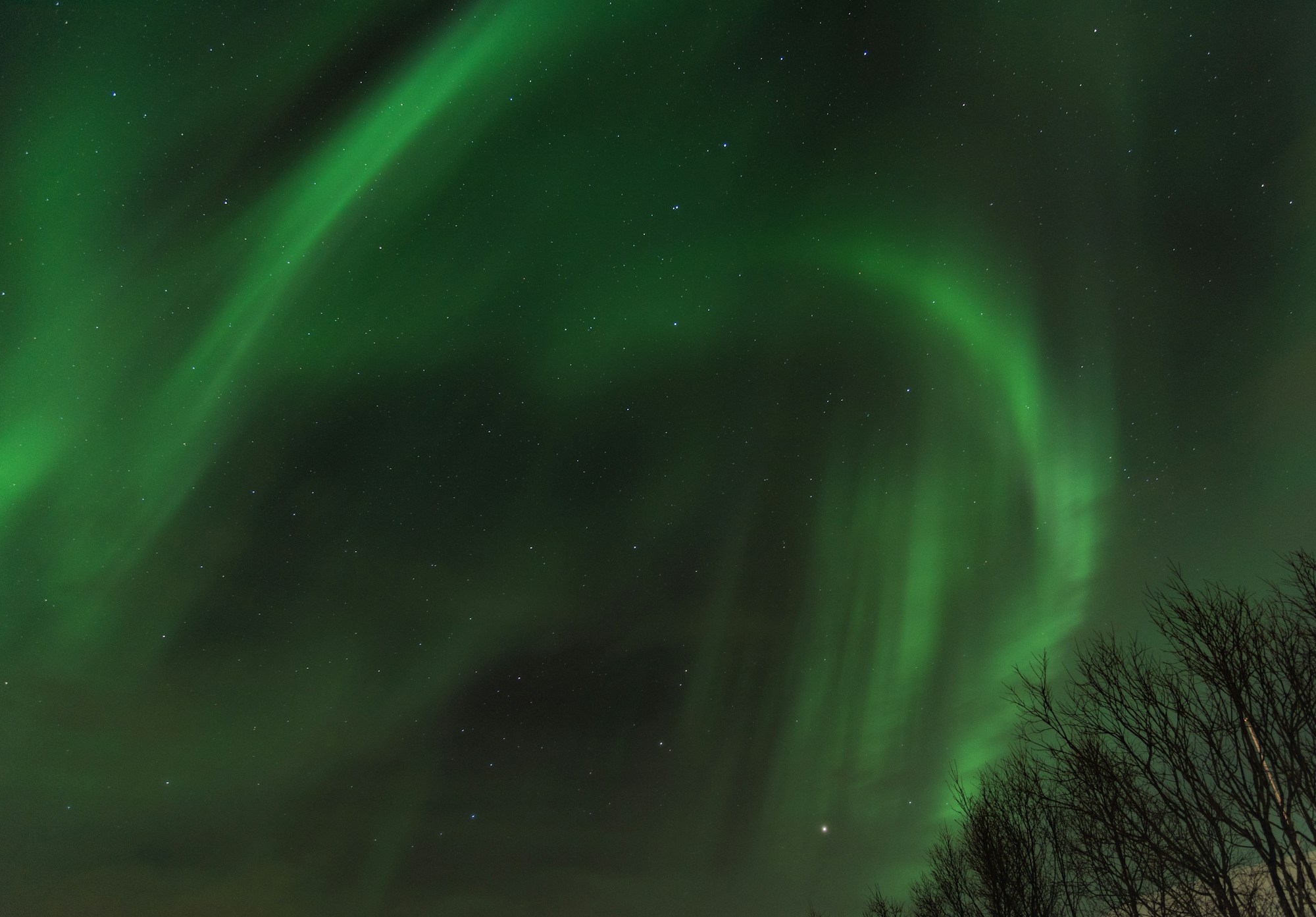
Tromsø — 69°N, beyond the Arctic Circle
Considered the northern lights capital, Tromsø is the largest city in northern Norway. Located directly under the auroral oval — an invisible ring around the magnetic North Pole where aurora activity is strongest — it statistically offers some of the best viewing opportunities in the world. According to Hurtigruten, winter 2025–2026 is particularly favourable: since 2024, we have been experiencing a solar activity peak that will continue throughout 2026.
Beyond aurora hunting, the city is packed with activities: visit the Arctic Cathedral with its monumental stained glass windows, go dog sledding in snowy forests, discover Sami culture by learning about reindeer herding, or spend a night in a lavvu (traditional tent). Aurora activity peaks typically between 10pm and midnight, when darkness is total and solar activity is at its highest, notes Vizeo.
Must-see in Tromsø
- Guided northern lights excursion (€80–120/person)
- Arctic Cathedral and its 140 m² stained glass window
- Storsteinen cable car for a panoramic view of the city
- Arctic Museum (Polaria) on the polar ecosystem
- Dog sledding or snowshoe safari at night
2. The Lofoten Islands: the archipelago of all dreams
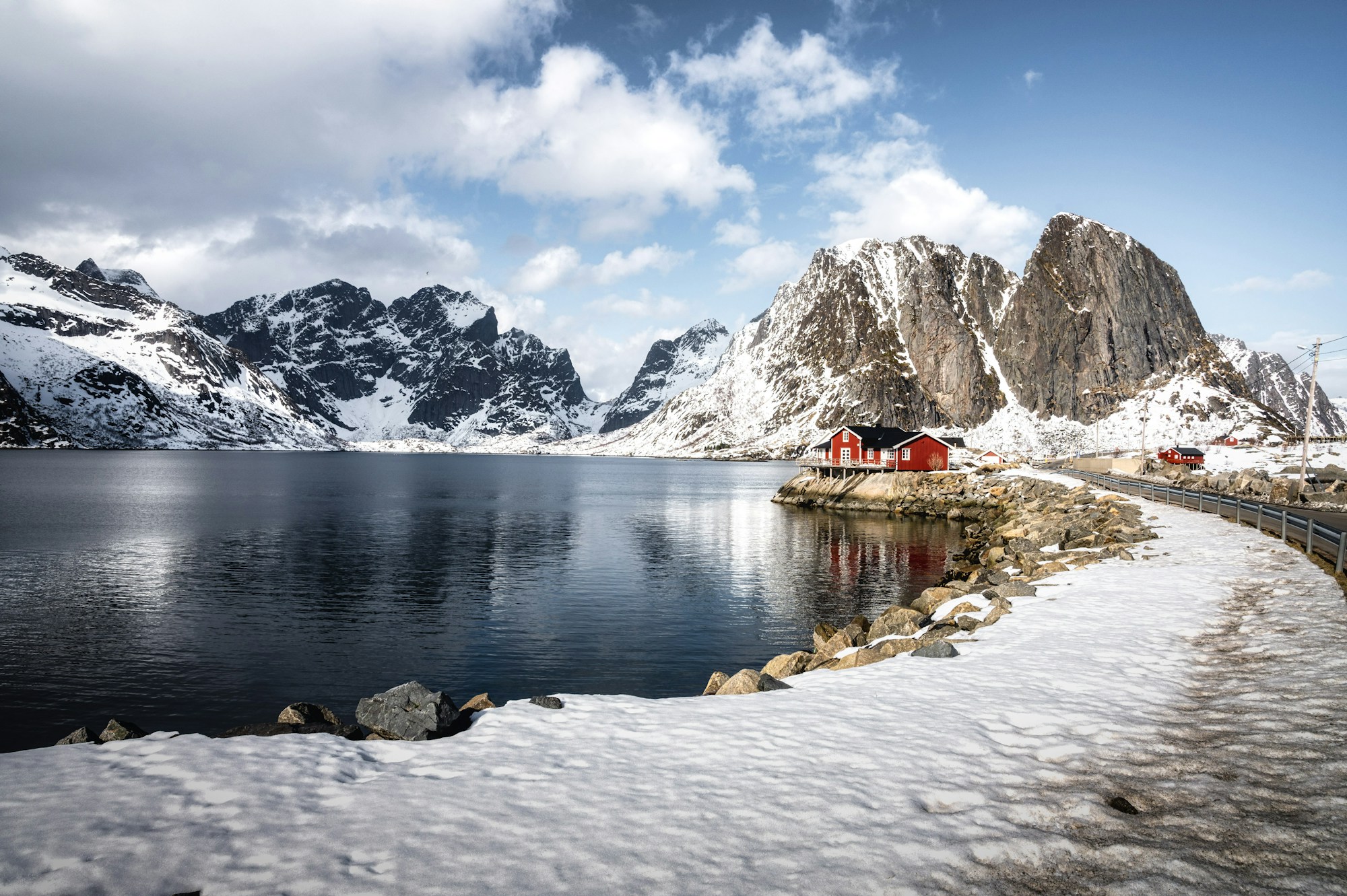
Lofoten — Above the Arctic Circle, between mountains and Arctic Sea
Nestled in the heart of the Arctic Circle, this archipelago of around 150 km offers breathtaking landscapes: jagged snow-capped peaks, emerald-green fjords, and fishing villages with red cabins (the famous rorbuer) suspended above the water. According to WeRoad, the low level of light pollution makes it one of the best spots in the world for northern lights. In summer, the midnight sun reigns from late May to mid-July without ever setting.
The only main road — the E10 — crosses all the islands to the village of Å, the last hamlet before the Arctic Ocean. Reine, ranked among the three most beautiful places in the world by Forbes, deserves an extended stop. The hike to the summit of Reinebringen (448 m, 2 hours return) offers the most photographed panorama in the entire archipelago, with reflections of mountains in the fjords. Set off at dawn to be alone at the summit.
Lofoten highlights
- Village of Reine and Hamnøy — postcard panoramas
- Silent cruise in the Trollfjord from Svolvær (€120/person)
- Skagsanden beach and Haukland beach (crystal clear water)
- Night in a traditional rorbu by the fjord
- RIB boat safari to observe white-tailed eagles
The Trollfjord: 100 metres wide, 1,100 metres high
The Trollfjorden is one of the most striking experiences in all of Norway: a fjord 2 km long and only 100 metres wide, flanked by vertical cliffs rising to 1,100 metres. The only way to access it is by boat from Svolvær, notes Âme Bohème. The silent electric cruise (1,390 NOK, ~€120) includes an underwater drone and a noiseless approach to the rocky walls — the captain cuts the diesel at the fjord entrance. Choose the twilight departure for exceptional photos.
3. Senja Island: the secret « Norway in miniature »
Senja — 2nd largest island in the country, still untouched by mass tourism
Two hours west of Tromsø, Senja brings together everything that makes Norway unique: deep fjords, jagged mountains, mirror lakes, sleepy fishing villages and breathtaking scenic roads — with ten times fewer tourists than the Lofoten Islands. Souvenirs du Voyage describes it as « one of Norway’s best-kept secrets ».
The highlight is the hike to the summit of Segla (640 m, 4 hours return from Fjordgard) offering a 360° panorama of the fjords and ocean — often compared to Trolltunga but without the crowds. The scenic route 862 follows the wild coastline to the viewpoint of Tungeneset, one of Norway’s most beautiful promontories according to The Outsiders.
Senja must-dos
- Segla hike (640 m) — sweeping views over the fjords
- Route 862: western fjords nearly free of tourists
- Tungeneset viewpoint at sunset
- Legal wild camping away from dwellings (Norwegian right of access)
4. Geirangerfjord & Ålesund: the classic south-western fjords
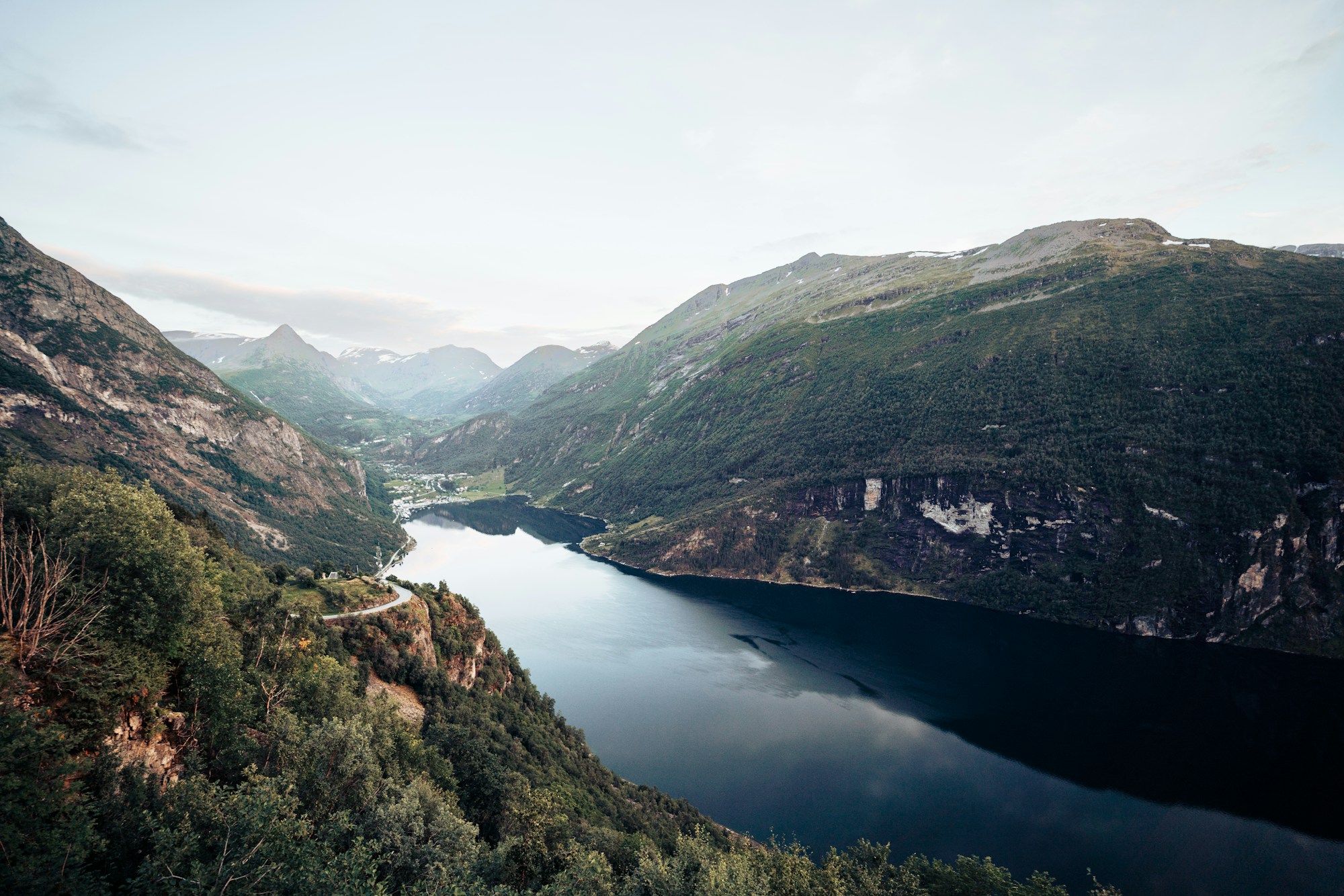
Geirangerfjord & Ålesund — UNESCO Heritage & Arctic Art Nouveau
A UNESCO World Heritage Site, the Geirangerfjord is the quintessential image of Norway: a 15 km fjord lined with majestic waterfalls such as the Seven Sisters (seven parallel streams cascading down) and the Suitor falling opposite. The abandoned farms clinging to the walls 300 metres above the water bear witness to the harshness of past life. Sail from Hellesylt or directly from Geiranger (€30–50/person), preferably on a Tuesday or Wednesday to avoid cruise ships that dock at weekends, advises Jean’s Factory.
Ålesund, 1h30 drive away, is an architectural gem: rebuilt after the 1904 fire, the entire city displays a unique Art Nouveau style in Europe. Climb the Aksla mountain viewpoint (418 steps) for a 360° view of the archipelago. The Troll Road (Trollstigen), with its 11 hairpin bends between vertiginous waterfalls, connects Åndalsnes to Ålesund from May.
Highlights of this stage
- Cruise on the Geirangerfjord between waterfalls and cliffs
- Visit Ålesund and its Art Nouveau architecture
- Troll Road (Trollstigen) — 11 hairpin bends
- Dalsnibba viewpoint (1,476 m) to see the fjord from above
5. Ålesund in pictures: the Arctic Art Nouveau city
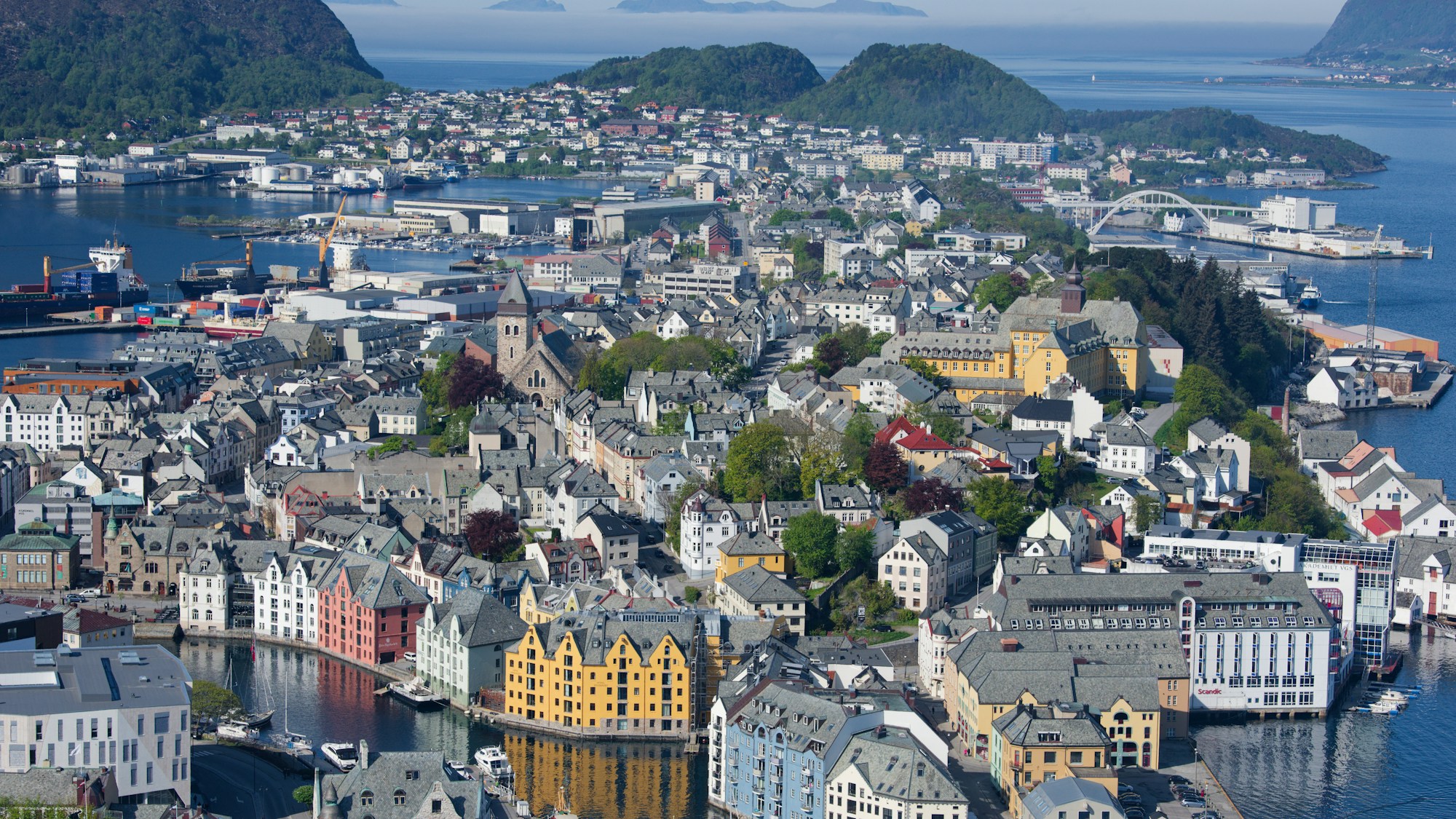
Ålesund — The city of islands and Art Nouveau
Built on several islands connected by bridges, Ålesund is unique in Europe: entirely rebuilt in Art Nouveau style after the 1904 fire, it displays a rare architectural consistency. The Brosundet district, with its former fishing warehouses transformed into trendy restaurants and hotels, is the perfect place for an evening out. The Art Nouveau Museum (Jugendstilsenteret) recounts this reconstruction in detail. From Ålesund, kayaking excursions in the surrounding fjords are possible year-round.
6. Vesterålen: the hidden paradise for whale watching
Vesterålen — Norway’s only year-round whale watching destination
Located north of the Lofoten Islands, the Vesterålen archipelago is the only destination in Norway where whales can be observed year-round, thanks to the proximity of the Bleik submarine canyon (Bleiksdjupet). From Andenes, large sperm whales can be observed at close range. In winter (November–February), orcas and humpback whales follow herring shoals into the fjords. According to Visit Norway, it is the most accessible place in the world to get close to sperm whales.
The ghost village of Nyksund, now a creative retreat with galleries and museums, is also worth a detour. Despite landscapes as spectacular as those of the Lofoten Islands, Vesterålen attracts far fewer tourists — a boon for those seeking authenticity.
Must-have experiences
- Whale safari from Andenes (sperm whales year-round)
- Orca and humpback whale watching (November–February)
- Nyksund village — from ghost town to artistic retreat
- Vesterålen scenic road — almost deserted
7. The ideal itinerary: 2 weeks in Norway
Here is the recommended programme for a winter version (October–March), optimised for northern lights. Adapt according to your departure season.
| Days | Stage | What to do |
|---|---|---|
| 1–2 | Tromsø | Arrival, Arctic Cathedral, first northern lights hunt, dog sledding |
| 3–4 | Lyngen Alps | Ski touring or snowshoeing, lodge with view of Lyngen fjord, northern lights |
| 5 | Road to Senja | Hike to the summit of Segla (640 m), panoramic views |
| 6 | Senja | Scenic route 862, Tungeneset viewpoint, western fjords |
| 7–8 | Road to Lofoten | Via Bodø + ferry (3h30) or internal flight with Widerøe. Check in at Svolvær |
| 9–10 | Svolvær & Trollfjord | Silent Trollfjord cruise, sea eagle safari, Skrova island |
| 11–12 | E10 road south | Henningsvær, Sakrisøy, Hamnøy, Reine, Reinebringen hike, village of Å |
| 13 | Vesterålen | Andenes, sperm whale safari, Nyksund |
| 14 | Return to Tromsø | Internal Widerøe flight from Leknes or Bodø. Departure. |
Indicative budget per person
According to Jean’s Factory, the average budget for 2 weeks in Norway ranges between €2,500 and €3,500 per person (flights, car hire, accommodation, meals). Tips to reduce the bill: wild camping is legal and free thanks to the Norwegian right of access (allemannsretten), self-catering halves the food bill, and all hikes are free.
Frequently Asked Questions about Norway in 2026
What is the best time to see the northern lights in Norway in 2026?
2026 is an exceptional year: we are at the peak of the solar cycle, the highest in 11 years according to NOAA. Northern lights are visible from late September to late March. Activity peaks between 10pm and midnight, with clear skies and a Kp index above 3. According to Hurtigruten, Tromsø and the Lofoten Islands offer the best viewing conditions in Europe.
Is a rental car absolutely necessary in the Lofoten Islands?
Yes, a car is essential in the Lofoten Islands. Public transport is virtually non-existent between sites of interest. Rental costs €60–90 per day depending on the season. Book several months in advance: availability collapses and prices skyrocket in high season (June–August). Pourquoi Pas Nous also recommends booking ferry crossings in advance.
Are northern lights guaranteed?
No, aurora viewing is never guaranteed. Even during periods of high solar activity, overcast skies are enough to ruin everything. The good news: in northern Norway, the weather changes very quickly, and a cloudy night can give way to a starry sky within a few hours. Some operators offer a free additional trip if no auroras appear. Check Aurora Maniacs for real-time forecasts.
How to travel between Tromsø and the Lofoten Islands?
Several options: internal flight with Widerøe from Tromsø to Leknes or Svolvær (1 hour, €80–150), or drive via Bodø + Bodø-Moskenes ferry (3h30, €50–90 with car). For the ideal circular itinerary, rent a car in Tromsø, drive through the Lofoten Islands over 5–6 days, then take an internal flight back from Leknes. Widerøe is the only airline serving small towns in the archipelago, notes Vizeo.
Can you see whales in the Lofoten Islands?
From mid-November to late February, orcas and humpback whales follow herring shoals into the Lofoten fjords. For guaranteed year-round viewing, head to Andenes in Vesterålen (2 hours from the Lofoten Islands): the Bleik submarine canyon attracts sperm whales year-round. Some operators even offer a guarantee — if no whales, a free additional trip, according to Visit Norway.
What budget should you plan for 2 weeks in Norway?
The average budget is €2,500 to €3,500 per person for 2 weeks, including international flights (€300–600), car hire (€60–90/day), accommodation (€80–150/night) and meals (€25–40/meal at a restaurant). To reduce costs: do legal wild camping (free), self-cater and enjoy all the free hikes. All hikes are freely accessible thanks to allemannsretten (Norwegian right of access).
What is a rorbu and how much does it cost?
A rorbu is a traditional fisherman’s cabin on stilts, directly above the water, typical of the Lofoten Islands. Formerly used by cod fishermen from the mainland, they have been renovated into tourist accommodations with all modern comforts. Expect to pay €100–200 per night depending on location and season. Staying in a rorbu at Reine or Hamnøy remains one of the most memorable experiences Norway can offer.
Which app should you use to hunt for northern lights?
Two apps are recommended: Norway Lights and SpaceWeatherLive for real-time forecasts. The Kp index (0 to 9) measures the intensity of magnetic disturbances — a Kp of 3 or more, clear skies, is generally enough to see northern lights from Tromsø or the Lofoten Islands. According to Voyage Avec Nous, the ideal is to get at least 30 minutes away from city lights.
Sources
- Futura Sciences — Northern Lights 2025–2026: the ideal time to explore northern Norway
- Hurtigruten — Best time and place to observe the northern lights in Norway
- Jean’s Factory — 2-week Norway itinerary: what to do and see?
- WeRoad — Group travel in Norway to the Lofoten Islands
- Vizeo — Northern lights in Norway: where and when to see them?
- Visit Norway — Northern lights in Norway (official)
- Visit Norway — Vesterålen (official)
- Âme Bohème — Trollfjord Cruise: the ultimate guide to discovering this Lofoten gem
- Souvenirs du Voyage — Senja Island: Norway’s favourite secret
- Pourquoi Pas Nous — Lofoten Budget 2025
- Travel to Norway — Ultimate Lofoten Islands Travel Guide 2026
- St Martin Week — 2026: the dream year for seeing northern lights
- Voyage Avec Nous — My tips for seeing northern lights in Norway
Research conducted on 22 February 2026
Ready to plan your Norway trip?
Two weeks in the fjords and the Lofoten Islands under the northern lights — it’s the trip of a lifetime. Discover itineraries created by our community of travellers and get inspired to prepare your Norwegian adventure on Pixidia.
Explore all Norway itineraries