
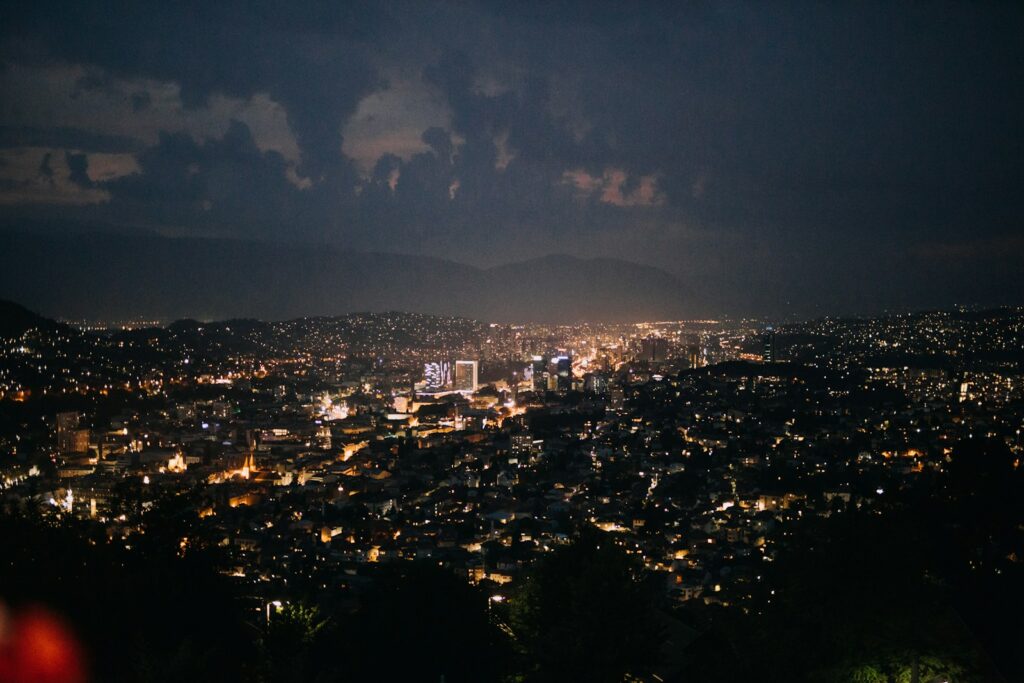
Transavia flies Paris-Orly to Sarajevo direct, twice a week on Mondays and Fridays, from 17 April 2026. The flight takes about 2h15, and the route is seasonal. Before booking, check fares, exact times and the season end date on transavia.com.
Verified on against the sources.
What if your next great discovery had a name you had never dared to pronounce? Sarajevo — the « Jerusalem of the Balkans » — has just entered the radar of French travellers with news that changes everything: Transavia is launching a direct flight Paris-Orly → Sarajevo from 17 April 2026. Two hours and fifteen minutes of flying, from €69, and you land in one of the most complex, most wounded, and most beautiful capitals in Europe.
Named best destination of 2025 by National Geographic readers, Sarajevo remains little-known among French travellers — and that is precisely its advantage, and yours. This complete guide takes you through its Ottoman alleyways scented with Bosnian coffee, up the slopes of Mount Trebević where the 1984 Olympic bobsled track is covered in street art, all the way to the Tunnel of Hope that tells the story of the longest siege in modern history. With a cost of living 31% lower than in France, Sarajevo is the adventure you’ve been looking for.
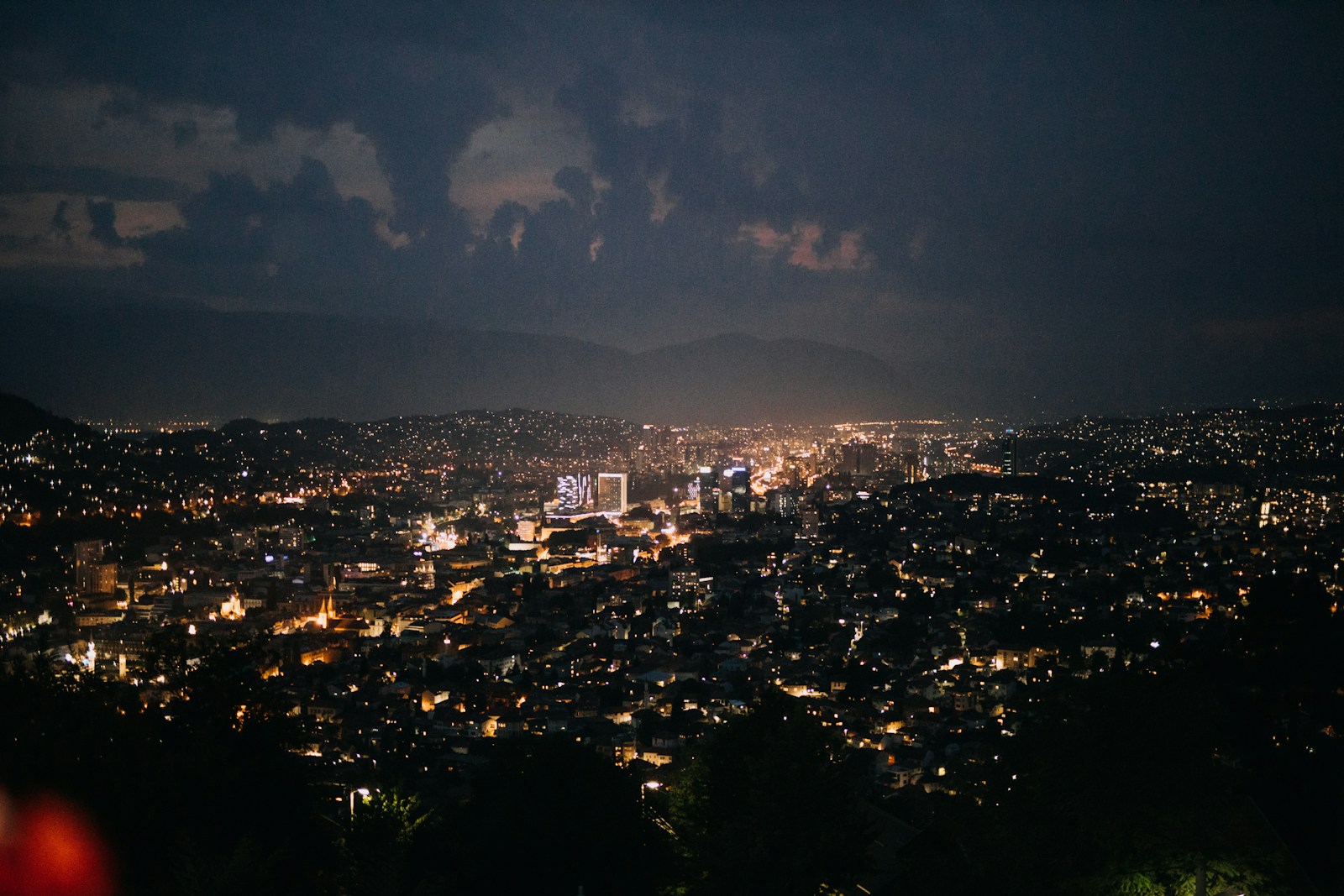
The Transavia direct flight Paris-Sarajevo: the big news for 2026
This is the event that reshuffles the deck for travellers flying from France. According to Ulysse.com, Transavia is launching a direct route Paris-Orly (ORY) → Sarajevo Butmir (SJJ) from 17 April 2026. The low-cost carrier thus becomes the only airline connecting Orly directly to the Bosnian capital.
According to Le Routard, this is one of ten new routes launched by Transavia for summer 2026. Taxis and regular buses connect the airport to the centre. The first flight falls exactly at the start of the best season: April to June, temperatures of 15–25°C, the city in bloom, fewer tourists.
Baščaršija: the living heart of Sarajevo
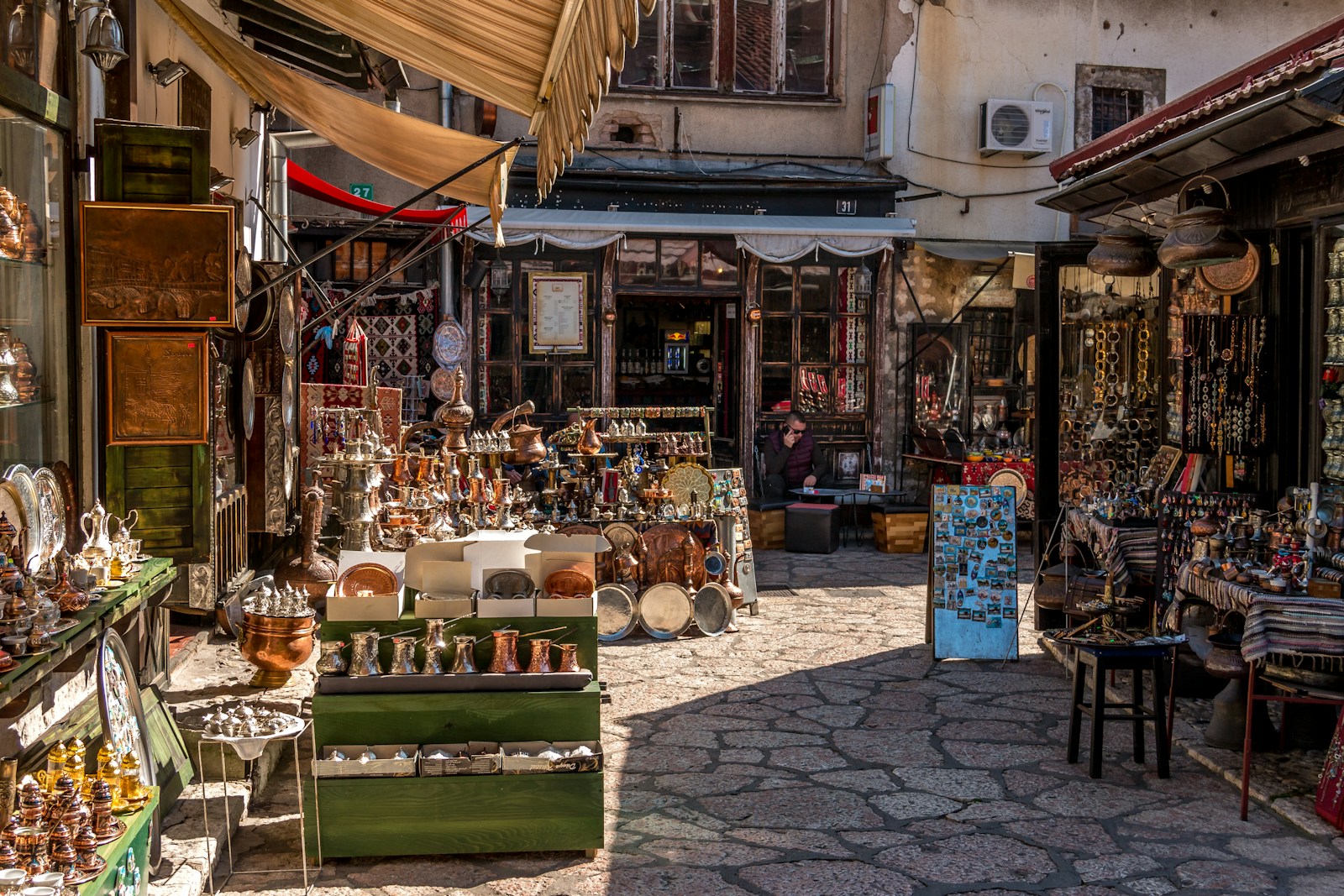
The Ottoman grand bazaar — the historic and vibrant soul of the city
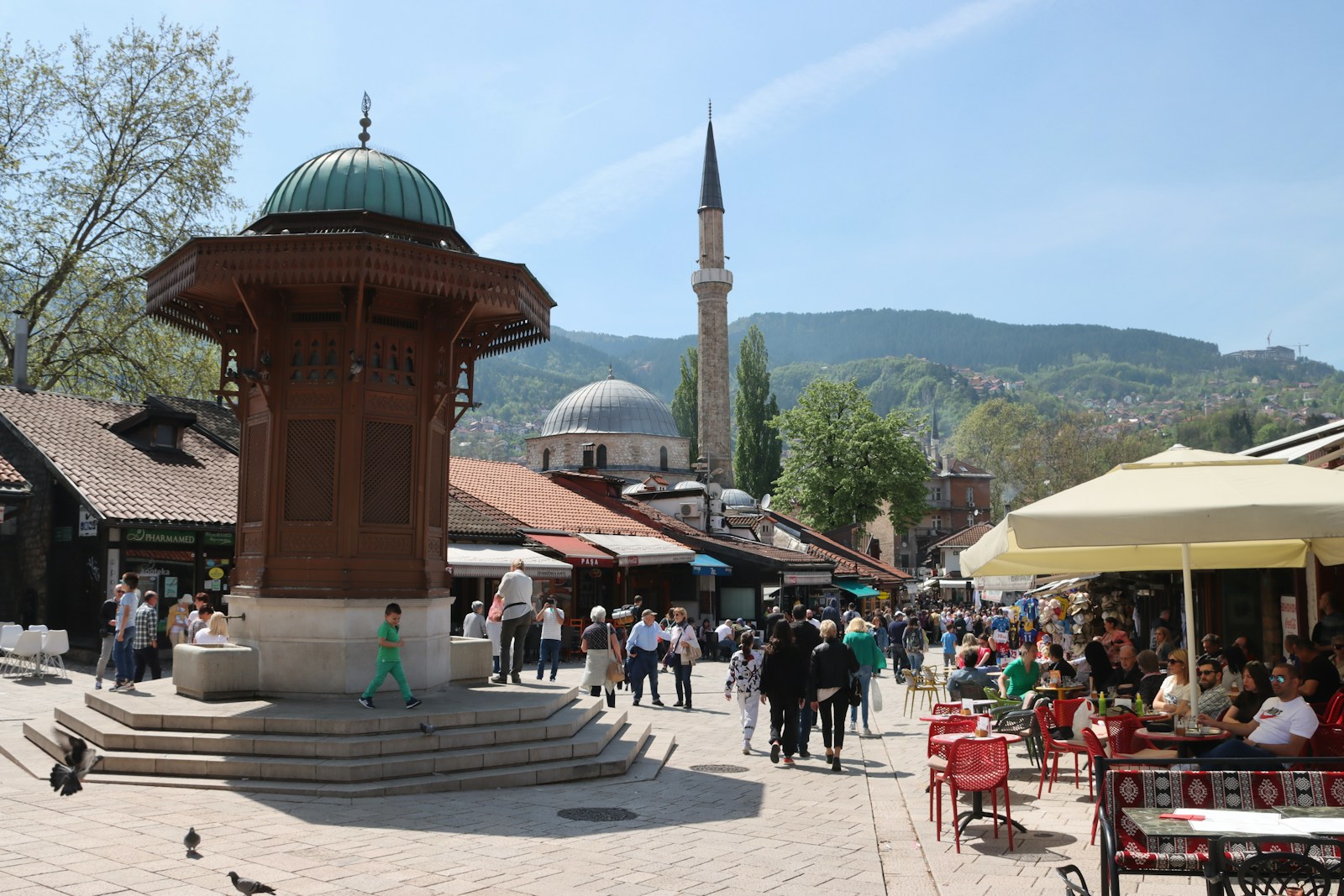
No visit to Sarajevo can begin anywhere other than Baščaršija — the Ottoman grand bazaar that forms the historic and vibrant heart of the city. Its name comes from the Turkish for « main market », and the reality lives up to it: according to Lonely Planet, the quarter is lined with stalls, a lively coppersmiths’ alley (kazandžiluk), grand Ottoman mosques, restaurants and welcoming cafés.
At the centre of the square stands the Sebilj fountain, an octagonal wooden monument erected around 1753 during the Ottoman Empire — an absolute symbol of Sarajevo. Nearby, the Gazi Husrev-beg Mosque (1531) is one of the finest in the entire Ottoman Balkans, with its adjacent medersa (Quranic school) still in operation. According to Balkans Courriers, Sarajevo is nicknamed the « Jerusalem of the Balkans » because a mosque, a Catholic church, an Orthodox church and a synagogue coexist within a few hundred metres of each other.
Must-do in Baščaršija
- Wander through the Ottoman alleyways and watch the copper craftsmen at work
- Sit by the Sebilj fountain with a Bosnian coffee (€1–2)
- Visit the Gazi Husrev-beg Mosque (free entry, modest dress required)
- Look for crafts made from bullet casings — a striking souvenir
- Try a baklava at Baklava dućan
Ferhadija Street and the Austro-Hungarian legacy
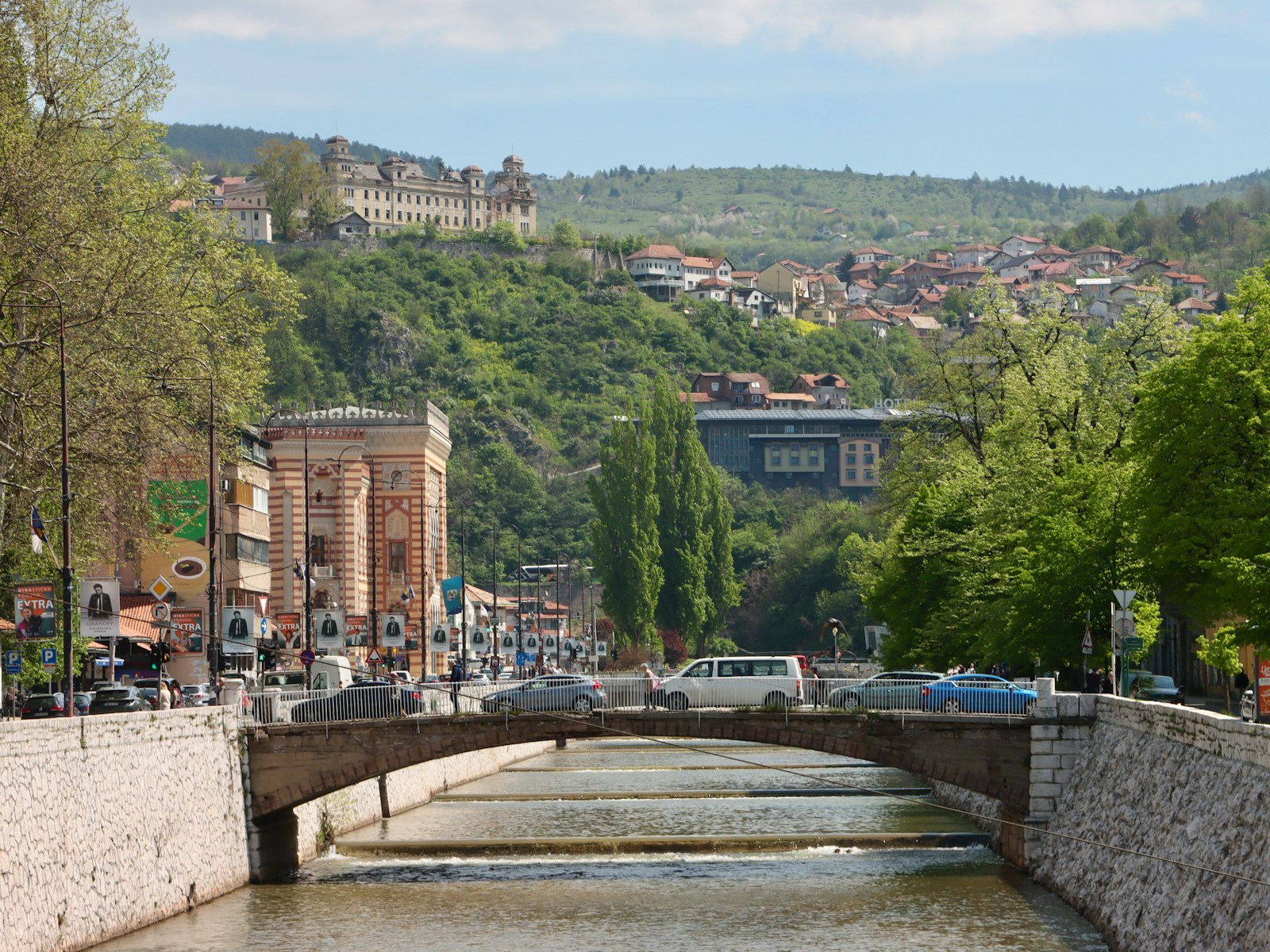
Ferhadija — where East meets West
Walking west from Baščaršija along Ferhadija Street transports you to another century — and another culture. According to Meet Bosnia, a marker engraved in stone on the pavement reads: « Sarajevo: Meeting of Cultures ». Standing on that precise spot and looking east, you see Istanbul; looking west, you see Vienna.
The Austro-Hungarian architecture lining the pedestrian boulevard is magnificent. The neo-Moorish Vijećnica (City Hall), built in 1896, is the crown jewel: destroyed during the war, its reconstruction completed in 2014 made it one of the most beautiful buildings in the entire region. Inside, a stained-glass dome illuminates visitors. Along the Miljacka river stands the Latin Bridge (Latinska ćuprija), the small stone bridge where on 28 June 1914, Archduke Franz Ferdinand of Austria was assassinated — triggering the First World War. An adjoining museum traces the context of this pivotal event.
Mount Trebević and the 1984 Olympic bobsled track
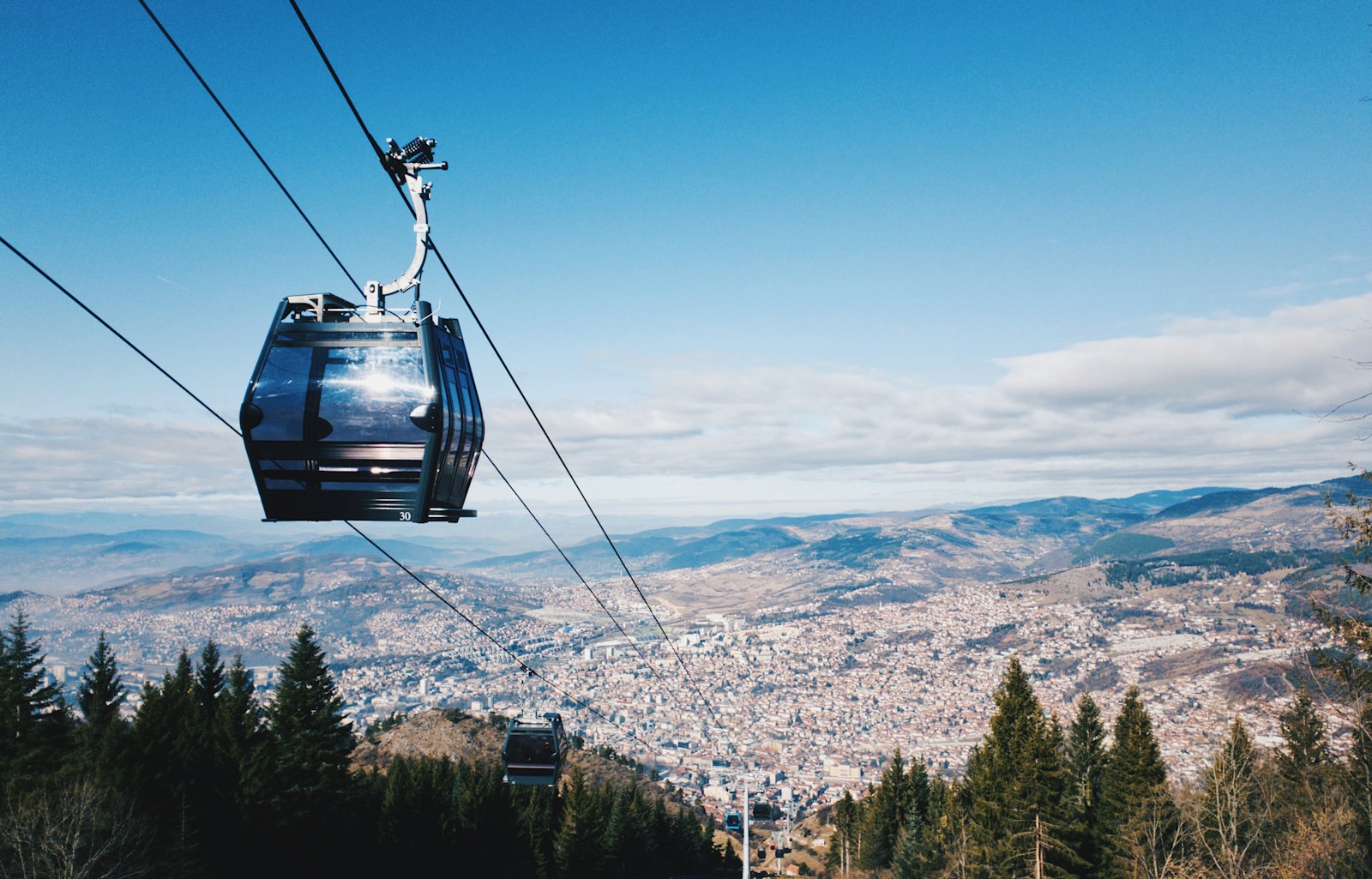
The cable car, the Olympic bobsled track and the panoramic views
Mount Trebević offers one of the most singular experiences in all of Europe. From the lower station, a few minutes’ walk from the Vijećnica, the cable car ascends in 10 minutes to the summit, offering a spectacular panoramic view over the entire valley of Sarajevo. According to Voyages et Vagabondages, the cable car at ~€10 return is the best investment of your stay.
From the upper station, a 10-minute walk leads to what remains one of the most unique and photogenic sites in Europe: the bobsled and luge track built for the 1984 Winter Olympic Games. According to Wikipedia, the 1.3-km track was damaged during the siege (used as an artillery position), then covered in vibrant street art, and fitted in 2025 with an « Olympic Story » educational trail featuring 13 panels with QR codes.
The Tunnel of Hope: memory of the siege
The Tunnel of Hope is the most moving experience of any visit to Sarajevo. During the siege (1992–1996), the longest siege of a capital in the history of modern warfare, this tunnel measuring 800 metres long, 1 metre wide and 1.60 metres high connected the encircled city to free territory, running beneath the UN-controlled airport. Built in 4 months and 4 days, it opened on 30 July 1993.
According to Destinations Europe, it linked the Dobrinja and Butmir districts, enabling the supply of food, medicines and humanitarian aid, and allowed residents to escape the city. Now a museum, it features an 18-minute film, war photographs, military equipment, uniforms and deeply moving testimonies. Visitors can still walk a few dozen metres into the original tunnel.
Bosnian gastronomy: ćevapi, burek and coffee
Ćevapi, burek, Bosnian coffee — the three pillars of Bosnian cuisine
Bosnian cuisine is one of the great culinary surprises of the Balkans. According to Voye Global, nestled between East and West, it reflects centuries of influences: Ottoman spices, Balkan soul and Austro-Hungarian indulgence.
Ćevapi are the national dish. These fingers of grilled minced meat (a blend of beef and lamb) are served in a somun (warm flatbread), with raw onions and kajmak (dairy cream). The legendary address: Ćevabdžinica Željo in the old town. Burek is similarly a religion: spiral flaky pastry baked in a cast-iron pan. In Sarajevo, burek strictly means meat filling; the cheese version is called sirnica, potato krompiruša, cheese-spinach zeljanica. Best addresses: Buregdžinica Bosna or Buregdžinica Sac.
| Dish | Description | Price | Recommended address |
|---|---|---|---|
| Ćevapi | Grilled minced meat in somun bread | €3–5 | Ćevabdžinica Željo |
| Burek | Meat spiral flaky pastry | €2–3 | Buregdžinica Bosna |
| Aščinica | Traditional Bosnian home cooking, dolma, sarma | €5–8 | ASDŽ |
| Bosnian coffee | Copper džezva + sugar cube + lokum | €1–1.50 | All of Baščaršija |
| Baklava | 10+ types of Ottoman pastry | €1–2 | Baklava dućan |
Day trip to Mostar and the Stari Most
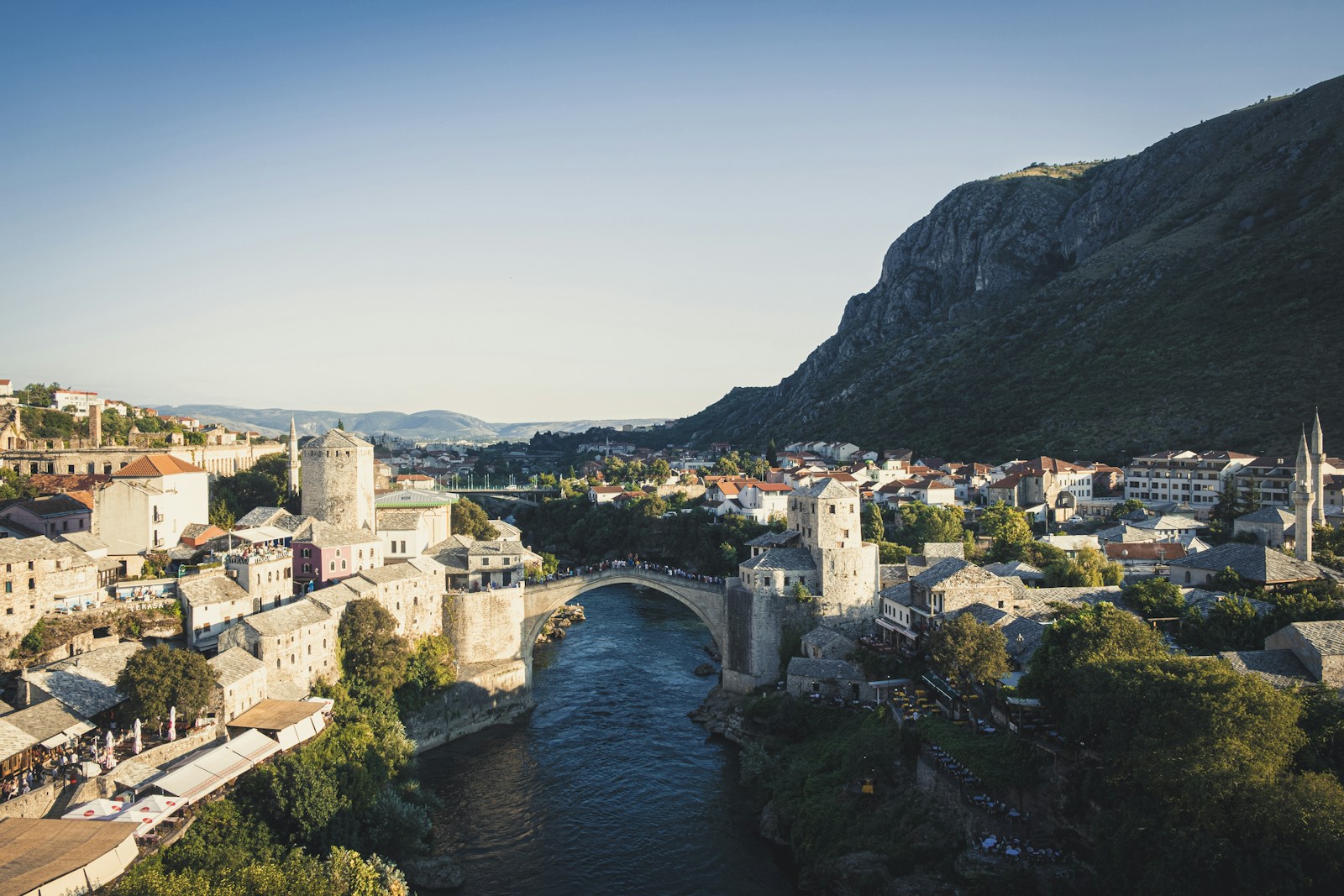
Stari Most — Mostar’s immortal bridge, symbol of reconciliation
Located 130 km south of Sarajevo (2 hours by bus or train), Mostar and its Stari Most (Old Bridge) are unmissable for any stay of four days or more. According to Génération Voyage, this bridge built in 1566 by Ottoman architect Mimar Hayruddin, destroyed in 1993 during the Bosnian conflict, was rebuilt in 2004 using traditional techniques and listed as a UNESCO World Heritage Site. Members of the Mostar Diving Club perform spectacular jumps from its centre — once enough tips have been collected.
For shorter stays (4–5 days), the best guided day trips from Sarajevo combine: Mostar, Počitelj (medieval fortress), Blagaj (source of the Buna river and dervish monastery), Jablanica and the Kravice waterfalls. According to Funky Tours, these tours arrive in Mostar around 15:00–16:00, when day-trippers have left — the city is yours.
Budget and accommodation in Sarajevo
According to Où et Quand, the cost of living in Sarajevo is on average 31% lower than in France. Eating at a restaurant costs 52% less. It is one of the most affordable European capitals without sacrificing charm or gastronomy.
| Profile | Daily budget on-site | Accommodation | Examples |
|---|---|---|---|
| 🎒 Budget traveller | €20–30 | Hostel (€13/night) | Balkan Han Hostel |
| 🧳 Mid-range | €40–60 | 3-star hotel (€40–50/night) | Hotel Kandilj, Hotel Sana |
| 🏨 Comfort | €80–120 | 4–5 star hotel (up to €143) | Swissôtel Sarajevo |
Recommended itinerary: 4 days in Sarajevo
| Day | Programme |
|---|---|
| Day 1 | Arrival, settle in Baščaršija. Sebilj fountain, Gazi Husrev-beg Mosque, Ottoman alleyways. Dinner with ćevapi at Željo. |
| Day 2 | Ferhadija → « Meeting of Cultures » marker → Vijećnica (stained-glass dome). Latin Bridge and Franz Ferdinand museum. Kovači district and war cemeteries. Evening in Marijin Dvor. |
| Day 3 | Morning: Trebević cable car + 1984 Olympic bobsled track (1.3 km). Afternoon: Tunnel of Hope (War Tunnel Museum). |
| Day 4 | Full-day excursion: Mostar + Blagaj + Počitelj + Kravice waterfalls (guided tour €25–60). |
FAQ — Everything you need to know before visiting Sarajevo
When is the Transavia Paris-Sarajevo flight available and at what price?
The Paris-Orly → Sarajevo Transavia flight is available from 17 April 2026 until 23 October 2026. The route operates twice a week (Mondays and Fridays), departing Paris at 19:55 for a 22:25 local time arrival. Fares start at €69 one-way. Bookings are open at transavia.com.
Do I need a visa to visit Bosnia-Herzegovina?
No, no visa is required for French citizens for stays under 90 days. A valid national ID or passport is sufficient. Note that French national ID cards issued between 2004 and 2013 with automatic five-year extensions may be refused at the Bosnian border — use your passport if in doubt.
What is the best time to visit Sarajevo?
The ideal period runs from April to June and September to October: pleasant temperatures of 15–25°C, the city in bloom in spring, fewer tourists than in midsummer. The first Transavia flight on 17 April 2026 falls at the very start of this ideal window. Winter (December–March) offers a unique atmosphere and access to nearby ski resorts (Jahorina, Bjelašnica, which hosted the 1984 Olympic ski events).
What currency is used in Sarajevo?
The national currency of Bosnia-Herzegovina is the Convertible Mark (BAM or KM). The exchange rate is approximately €1 = 1.96 BAM. While hotels and tourist restaurants generally accept credit cards, many small establishments (ćevabdžinicas, aščinicas, bazaar vendors) operate cash-only. Always carry cash in BAM.
Is Sarajevo a safe destination for travellers?
Yes, Sarajevo is considered a safe destination. With a safety index of 56/100, it is safer than many European capitals. Locals are renowned for their warmth and hospitality towards visitors. Normal precautions apply as in any tourist city: keep an eye on your belongings in busy areas (Latin Bridge, Baščaršija markets).
How do you get around Sarajevo?
The old town (Baščaršija, Ferhadija, Kovači) is entirely walkable. For longer distances, Sarajevo has an efficient network of trams (lines 1 and 3) and buses: a ticket costs just €0.92 (1.80 BAM). For Trebević, the cable car departs from the city centre at ~€10 return. For the Tunnel of Hope (Butmir district), a taxi from the centre costs €5–7 and takes 10 minutes. From the airport, expect €10–15 by taxi.
How many days should you plan for Sarajevo?
3 to 4 days are sufficient to grasp the soul of Sarajevo. Day one plunges into Baščaršija and the Ottoman old town. Day two explores the Austro-Hungarian heritage, the Vijećnica, the Latin Bridge and the districts of memory. Day three is devoted to Trebević, the bobsled track and the Tunnel of Hope. A fourth day allows an excursion to Mostar. Plan 5 days if you want time to linger and spend long hours in the cafés.
Is there a time difference between Paris and Sarajevo?
Sarajevo uses Central European Time, like France. In winter too, both cities are on the same time. In summer (late March to late October), both cities are on the same time — no time difference. The Transavia flight departing at 19:55 from Paris arrives at 22:25 local time — no difference in summer.
Sources
- Ulysse.com — Transavia Paris-Sarajevo 2026
- Transavia.com — Sarajevo destination
- Balkans Courriers — Sarajevo guide
- Lonely Planet — Guide to Sarajevo
- Meet Bosnia — What to See in Sarajevo
- Wikipedia — Sarajevo Olympic Bobsleigh Track
- Destinations Europe — Tunnel of Hope
- Voye Global — Bosnian food guide
- Génération Voyage — Mostar Old Bridge
- Où et Quand — Sarajevo budget
- Destination Sarajevo — Official tourism website
Ready to visit Sarajevo? Explore our carefully selected itineraries and accommodations to make the most of your stay in the Balkans capital.
Discover our Balkans itineraries