
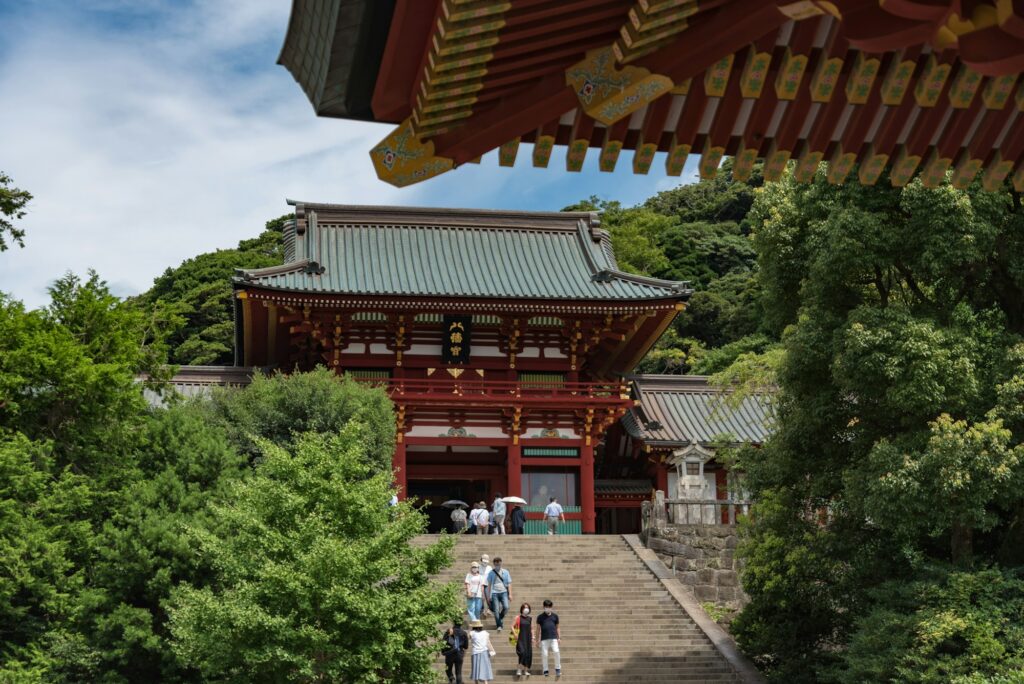
Kamakura’s Yabusame 2026, a ritual horseback archery display, takes place on Wednesday 16 September at Tsurugaoka Hachimangu shrine, as the closing day of the Reitaisai, the shrine’s grand annual festival. The ceremony starts at 1pm, with the archers galloping the course from around 2pm until just after 3:30pm. Entry is completely free with no booking required: the paid wristband system (around ¥3,000) was scrapped in 2024. Budget about an hour by train from Tokyo. Landing on a Wednesday, crowds stay noticeably lighter than on a Kamakura weekend.
On Wednesday 16 September 2026, Tsurugaoka Hachimangu shrine in Kamakura hosts one of the most spectacular rituals on the Shinto calendar. Archers in samurai hunting dress fire three arrows at full gallop along a 250-metre course, as the finale of the Reitaisai, the shrine’s grand annual festival. The event is free, needs no booking, and sits just under an hour by train from central Tokyo. Here’s how to plan it, without mixing up this September edition with the different one held in spring.
1. The Kamakura Yabusame 2026 at a Glance
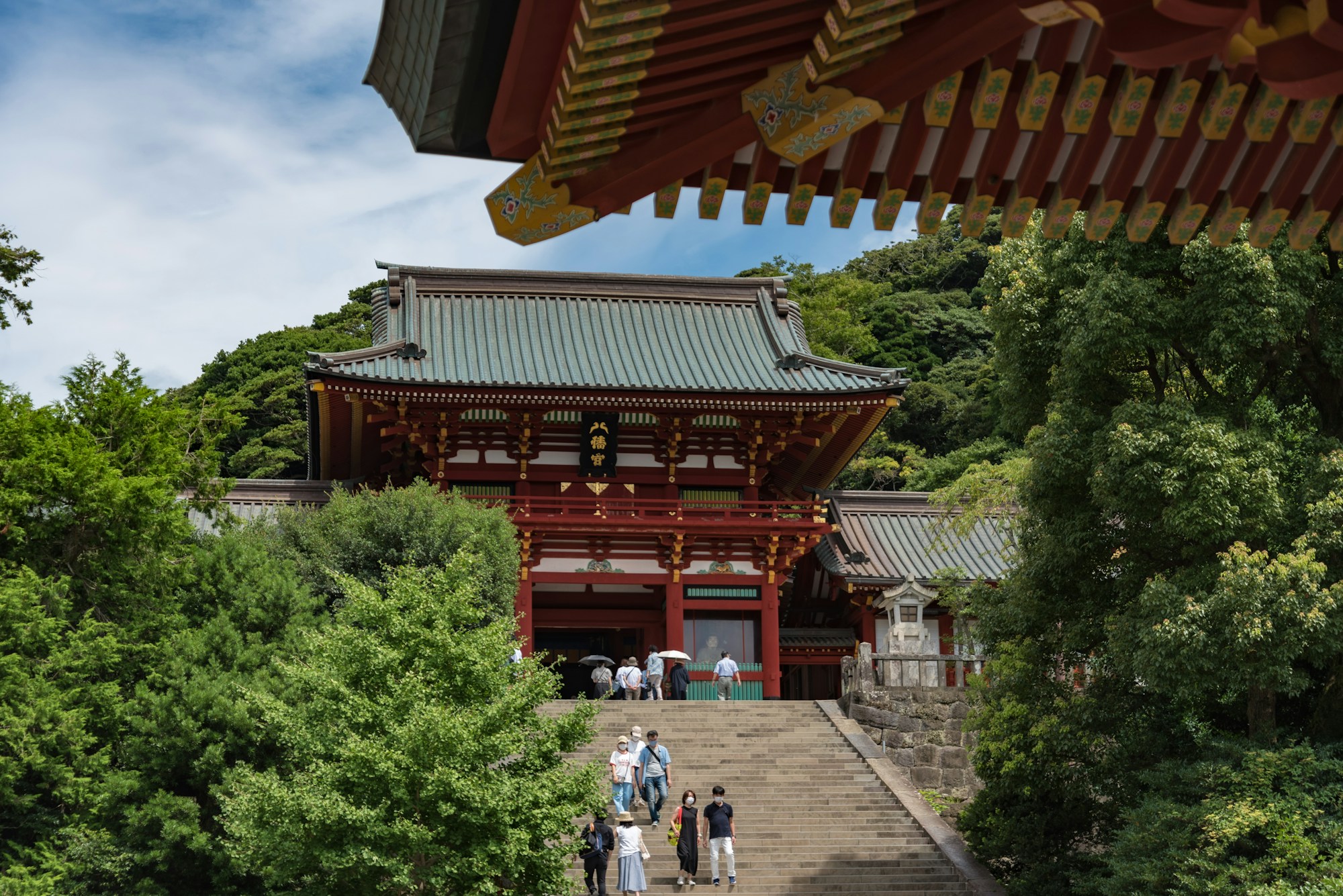
September’s Reitaisai, not to be confused with the spring festival
Tsurugaoka Hachimangu shrine holds Yabusame twice a year, and the two don’t carry equal weight if you’re planning a trip around this one. The Reitaisai, the shrine’s own grand annual festival, runs from 14 to 16 September 2026, with Yabusame closing out the final day. The Kamakura Matsuri, organised not by the shrine but by the city’s tourism board, is a spring event: its 2026 edition ran from 12 to 19 April, with its own Yabusame on Sunday the 19th, already over by the time this article went live, according to MatsuriMap.
The ritual itself dates back to 1187: archers dressed in Kamakura-era hunting attire fire three consecutive arrows, at full gallop, at three wooden targets set along a course of roughly 250 metres. « Steeped in over 800 years of history, this festival is a profound celebration of samurai culture », notes Exoticca. Japan’s government magazine frames it a little differently: « Yabusame is not a tournament with winners or rankings, the primary goal is for all archers to hit the three targets », explains Highlighting Japan.
One notable change on access: until 2023, paid wristbands (around ¥3,000) bought organised access to the Reitaisai. Since 2024, that system has been dropped for the September edition. Access is now entirely free, with no booking, on a first-come, first-served basis, as confirmed by Kanpai Japan and Kamakurasaiji.
Highlights
- Completely free access, no ticket or booking needed, since paid wristbands were scrapped in 2024
- The full ceremony runs from 1pm to around 3:30pm: the ritual at the Maiden hall, a procession, then the runs along the course
- An unbroken tradition since 1187, performed at Kamakura solely by the Ogasawara-ryu school
Yabusame itself can’t be booked: it’s a free ritual, open to everyone. If you’d rather spend the morning on a guided walk than exploring solo before the afternoon ritual, a walking tour of the historic centre is a solid option, especially one that already bundles in the Great Buddha.
2. The Ritual: What You’ll See on the Day
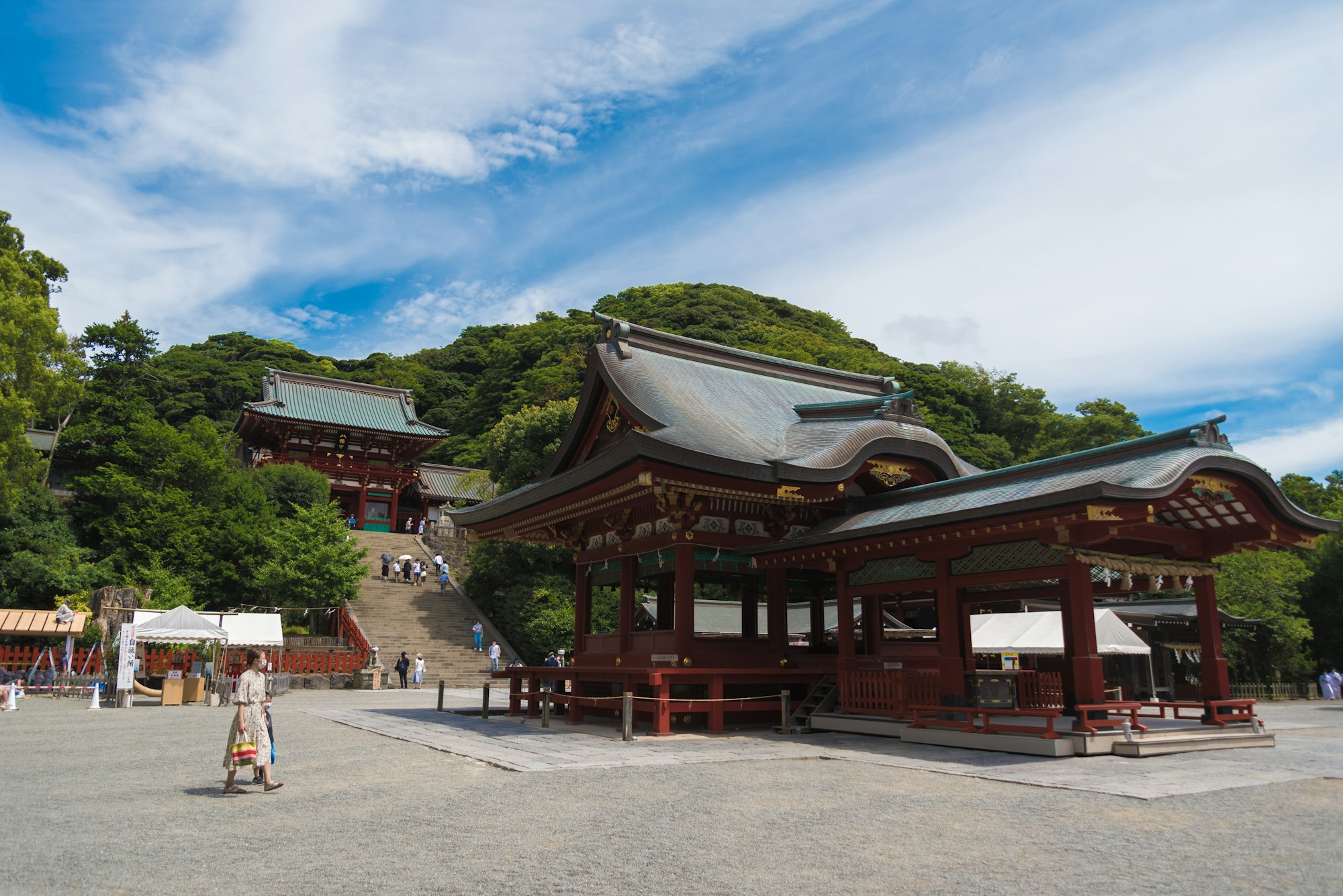
From the ceremony at the Maiden hall to the gallop down the course
The Reitaisai programme spans three days: a purification vigil on the evening of 14 September, the main ceremony and mikoshi (portable shrine) procession on the 15th, then Yabusame on the 16th. On this last day, a Shinto ceremony is held first at the Maiden, the dance pavilion with its bright red pillars, where the archers are presented in traditional dress (kasa hat, shōzoku robes, igote sleeve guards embroidered with family crests). A procession, archers, flag-bearers, target-carriers, then makes its way to the course, where an official checks the track is safe before every run.
On the course, each archer gallops without ever slowing their horse, balanced on their legs alone (a technique known as tachisukashi), both hands busy with bow and arrow. At the moment of release, archers let out the ritual cry « In-Yo! » (陰陽, Yin-Yang), an invocation of harmony between opposing forces. The arrows used, whistling kaburaya, were originally meant to scare off evil spirits with their sound. The struck target boards become lucky charms much sought after by spectators, notes Wikipedia.
At Kamakura, this ritual is performed exclusively by the Ogasawara-ryu school, founded in 1187 when Minamoto no Yoritomo entrusted Ogasawara Nagakiyo with codifying the etiquette of archery and horsemanship. More than 850 years and 31 generations later, the school is now led by Ogasawara Kiyotada, with his son Kiyomoto gradually taking over supervision of the rituals. Japan’s government magazine has also documented, on several occasions since 2023, the challenges of passing on this discipline nationwide: a shortage of successors, the cost of keeping horses, according to Highlighting Japan. None of that points to anything imminent at Kamakura, where the institution remains solid, but it does add weight to what you’ll be watching: a living ritual, not a fixed folklore show.
Highlights
- Every archer gallops the full course without slowing, balanced on their legs alone
- The ritual cry « In-Yo! » rings out at every shot, an invocation of harmony between opposing forces
- It isn’t a competition: the shared goal is for every archer to hit their targets
3. From Tokyo: Transport, Timing and Budget
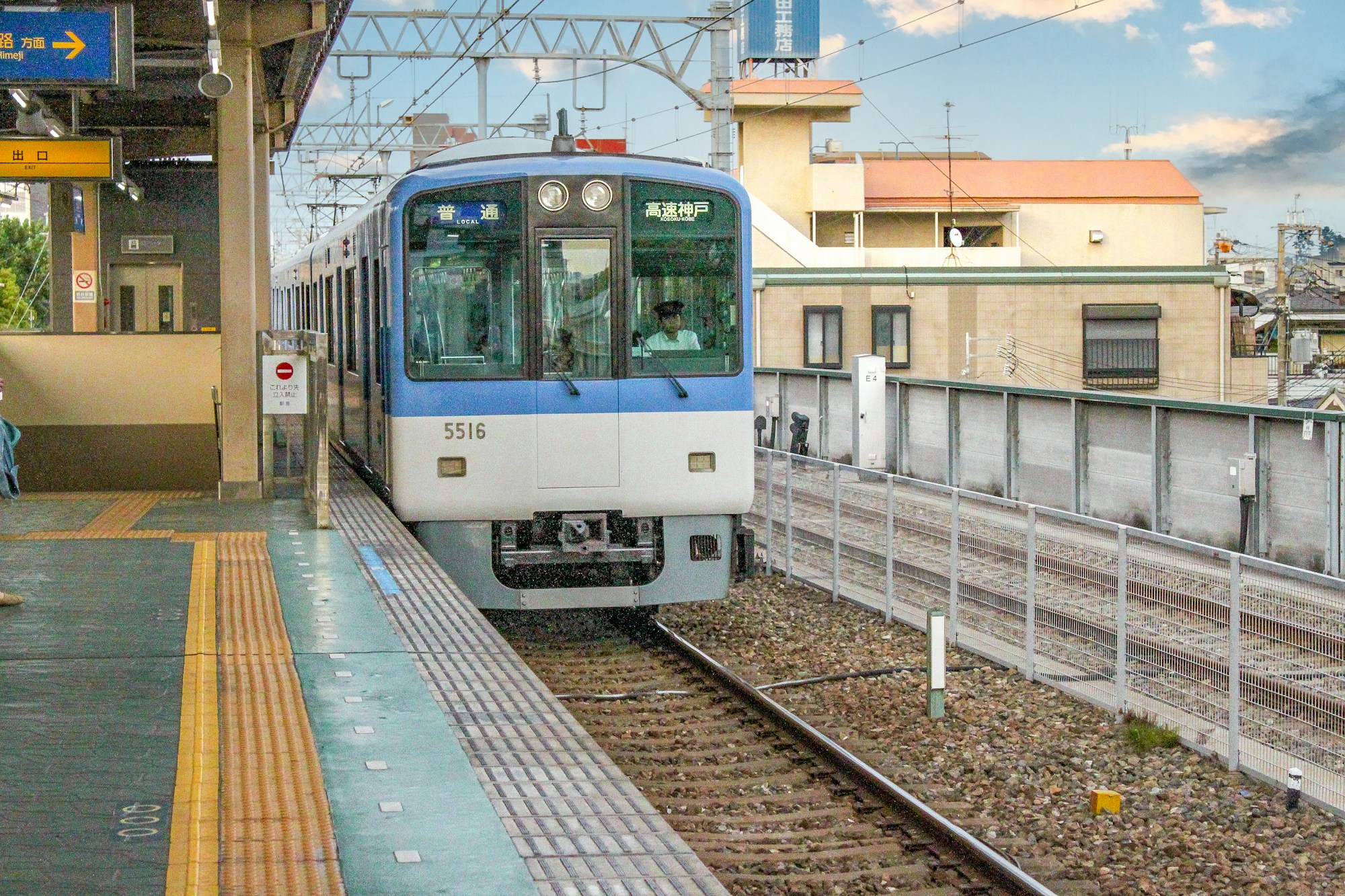
Kamakura, about an hour by train from central Tokyo
Two lines run to Kamakura with no change needed from central Tokyo: the JR Yokosuka Line, departing Tokyo Station (via Shimbashi, Shinagawa and Yokohama), and the JR Shonan-Shinjuku Line, from Shinjuku, Shibuya or Ikebukuro. Expect a 55-60 minute journey, for around ¥1,040 one-way depending on your starting station. One thing worth checking before you board: the train needs to show « Zushi » or « Kurihama » as its destination, otherwise you’ll need to change at Ofuna, according to JRailPass.
On the ground, an IC Suica or Pasmo card (or their tourist versions, Welcome Suica and Tourist Pasmo, available right from the airport) works tap-in/tap-out on every train and bus, with no need for single tickets. The national JR Pass covers both lines as far as Kamakura, but not the Enoden, the private line serving Hase and Enoshima: for this one round trip alone, a normal ticket usually works out cheaper than a JR Pass. Other recent changes affect travellers in Japan too, from the end of tax-free shopping to new visitor quotas: our full rundown on Japan in 2026 covers it all.
From Kamakura Station’s East Exit, allow 10-15 minutes on foot to the shrine, heading up Wakamiya Oji avenue or the parallel Komachi-dori shopping street. The station’s luggage lockers, limited in number, are often full on busy days, and 16 September will be one of them: the tourist information office at the West Exit, which takes luggage drop-offs with no booking, is a safer bet. On the international side, UK passport holders don’t need a visa for tourist stays under 90 days in Japan, just a valid passport, according to GOV.UK. Budget roughly £620-950 return from London in low season (spring, autumn), climbing past £1,000 during the summer school holidays, according to Kayak.
Highlights
- Ride direct by picking a train bound for Zushi or Kurihama, or change at Ofuna if it isn’t
- The JR Pass covers the line to Kamakura, but not the Enoden, the private line to Hase and Enoshima
- No visa needed for UK tourist stays under 90 days
4. Where to Stand and How to Make the Most of It
Three viewing zones along the course, and a season to watch
Three zones stand out along the 250-metre course: near the first target, to catch the gallop setting off; near the second, level with Tsurugaoka kindergarten, where the horse hits top speed and the visual impact peaks; near the third, for the finish of each run. The Maiden, with its bright red pillars, makes the best photo backdrop for the opening ceremony, but it isn’t the spot to watch the gallop. One Japanese source offers a counterintuitive tip: standing back slightly for a wider view can be more satisfying than a strict front-row spot, especially with children in tow, according to Hitofushi.
For a front-row spot, aim to arrive between 10am and 10:30am: past 12:30pm the best zones are already packed, and after 2-2:30pm the view from the back rows gets blocked by a wall of heads and raised phones. Mats and folding chairs are allowed once you’re in place, but umbrellas are banned once the ritual starts, so they don’t block other spectators’ view. Sun cream and water are essential: mid-September stays warm and humid in Kamakura, with temperatures still around 21-26°C.
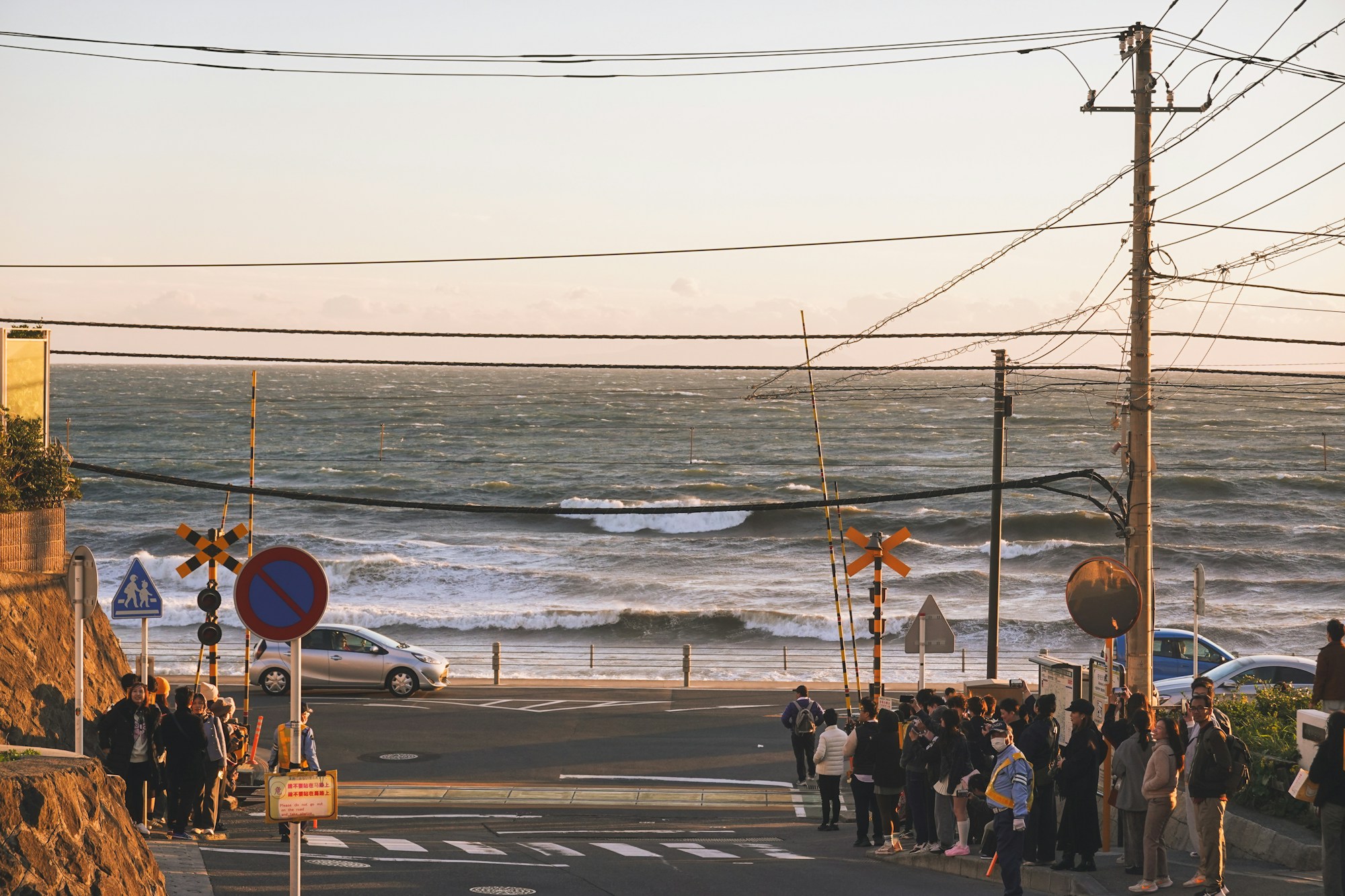
Another good reason to aim for a Wednesday over a weekend: Kamakura drew close to 15.9 million visitors in 2024, a post-pandemic record, driven partly by the K-drama boom and by the anime Slam Dunk, whose Kamakurakoukou-mae level crossing has become such a photo pilgrimage site that dedicated guardrails had to be installed, according to Travel And Tour World. A new ¥150 accommodation tax is also due to take effect from October 2026, just weeks after the Reitaisai. This isn’t autumn-leaf (momiji) season either, which peaks more towards late November and early December, including over in Kyoto: in mid-September, Kamakura is still in the grip of late-summer heat, without autumn’s colour palette.
One last thing to watch: 16 September falls right in the middle of Japan’s typhoon season, which typically brings two to three systems across the archipelago between August and October. No systematic postponement policy has been identified, as Shinto rituals traditionally carry on through light rain, but the shrine does occasionally post notices in case of severe weather. It’s worth checking official channels in the days before you travel.
Highlights
- The second target offers the most spectacular view, as the horse hits top speed there
- A September Wednesday remains the best window to dodge the crowds of a weekend Kamakura Matsuri
- No systematic cancellation for light rain, but notices go up in cases of severe weather
5. Make a Full Day of It: the Great Buddha, Hasedera and Komachi-dori
A full day out, built around the ritual’s timing
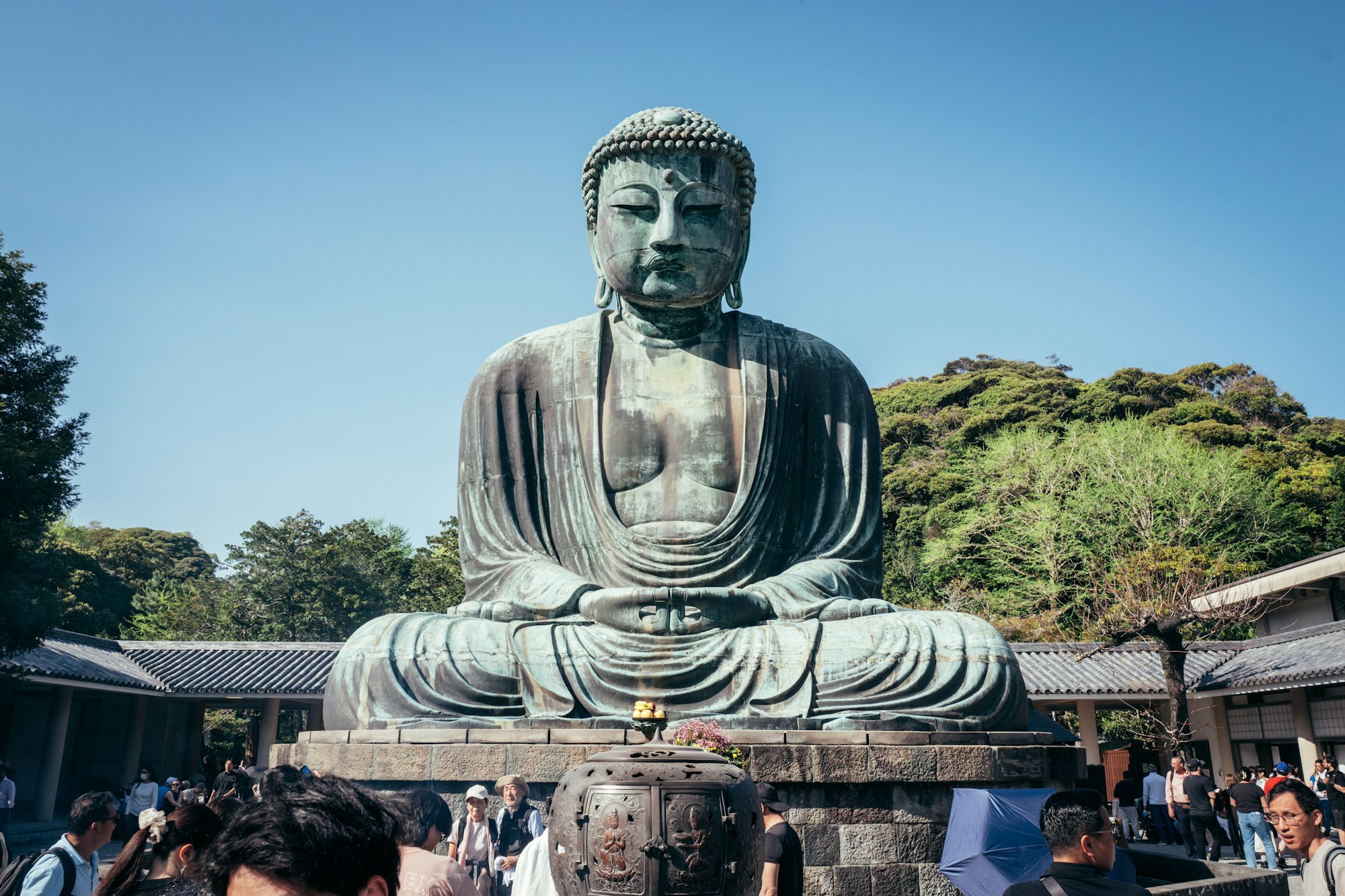
The Great Buddha of Kamakura (Kotoku-in), an 11.3-metre bronze seated statue cast in 1252, has stood in the open air ever since the tsunami that followed the 1498 Meiō earthquake destroyed the hall that once housed it, according to Wikipedia. Entry costs ¥300 (a further ¥20 to step inside the statue), and an early arrival helps you dodge the tour groups. Nearby, the temple Hasedera, founded in 736, holds a gilded statue of Kannon and the Benten-Kutsu cave, where a torch helps you view the figurines of the Seven Lucky Gods. Entry: ¥400.
Between the station and the shrine, the pedestrian street Komachi-dori (360 metres, around 250 shops) has the highest concentration of restaurants in the area. The local speciality worth trying, available from April to December, is shirasu-don, a bowl of rice topped with whitebait from Sagami Bay, alongside classics like dango, bamboo-charcoal ice cream or taiyaki.
Yabusame day calls for a bit of juggling: since the ritual takes up the 1pm-3:30pm slot, it’s best to keep the morning free for the shrine (free entry) and Komachi-dori, then switch to the Great Buddha and Hasedera in the late afternoon, before they close, generally around 5-5:30pm, or save them for the next day if you’re staying over. For travellers with a bit more time, the Daibutsu hiking trail (2.5-3km, beginner level) links Jōchi-ji temple, near Kita-Kamakura, to Kotoku-in, and you can extend on to Enoshima in a 25-minute ride on the Enoden. If instead you’re after another escape from Tokyo to round out the trip, Hakone, with its onsens and views of Mount Fuji, offers a complete contrast to Kamakura’s historic atmosphere.
Highlights
- The Great Buddha has stood in the open air ever since the 1498 tsunami destroyed the hall that housed it
- Komachi-dori has the highest concentration of restaurants between the station and the shrine
- On Yabusame day, it’s best to save the Great Buddha and Hasedera for late afternoon or the next day
Practical Info for International Visitors
UK passport holders don’t need a visa for tourist stays under 90 days in Japan, just a valid passport, according to GOV.UK. Budget around £620-950 return from London in low season, climbing past £1,000 during the summer school holidays, per Kayak fare data. On the time difference, Japan runs 8 hours ahead of the UK in September (British Summer Time), since Japan never changes its clocks. On the ground, an IC Suica or Pasmo card covers most transport, but not every small independent shop, so keep some cash on you. On the weather front, mid-September stays warm and humid, right in the middle of typhoon season: keep an eye on Japan Meteorological Agency (JMA) alerts in the days before you travel. To get online the moment you land, without hunting for a local operator, compare providers in our 2026 travel eSIM comparison.
Mobile data live the moment you land at Narita or Haneda, no need to hunt down a konbini or operator counter for a local SIM card.
Data plans from a few days to several weeksA long-haul flight, typhoon season and no NHS cover once you’re outside the UK: travel insurance with repatriation is the baseline for a trip to Japan.
From $56 / 4 weeksFrequently Asked Questions
Is the Kamakura Yabusame free to attend?
Yes. For the September edition (Reitaisai), entry is entirely free with no booking, on a first-come, first-served basis. An older paid-wristband system, around ¥3,000, was scrapped in 2024, according to Kanpai Japan.
What’s the difference between Kamakura’s September and April Yabusame?
Tsurugaoka Hachimangu shrine holds two annual events: the Reitaisai, its own grand festival, in mid-September, and the Kamakura Matsuri, run by the city’s tourism board, in mid-April. In 2026, only the September edition (16 Sept) is still to come as this article goes live, with the April one (19 April) already past, according to MatsuriMap.
How long does it take to get from Tokyo to Kamakura?
Allow 55-60 minutes on a direct train, via the JR Yokosuka or Shonan-Shinjuku line, for around ¥1,040 one-way, according to JRailPass.
Can you combine Yabusame with a visit to the Great Buddha on the same day?
Yes, but it takes a little planning. The ritual occupies the 1pm-3:30pm slot: it’s best to visit the shrine and Komachi-dori in the morning, then save the Great Buddha and Hasedera for late afternoon, before they close, generally around 5-5:30pm, or for the next day if you’re staying over, according to The Invisible Tourist.
Which school performs Yabusame at Kamakura?
The Ogasawara-ryu school, which has passed down this discipline since 1187, currently led by its 31st head, Ogasawara Kiyotada, according to Nippon.com.
Is Yabusame cancelled if it rains?
No blanket rule has been identified: Shinto rituals traditionally go ahead through light rain, but the shrine posts occasional notices in cases of severe weather. With September falling in the middle of typhoon season, it’s worth checking the shrine’s official channels in the days before you travel.
Do you need a JR Pass to see the Yabusame?
Not necessarily, just for this one trip: a simple return ticket usually works out cheaper than a national JR Pass. The Pass covers the line to Kamakura, but not the Enoden, the local private line, according to JRailPass.
Where else can I see a Yabusame if I can’t be in Japan on 16 September?
Other shrines hold Yabusame on different dates: Meiji Jingu, in Tokyo itself, on 3 November; Shimogamo Shrine in Kyoto, on 3 May, as part of the Aoi Matsuri; and Miyazaki-jingū, on 3 April, according to Discover Kyoto.
Sources
- Tsurugaoka Hachimangū Reitaisai Festival (JNTO): official page of the Japan National Tourism Organization
- Reitai-sai, Kamakura’s Mounted Archery Festival (Kanpai Japan): festival schedule and free access
- Kamakurasaiji: dates and the evolution of the access system
- Kamakurameguri: Reitaisai programme and practical recommendations
- The 68th Kamakura Festival (MatsuriMap): dates of the spring Kamakura Matsuri
- Tsurugaoka Hachiman-gu Reitaisai in Kamakura (Exoticca): history and free access
- Galloping Across Worlds, The Sacred Art of Yabusame (Highlighting Japan): the ritual’s significance and succession challenges
- Yabusame (Wikipedia): technique, symbolism and vocabulary of the ritual
- Tsurugaoka Hachimangū (Wikipedia): history of the shrine
- Nippon.com: the Ogasawara-ryu school and its transmission
- Kamakura Travel Guide (JRailPass): lines, fares and journey time from Tokyo
- Hitofushi: best viewing spots along the course
- Kamakura Day Trip (The Invisible Tourist): sample itinerary combining the shrine and the Great Buddha
- Kamakura Day Trip Budget Guide (BudgetYen): a detailed day-trip budget
- Travel And Tour World: visitor numbers and overtourism pressure in Kamakura
- Discover Kyoto: Yabusame at Shimogamo Shrine, a spring alternative
- Japan travel advice (GOV.UK): entry requirements for UK passport holders
- London to Tokyo flight prices (Kayak): seasonal return fare ranges
Research conducted on 25 August 2026.

Plan your trip with Pixidia
Pixidia learns how you travel and helps you build a trip that truly fits you and everyone coming along.
Open the planner