
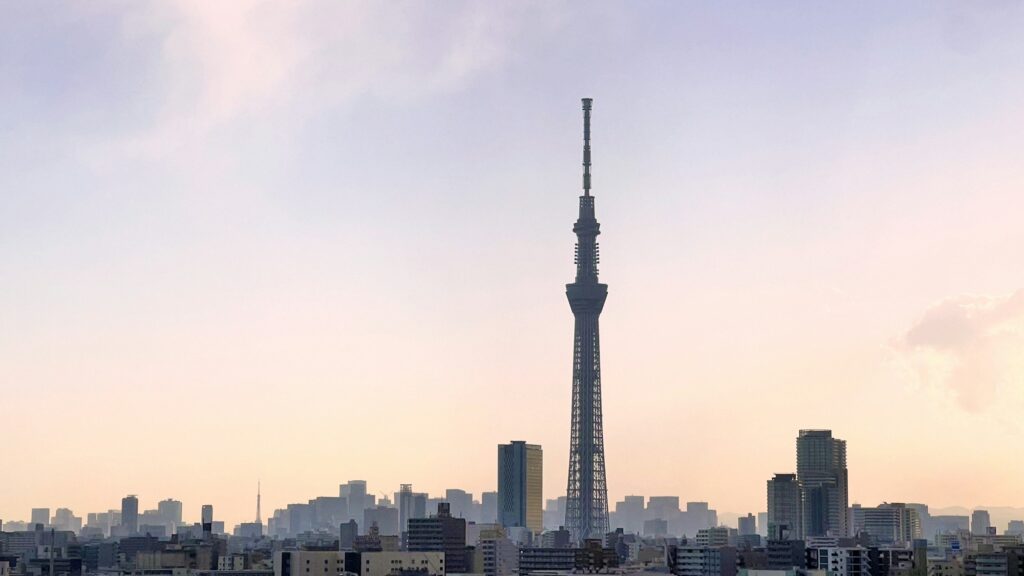
The Hakone Ekiden 2027, 103rd edition, runs on 2 and 3 January 2027 between Tokyo and Lake Ashi. Recent editions cover 217.1 km, but an announcement from March 2026 signals changes to the stages. Day one traditionally starts at 8:00 am; the 2027 start time has not been published.
Checked on against the sources cited at the end of the article (2027 edition announcement, specialist press).
Every year, Japan’s New Year is also watched from the roadside. The Hakone Ekiden links Ōtemachi, in the heart of Tokyo, to Lake Ashi in the Hakone area, over two days, for 217.1 km in recent editions. University teams from the Kantō region take turns on the course, with ten runners per team and five stages a day. The 2027 date is confirmed. What changes from one year to the next is traffic hours, the rules on display and the relay points, and that is where your experience on the ground is decided. This guide separates what is confirmed, what is tradition and what is still to come.
1. Hakone Ekiden 2027: what is confirmed
The 103rd edition runs on Saturday 2 and Sunday 3 January 2027. On the first day, the runners leave Ōtemachi in Tokyo and reach Lake Ashi, in the town of Hakone. On the second day, they make the return trip to Ōtemachi. The dates come from the edition announcement published by the specialist press. At the time of checking, the organiser’s website did not yet have a dedicated page for 2027.
A few reference points, valid for recent editions:
- Distance: 217.1 km in total, including 107.5 km on day one and 109.6 km on day two (Nippon.com, article from 2024, French edition).
- Format: five stages a day, ten in total, and ten runners per team.
- Origin: first held in 1920. At each handover, runners pass a cloth sash, the tasuki, worn diagonally across the body (Wikipedia).
- Broadcast: Nippon TV broadcasts both days in full, live (Nippon.com).
The race is men-only and reserved for university teams from the Kantō region, which sets it apart from professional marathons.
2. The 2027 calendar: confirmed, expected, not yet published
The table separates what we know for 2027 from what we only know for 2026. The 2026 times are not 2027 times: they give an idea of the order of magnitude, nothing more.
| Item | 2026 edition (reference) | 2027 edition |
|---|---|---|
| Race dates | 2 and 3 January | 2 and 3 January, announced (Saturday and Sunday) |
| Start of day one | 8:00 am, in front of the Yomiuri Shimbun building in Ōtemachi | 8:00 am by tradition, 2027 start time not announced |
| Road closure at Ōtemachi | 6:00 to 9:00 am on 2 January; 12:00 to 3:00 pm on 3 January | Not published |
| Road closure around Lake Ashi | No 2026 figure obtained; in 2025, roughly 10:45 am to 1:00 pm (order of magnitude) | Not published |
| Viewing rules | Organiser’s notice from 2022, to be reconfirmed for 2027 | To be reconfirmed |
| Relay points | Tsurumi, Totsuka, Hiratsuka, Odawara, Lake Ashi (cited by several sources) | Official list not published |
Source: Sportiva (Shueisha) for the 2027 dates, Travel Watch for the 2026 times, checked on 7 November 2026.
3. The route: 217.1 km in ten stages
In recent editions, day one covers 107.5 km, from central Tokyo to Lake Ashi, passing through Yokohama, Totsuka, Hiratsuka and Odawara. Day two, 109.6 km long, brings the runners back to Ōtemachi along the same axis, in reverse. The key stages for spectators are the ones where the race shifts mood three times: the urban plain, the coast, then the climb.
| Stage | Day | Section | Distance | Stage record |
|---|---|---|---|---|
| 1 | 2 January | Ōtemachi to Tsurumi (Yokohama) | 21.3 km | 1 h 00 min 28 s (Rui Aoki, Koku Gakuin) |
| 2 | 2 January | Tsurumi to Totsuka | 23.1 km | 1 h 05 min 09 s (Victor Kimutai, Josai) |
| 5 | 2 January | Odawara to Lake Ashi, via Hakone-Yumoto (climb) | 20.8 km | 1 h 07 min 16 s (Asahi Kuroda, Aoyama Gakuin) |
| 6 | 3 January | Lake Ashi to Hakone-Yumoto (descent) | 20.8 km | 56 min 48 s (Riki Koike) |
Source: Japan Running News, unofficial specialist press, checked on 7 November 2026.
The course record is 10 h 37 min 34 s, set by Aoyama Gakuin University at the 2026 edition, according to the specialist press (unofficial timing). The same university won the 2024, 2025 and 2026 editions. The previous record, 10 h 41 min 25 s, dates from 2024.
We do not repeat the distances of the other stages here, notably those of day two: the sources do not give them all, and those that do contradict each other. An article from March 2026 also announces changes to stage lengths for upcoming editions. The 217.1 km total and the 107.5 km of day one remain the most solid basis.
4. Where to watch: spots and atmospheres
Your choice depends first on how much time you have. The Ōtemachi start is at 8:00 am on 2 January, by tradition (2027 time not published). The Yokohama passage is indicative around 9:30 am on day one (2026). Hakone requires connections, a train then a bus, and takes longer.
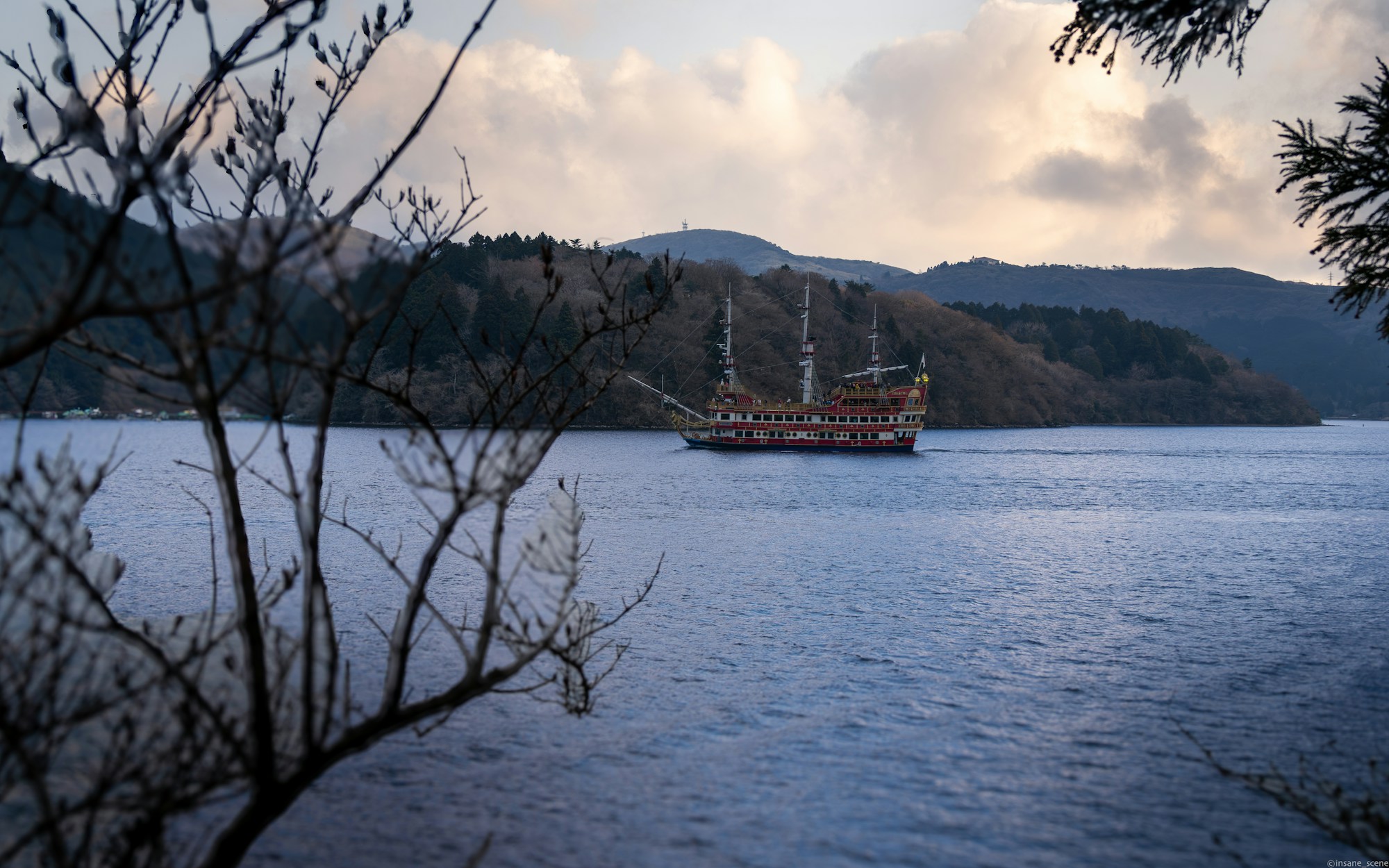
Hakone: the stage 5 climb and Lake Ashi
The stage 5 climb, between Odawara, Hakone-Yumoto and Lake Ashi, is the most demanding part of the course. The guides we consulted present it as the most spectacular stretch, and National Route 1 is closed to traffic while the runners pass. To get there, take the Odakyu line to Hakone-Yumoto, then the Hakone Tozan and a bus to the lake. A personal blog from 2016 describes watching from the platform at Hakone-Yumoto station (The Tokyo Files). This is not an official spectator area, and its access has not been verified for 2027: do not take it for granted.
Highlights
- The stage 5 climb, the most demanding stretch of the course according to the guides consulted
- Lake Ashi and the bend where the day-one finish comes in, at Hakone-machi
- A mountain setting that calls for warm layers from the start
If you want a day in Hakone on top of the race, a private day tour is offered on Viator. What sets it apart is its private format: its length, its departure point and what it includes are listed on the product page, which we do not reproduce here. The catch: a Hakone tour does not guarantee you will see the runners go by. Check this on the listing before you book.
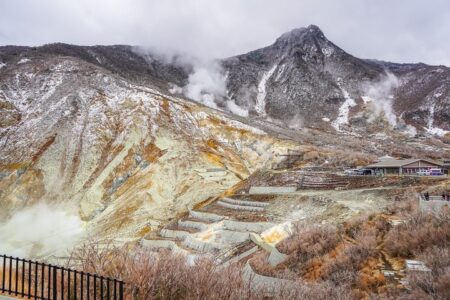
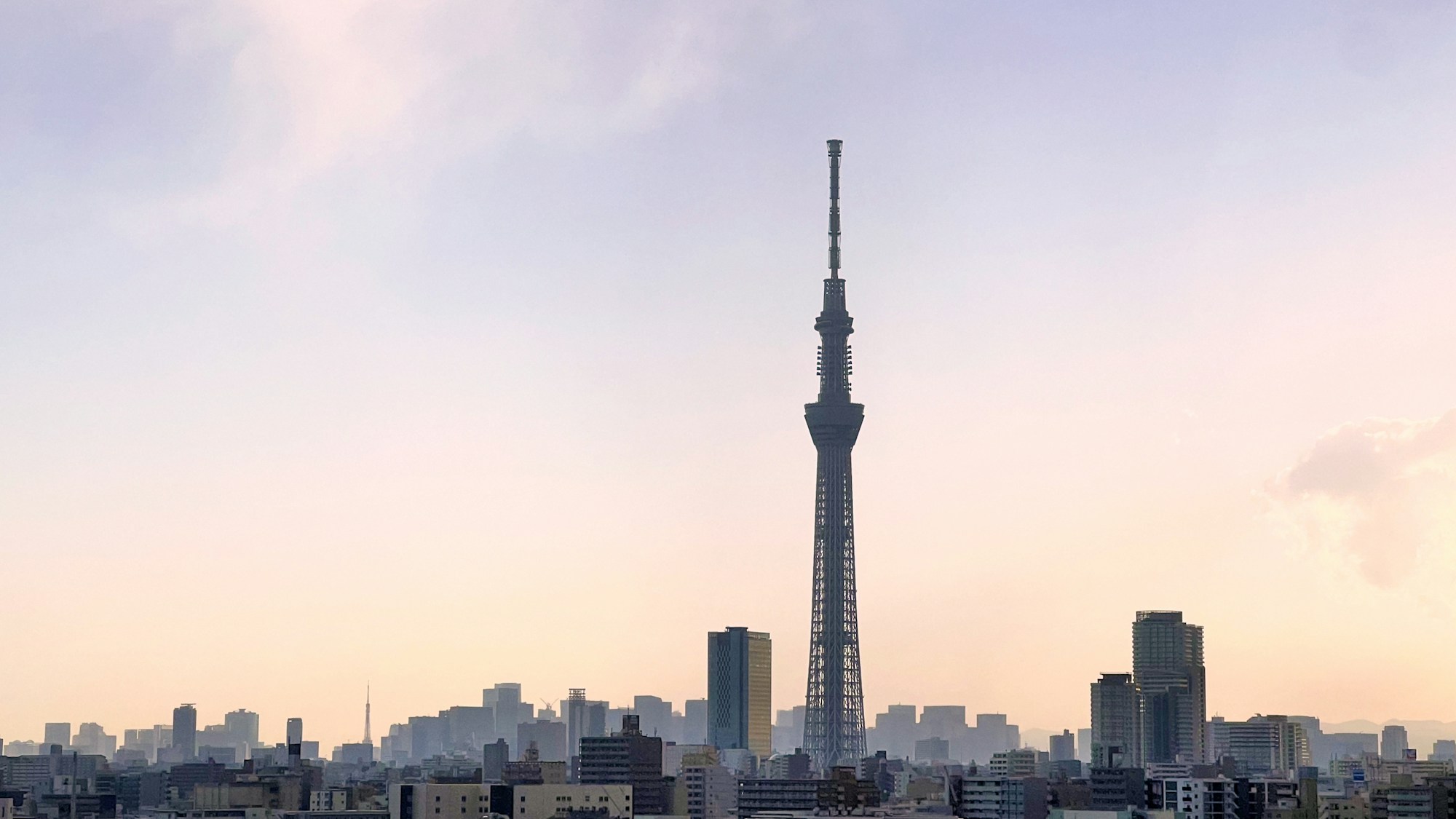
Tokyo: the 8:00 am start at Ōtemachi
The start takes place in front of the Yomiuri Shimbun headquarters, near Ōtemachi station. One guide recommends arriving before sunrise to get a place at the front. In 2026, traffic around the area was closed from 6:00 to 9:00 am on 2 January, then from 12:00 to 3:00 pm on 3 January. The 2027 times had not been published at the time of checking: these figures give an order of magnitude, not a promise.
Highlights
- The 8:00 am start, by tradition (2027 time not published)
- The day-two finish, early afternoon, in the same area
- A start and a finish in the same area, at Ōtemachi
| Spot | Nearest station | Crowd level per the guide | Toilets and tips |
|---|---|---|---|
| Hibiya to Kasumigaseki | Hibiya, Kasumigaseki, Uchisaiwaichō | High | Station and park, before you go |
| Shiba-kōen to Daimon | Hamamatsuchō, Daimon, Onarimon | Medium to high | Station, before you head out |
| Tamachi to Mita | Tamachi, Mita | Medium | Station, before you head out |
| Shinagawa to Kita-Shinagawa | Shinagawa, Kita-Shinagawa | High | Station toilets |
| Ōi-machi to Aomono-yokochō | Ōi-machi, Aomono-yokochō | Medium to low | Station |
| Tachiai-gawa to Ōmori-kaigan | Tachiai-gawa, Ōmori-kaigan, Heiwajima | Low to medium | Station toilets |
| Rokugō Bridge (Tokyo side) | Rokugō-dote | Low to medium | Station, bring warm clothing |
Source: Kaibutsu, Tokyo guide 2026 (updated 21 March 2026), 2026 data to be reconfirmed, checked on 7 November 2026.
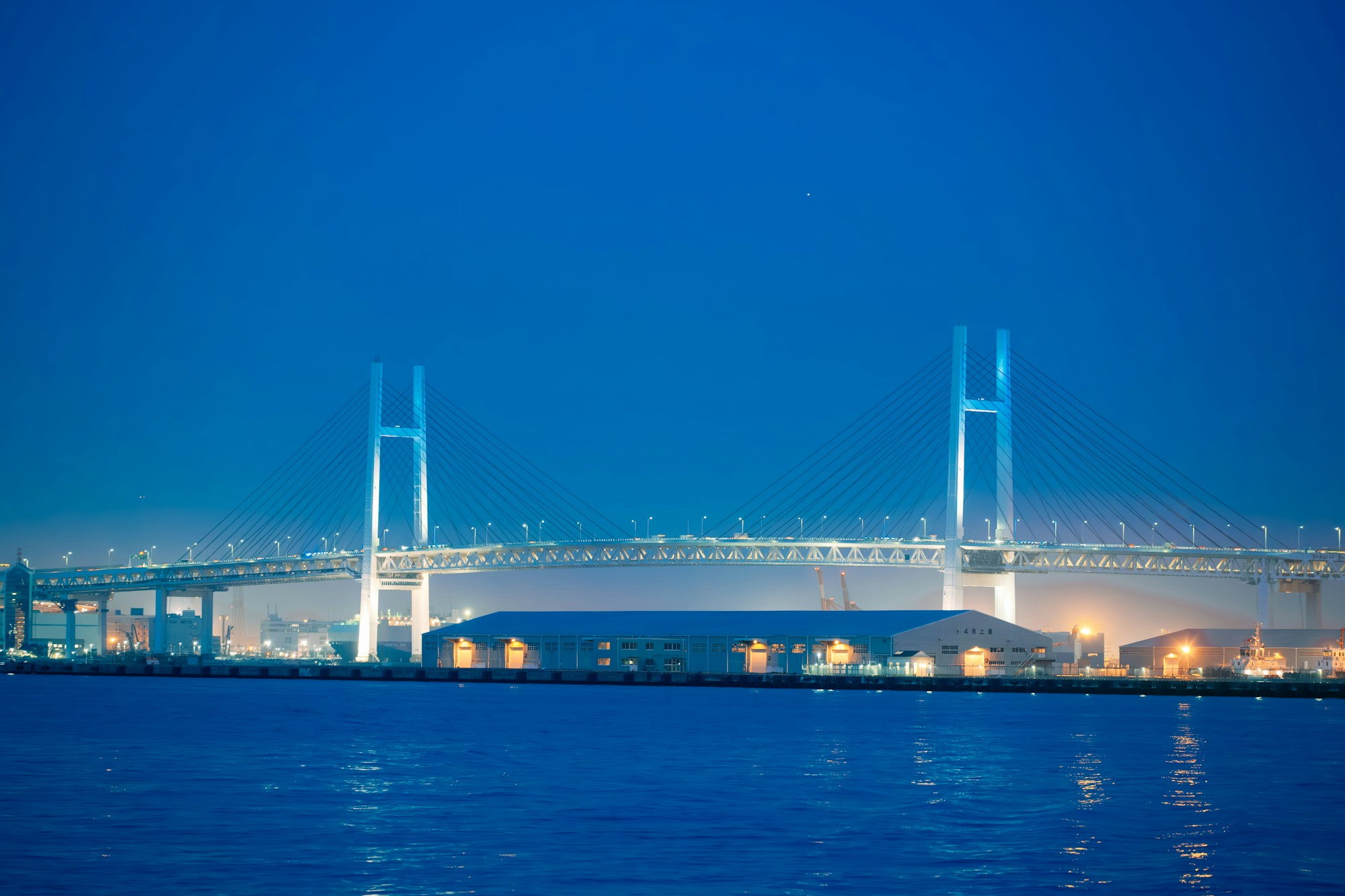
Yokohama: the station and the footbridges
The runners pass in front of Yokohama station, along a wide street under the elevated expressway, heading towards SOGO Yokohama. In 2026, the indicative passages were around 9:30 am on day one and around 11:50 am on day two (Yokohama Minato Mirai). The city’s footbridges are only for crossing: you don’t stop there to watch the race.
| Spot | Access | Watch out for |
|---|---|---|
| Tsurumi (Yokohama), stage 1 | Keikyū Tsurumi-Ichiba, about two minutes’ walk from the bridge | Arrive at least 30 minutes before the passage (local article) |
| Yokohama station | East exit, indoor spaces nearby | 2026 times are indicative, to be reconfirmed |
| Odawara | JR and Odakyu stations | Station very busy on 2 January |
| Hakone-Yumoto | Odakyu, then Hakone Tozan | Platform: 2016 blog, access not verified for 2027 |
| Lake Ashi | Hakone Tozan bus from Hakone-Yumoto | Road closed during the passage, traffic jammed |
Sources: Yokohama Minato Mirai, Hakone Japan, local article on Tsurumi (unofficial source, to be verified), checked on 7 November 2026.
Stage 4 runs through Oiso and Ninomiya, towns that the Japan Activity guide considers calmer than Ōtemachi. This advice is qualitative: no official map of viewing areas had been published at the time of checking.
5. Viewing rules: the 2022 notice, to be reconfirmed
The rules below come from the organiser’s 2022 notice, as the 2027 version has not been published yet (Kanto Gakuren, 2022 notice). They need to be reconfirmed for 2027 as soon as the organiser publishes its notice for the year.
- No vehicles (cars, motorbikes, bicycles) on the course, for safety and so as not to get in the way of the race.
- No ladders or stools to see over the crowd.
- No banners or flags attached to railings, bridges or public fixtures.
- No school banners or flags within 100 metres of the start, the finish and the relay points.
- Watch from the pavement, without leaning out over the road.
- No drones or selfie sticks in the course area.
In Yokohama, the city reminds people that footbridges are reserved for the race (page updated 30 April 2026). The 2022 notice also specifies that any disruption to residents, public transport or shops can lead to a penalty for the team concerned.
6. Getting there: trains, car and the way back
For Ōtemachi. Several metro lines serve the district; check the connection on a map before you leave. No accessibility information (wheelchair access, reduced mobility) was found for Ōtemachi or Shinagawa: check with the station operator.
For Hakone. Take a JR train to Odawara (Tōkaidō line or Shinkansen), then the Odakyu line to Hakone-Yumoto. From there, the Hakone Tozan climbs to the mountain stations, and a bus connects to Lake Ashi.
Special trains. A December 2025 announcement planned a 駅伝応援号 (ekiden support train) on 2 and 3 January 2026 run by the Odakyu Hakone operator, and the Lake Ashi boat company (Hakone Kaizokusen) announced an equivalent service (press release of 23 December 2025). We could not verify that they ran, and no 2027 announcement has been found: do not plan your journey around these trains.
By car. Guides advise against coming by car: roads are closed and car parks are full. A notice from a past edition by Kanagawa University also advises against it.
The return. Trains are packed in the late afternoon. Plan your way back before you leave your spot, and leave yourself some slack for connections.
7. Weather: dry, very cold, harsher at altitude
In early January the weather is dry but very cold, especially at altitude around Lake Ashi. Snow remains possible in Hakone, though we cannot give a total amount (Hakone Japan, Japan Specialist Traveler, French-language page). A Hakone tourist office press release from 2018 describes January and February as the driest and most stable months of the year there (press release relayed by Resemom).
We could not obtain a monthly figure for the Hakone station or for Tokyo, so we publish no temperature figure. Dress in layers, with gloves, a hat and disposable hand warmers, known as kairo, which the guides recommend.
8. Budget: what is free and what is not
Watching from the roadside is free according to the guides, and no spectator ticket has been announced for 2027. The budget therefore goes on transport, meals and, if you wish, an excursion. For the night, the race falls during the New Year holidays (Shōgatsu), when Hakone hotels are in high demand. No accommodation price was verified for this guide, and we offer no accommodation links.
We do not give a price for the Hakone Free Pass or for entry to the Hakone museum: the sources consulted contradict each other on both amounts. Check them on the operator’s website before you go. If you plan a day in Hakone on top of the race, a private day tour is presented above: €159 per adult on a two-adult basis, checked on 7 November 2026.
9. Which plan suits your profile
First time. Start from Ōtemachi for the 8:00 am start on day one. You see the race up close, in the densest atmosphere, then you can head to the day-two area without changing neighbourhood. It is the simplest plan to organise.
With family. Ōtemachi is the easiest option to shorten if the children tire. Bring very warm clothes and a nearby indoor spot for a break. Hakone needs a longer day because of the connections and the climb.
For running or photo fans. The stage 5 climb is presented by the guides we consulted as the most demanding stretch. According to the 2022 notice, to be reconfirmed for 2027, drones and selfie sticks are banned: bring a long lens instead, and rest nothing on the railings.
On a tight budget. Watching is free everywhere. The heaviest cost is the train to Hakone. A stop in Yokohama, closer to Tokyo, lets you see the race without that round trip.
To plan your stay in Tokyo around the race, two more reads complement this guide: the article on what closes in Japan over New Year, useful for last-minute plans, and the guide to the best guided tours of Tokyo to fill your days away from the race.
What other guides don’t tell you
The guides we consulted repeat the same generalities. One point appears in no other part of this article and can be checked against a document from the organiser.
- A number for race traffic. The organiser’s 2024 notice (Kanto Gakuren) listed a road information number, 03-5411-1488, and a road information centre, 050-3369-6614. We only read a search extract of this notice: these numbers need to be reconfirmed for 2027 before any use. Kanto Gakuren, 2024 notice (extract consulted on 7 November 2026).
Before you go
Spots along the road are taken before the runners arrive. The guides talk about one to three hours ahead at the Ōtemachi start, and two hours before the passage in Hakone.
Pack layers, gloves, a hot drink and disposable hand warmers. Public toilets are rare, so use them before you head out.
Frequently asked questions about the Hakone Ekiden 2027
When is the Hakone Ekiden 2027?
On 2 and 3 January 2027, for the 103rd edition. 2 January 2027 falls on a Saturday and 3 January on a Sunday. The edition announcement gives these dates. The organiser’s 2027 page had not yet been published at the time of checking (Sportiva (Shueisha)).
What is the Hakone Ekiden route?
The race links Ōtemachi in Tokyo to Lake Ashi in the Hakone area, covering 217.1 km over two days and ten stages. Day one heads to Hakone over 107.5 km, and day two returns to Tokyo over 109.6 km. These figures come from recent editions, and an announcement from March 2026 signals changes to stage lengths for future editions (Nippon.com).
What is the Hakone Ekiden course record?
The course record is 10 h 37 min 34 s, set by Aoyama Gakuin University at the 2026 edition (102nd edition), according to the specialist press. This timing is unofficial. The previous record, 10 h 41 min 25 s, dates from 2024 (Japan Running News).
Can you watch the race for free?
Yes, watching from the roadside is free according to the guides, and no ticket has been announced for 2027. The organiser’s rules, in the 2022 notice (to be reconfirmed for 2027), ban vehicles, ladders, fixed banners, drones and selfie sticks, and ask spectators to watch from the pavement (Kanto Gakuren, 2022 notice).
Where can you see the stage 5 climb?
From Hakone-Yumoto station, on the Odakyu line then the Hakone Tozan, and then National Route 1 towards Lake Ashi. The road is closed to traffic during the passage. A personal blog from 2016 describes watching from the station platform, which is not an official spectator area; its access has not been verified for 2027 (The Tokyo Files).
Can you watch the race from a bridge in Yokohama?
No. Yokohama’s footbridges are for crossing only, and you are not allowed to stop on them to watch the race. In 2026, the indicative passages were around 9:30 am on day one, near the station (Yokohama Minato Mirai).
What time does traffic close at Ōtemachi?
In 2026, the Ōtemachi area was closed from 6:00 to 9:00 am on 2 January, then from 12:00 to 3:00 pm on 3 January. The 2027 times had not been published at the time of checking: check the police and organiser notices before you go (Travel Watch).
Sources
- Sportiva (Shueisha) : announcement of the 2027 edition, dates and edition number.
- Nippon.com : history, format, distances and broadcast (2024 article, French edition).
- Japan Running News : results, records and figures for the 2026 edition, unofficial specialist press.
- Kanto Gakuren, 2022 notice : the organiser’s viewing rules (search extract), to be reconfirmed for 2027.
- Kanto Gakuren, 2024 notice : the organiser’s road information numbers (search extract, to be reconfirmed for 2027).
- Travel Watch : Ōtemachi traffic closure times in 2026.
- Yokohama Minato Mirai : indicative passages and footbridge rules, updated 30 April 2026.
- Kaibutsu : guide to viewing points in Tokyo, 2026 edition.
- Hakone Japan : practical page on the race and its road closures.
- Japan Activity : spectator guide, traditional start time and qualitative advice on stage 4 (search extract).
- Japan Specialist Traveler : Kanagawa guide and viewing points (French-language page).
- Harbour World : press release of 23 December 2025 on the Lake Ashi boat service in 2026 (search extract, not read in full).
- The Tokyo Files : personal blog from 2016 on watching from Hakone-Yumoto station (search extract, not dated for 2027).
- Wikipedia : history, the 1920 origin and the tasuki.
Sources checked on 7 November 2026. Viewing rules date from 2022 and times from 2026: they need to be reconfirmed for the 2027 edition. Several sources were only read as search extracts; they are flagged above.

Plan your trip with Pixidia
Pixidia learns how you travel and helps you build a trip that truly fits you and everyone coming along.
Open the planner