
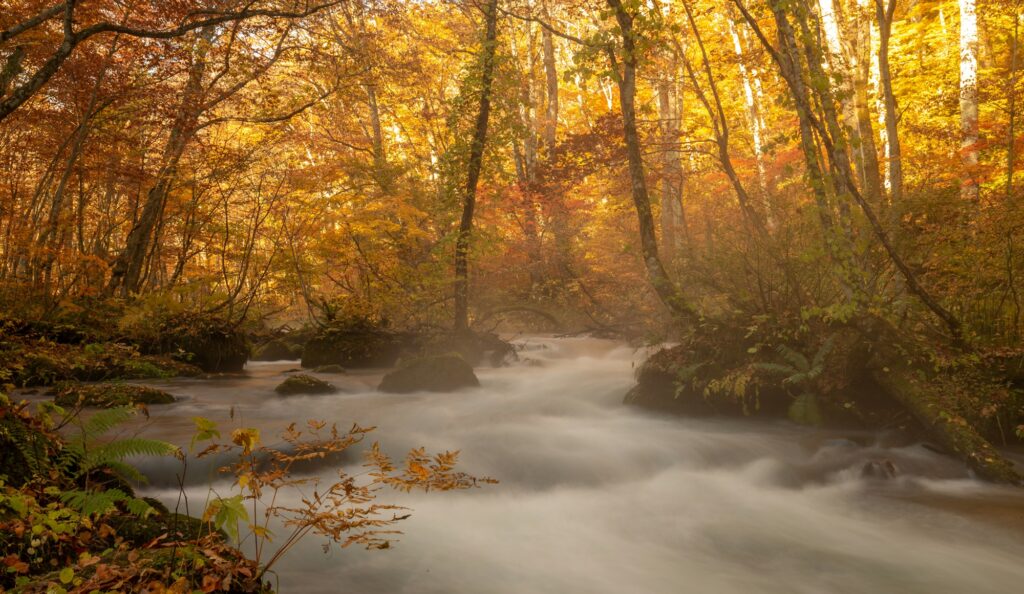
Tohoku turns red before Kyoto, with a gap of three to six weeks depending on the spot. According to japan-guide (19 September 2026), Hakkoda and Hachimantai peak from early to late October and Lake Towada in late October, while Kyoto is expected from mid-November to early December. The JR East Tohoku Area Pass is gone: the JR EAST PASS (¥35,000 for 5 days, about £166) has replaced it since 14 March 2026. Aim for Tohoku between 15 and 30 October, then Kyoto after 20 November.
Tohoku’s reds come before Kyoto’s, but not by so little that you can catch both in the same week. On 19 September 2026, japan-guide still listed the main sites in northern Honshu as « still green ». Every date in this article is therefore a forecast, with a margin of 5 to 10 days depending on the weather, and a second round of forecasts is due in early October. Here’s the site-by-site calendar, what has changed in 2026 (rail pass, fares, restrictions, taxes), the bear question, and three ways to link Tohoku with Kyoto.
1. The 2026 calendar: Tohoku in October, Kyoto in late November
Two windows that barely overlap
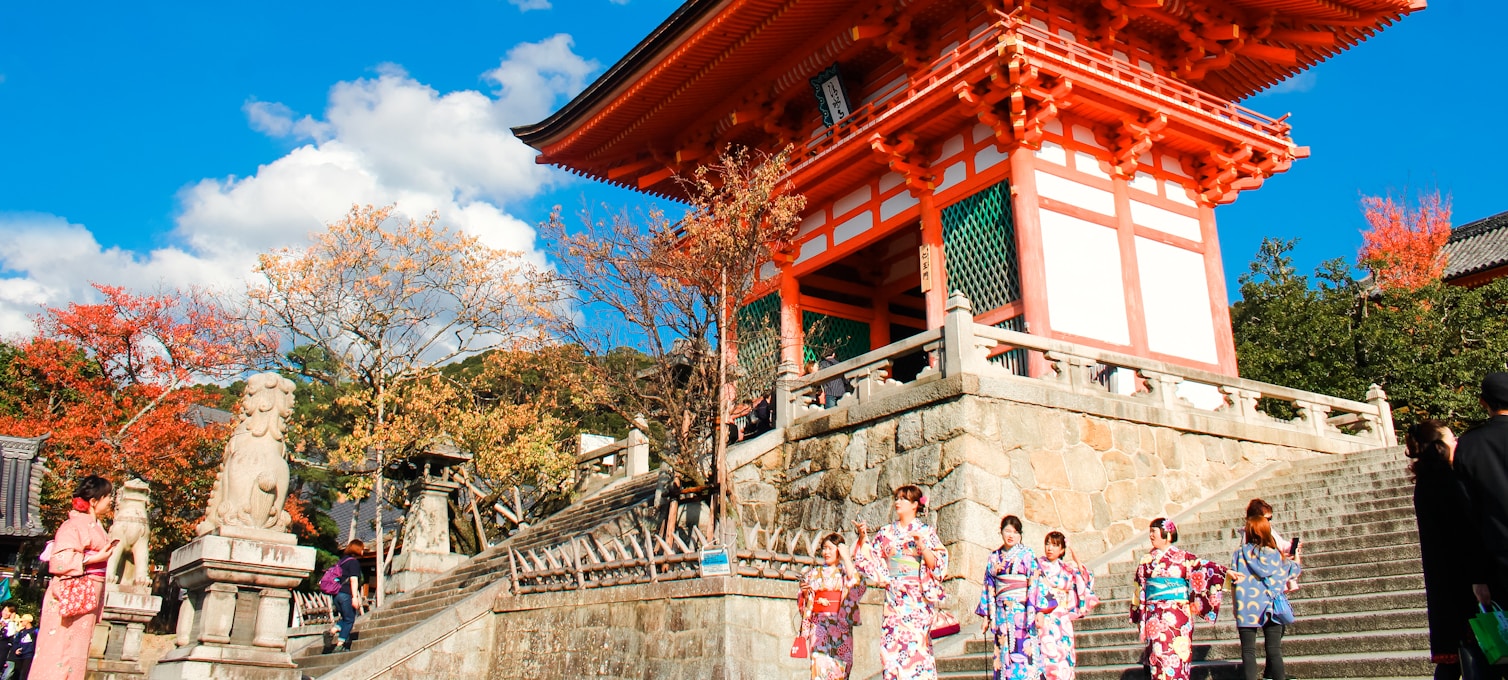
According to the first forecast from Japan Meteorological Corporation (JMC), published on 2 September 2026, the red is due in Aomori on 13 November (in line with the average), in Sendai on 25 November (4 days late), in Tokyo on 29 November and in Kyoto on 11 December (6 days late). Those dates mark when most of the leaves on a reference tree in each city are red. They are city indicators, not dates for mountain sites or temples, so they don’t tell you when Kyoto’s temples look their best: in the warm, dry autumn of 2025, japan-guide reported colours at their peak on 29 November and 2 December.
For Tohoku, Weathernews (forecast of 3 September) puts the peak between early October and late November depending on altitude, « later than normal or slightly later », and Kyoto and the Kansai region from late October to mid-December. The warmth delays the red, but the colours are expected to be vivid over large areas.
| Forecast window (2026) | Spots | Source |
|---|---|---|
| Late September to mid-October | Hachimantai and Hakkoda summits, Bandai-Azuma Skyline (around 13 October), high-altitude Zao (around 17 October) | Walker Plus, Weathernews, japan-guide |
| Mid to late October | Urabandai, Tsuta Numa, Nyuto Onsen, Lake Towada shores (around 29 October), Naruko Gorge (around 29 October) | Walker Plus, Weathernews |
| Late October to early November | Lower Oirase, Kakunodate, Dakigaeri, Ginzan Onsen, Yamadera (uncertain window, up to mid-November) | Weathernews, JNTO |
| Early to mid-November | Hiraizumi, Matsushima and Entsu-in, Hirosaki | Weathernews |
| Mid-November to early December | Kyoto | japan-guide |
Between the shores of Lake Towada and Kyoto, the gap is roughly three to four weeks. From Hachimantai it’s closer to six weeks, and it shrinks to barely two weeks for Hiraizumi (Pixidia’s own calculation from the windows above). A one-week trip can’t hit the peak in both regions. Our guide to autumn maples in Kyoto covers what to do once the city reaches its best.
What to remember
- No date is fixed before mid-October: the red starts when overnight lows drop below 8 to 10 °C, and a warm October pushes that threshold back.
- Mountain spots (Hachimantai, Hakkoda, Zao) are over by early November; lowland spots (Hiraizumi, Matsushima) are then at their best.
- JMC and Weathernews publish a second round in early October: that’s the moment to lock in your dates.
2. October’s mountain spots: Oirase, Towada, Hakkoda, Hachimantai, Zao
The Oirase Stream and northern Aomori
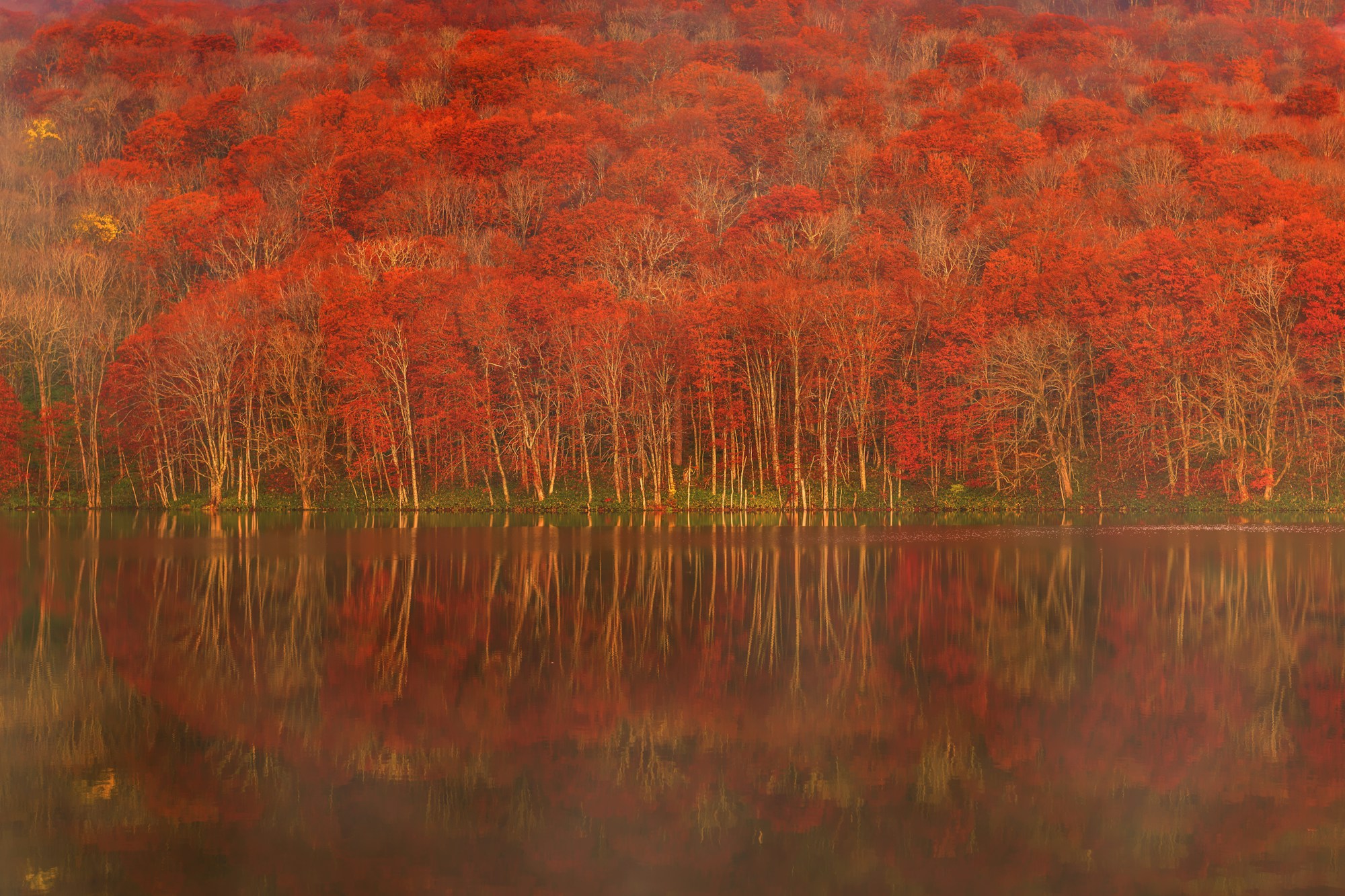
The Oirase Stream flows out of Lake Towada for 14 km, of which about 9 km is a walking trail between Nenokuchi and Ishigedo. According to japan-guide, the first colours appear from mid-October near the lake, and later downstream towards Yakeyama. Walker Plus forecasts the peak on the Lake Towada shores around 29 October. According to Japan Web Magazine, this is also where visitors most often leave disappointed: bad timing, crowds or a trail that’s too short.
What’s changing at Oirase in 2026
For years, the gorge road was closed to private cars in late October (27 October to 2 November in 2025). According to the Towada Oirase tourism organisation, that restriction has been brought forward to 7 to 13 September 2026: none is planned for October. Last year’s guides are therefore out of date on this point, and the road can be busy at the peak. Set off early, on a weekday.
From Tokyo, the Hayabusa reaches Hachinohe in about 3 hours, then the JR Oirase-go bus takes 2 hours 15 minutes to Towadako (¥3,050); from Aomori, the Mizuumi-go bus takes 2 hours 45 minutes (¥3,480, about £16.50). These buses only run from April to mid-November, and the stated frequency varies between sources: check the timetable on the JR Bus Tohoku site before you book a night. The lake boat crossing costs ¥1,400 to ¥1,650 depending on the operator and route. Aomori works as a base for Oirase and Hakkoda (our guide to the Aomori Nebuta Matsuri shows the city in summer).
Highlights
- Tsuta Numa: from 23 October to 3 November 2026, early-morning entry (5am to 7.30am) is by reservation only, open since 1 August, with groups limited to 8 people and one vehicle. During the day there’s no reservation but a contribution is payable on site (Towada City).
- Hakkoda: colours from early to late October; the ropeway costs ¥2,200 return (9am to 4.20pm), then Jigokunuma is a 10-minute walk from Sukayu Onsen (Amazing AOMORI).
- Hachimantai: summits in late September, and the Aspite Line road (27 km) around 10 October according to Watabi, closed from early November. You almost need a car.
- Zao (Yamagata): peak around 17 October; the ropeway costs ¥4,400 return. The Okama crater lake is often shrouded in fog: treat it as a bonus, not a plan.
- Fukushima: Bandai-Azuma Skyline around 13 October, Urabandai from mid-October to early November; the Goshikinuma car parks are often full by the morning at weekends.
3. Onsen, samurai districts and ryokan: Nyuto, Kakunodate, Ginzan, Yamadera
Old-fashioned autumn, between hot springs and wooden villages
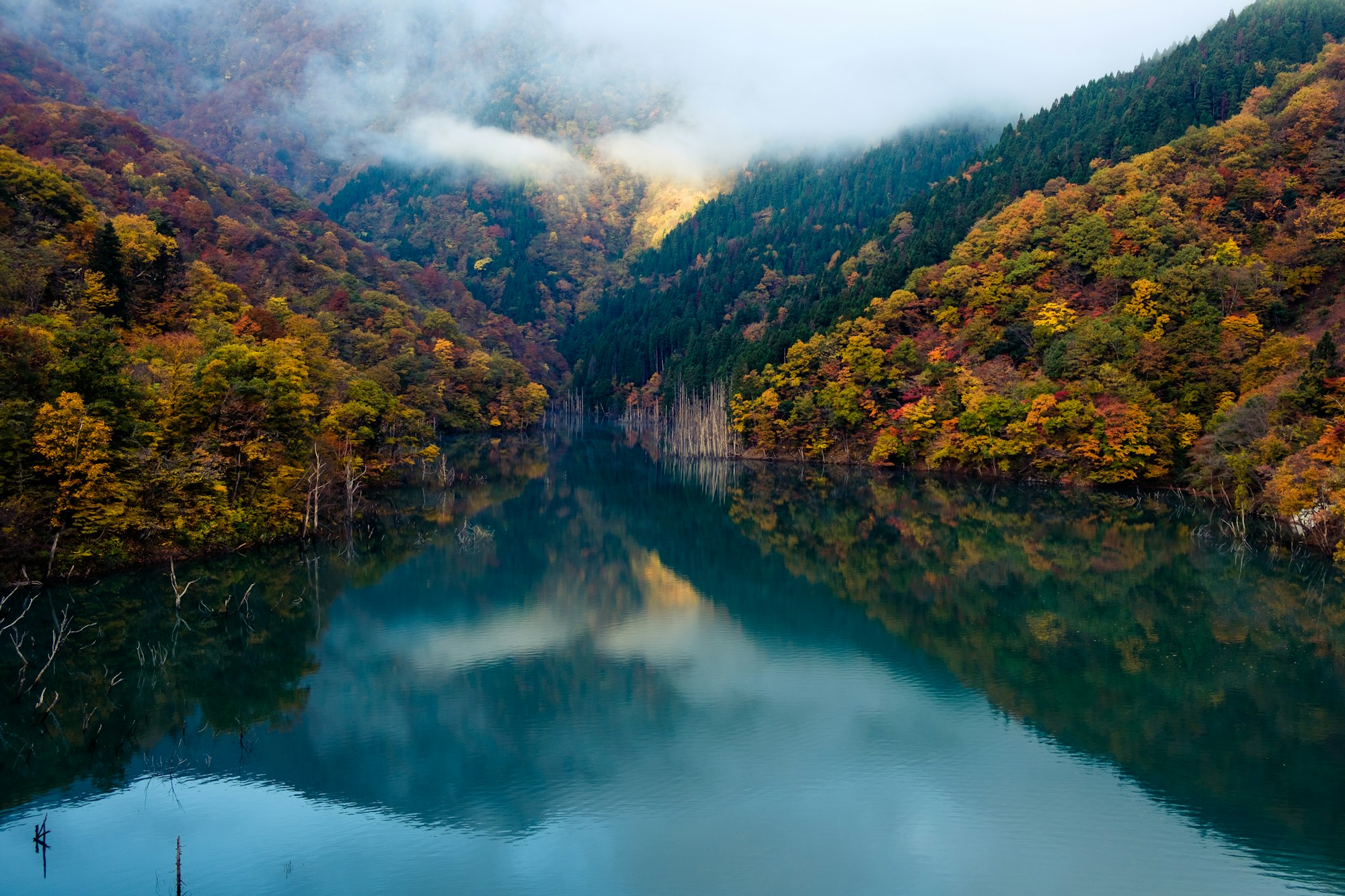
Nyuto Onsen (Akita) is made up of seven independent inns, each with its own spring. The peak is expected from mid to late October, with colours lasting into early November at Tsuru-no-yu. You get there from Tazawako (about 3 hours from Tokyo on the Akita Shinkansen) by the Nyuto line bus, 50 to 55 minutes for ¥800 to ¥950 depending on the stop. According to Japan Activity, Tsuru-no-yu has no direct bus (you need to book the inn’s shuttle), opens bookings on the 1st of each month at 7am for a stay six months later, takes cash only, and sells out within days. For October 2026, nights there are most likely gone: day baths (closed on Mondays at Tsuru-no-yu) or another inn, such as Ogama (around ¥11,000 to ¥13,000 per person with two meals, or £52 to £62), are the realistic options.
Kakunodate (Akita) is nicknamed the « little Kyoto of Tohoku ». Its samurai residences and weeping cherry trees, some of them planted from Kyoto stock in the 17th century, sit alongside maples from late October to early or mid-November, with an illumination from 4.30pm to 10pm (JNTO). Allow about 3 hours from Tokyo on the Akita Shinkansen, then a 15-minute walk from the station. The nearby Dakigaeri Gorge also peaks from late October to early November.
Ginzan Onsen (Yamagata) is a village of Taisho-era ryokan, with colours from late October to early November. The Yamagata Shinkansen links Tokyo to Oishida in about 200 minutes, then a 35-minute bus (¥1,000) serves the village roughly every two hours. According to japan-guide, the village is at its best in the evening, under the gas lamps: staying overnight makes all the difference, from around ¥18,700 per person including meals.
Yamadera means climbing 1,015 steps, 25 minutes from Yamagata on the Senzan line. Sources differ on the peak, between late October and mid-November. In 2025, japan-guide still noted « Starting to Change » on 29 October, which points more towards November. There’s an entrance fee: check the price with the temple, as the amounts quoted vary from one source to another.
Highlights
- An outdoor bath under beeches and maples matters more than any photo: Nyuto and Ginzan are made for it.
- Kakunodate is the best cultural bridge to Kyoto: samurai houses and maples, without the crowds of an imperial capital.
- These stops work by train and bus, no car needed, as long as you can live with infrequent timetables.
4. November’s spots, the bridge to Kyoto: Hiraizumi, Matsushima, Hirosaki
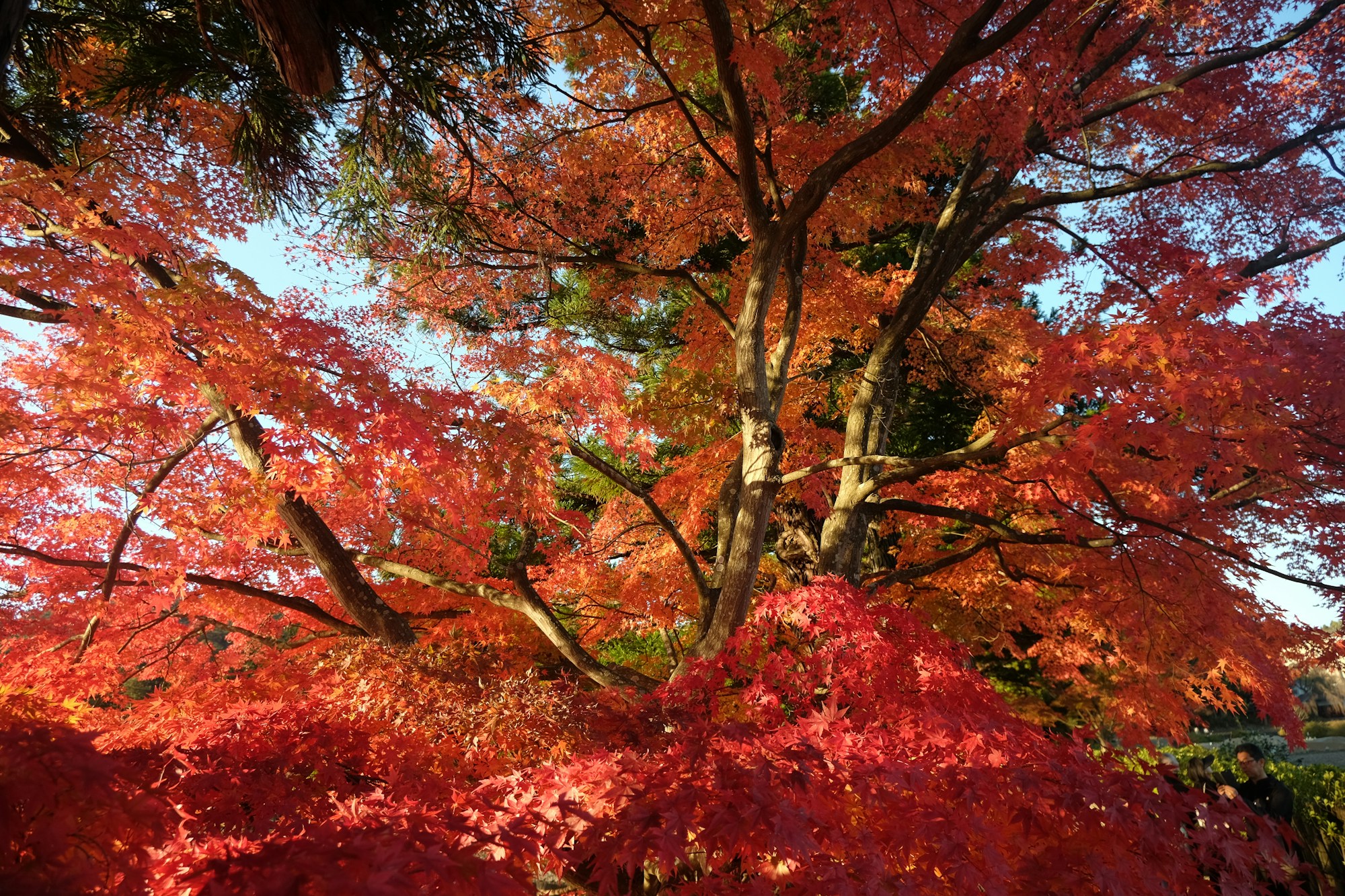
Where Tohoku catches up with Kyoto’s calendar
Hiraizumi, a UNESCO World Heritage Site, is the last Tohoku spot to peak and the one that feels most like a former capital: it was the centre of the Northern Fujiwara in the 12th century. According to japan-guide, admission to Chuson-ji (Konjikido and treasure hall) costs ¥1,000 and the site closes at 5pm, or 4.30pm from 4 November. The Fujiwara Autumn Festival runs on 1, 2 and 3 November 2026 at Chuson-ji and Motsu-ji. You get there by Shinkansen to Ichinoseki, then the JR Ofunato line.
Matsushima and Entsu-in colour from early to mid-November, with an evening illumination from late October to mid-November. The temple is a 5-minute walk from Matsushimakaigan station, itself 25 minutes from Sendai (Discover Sendai). Sendai as a city is expected on 25 November by JMC.
Hirosaki (Aomori) hosts its castle’s chrysanthemum and autumn leaves festival from 30 October to 8 November 2026: about 1,100 maples, lit from 4pm to 9pm (Japan Travel).
5. Three routes to link Tohoku and Kyoto in 2026
No 7 to 10 day trip combines both regions at their best: you have to pick a window, stretch the trip or accept a compromise. Here are three realistic formats, to adjust after the second forecast in early October.
A. Mountain Tohoku, 6 to 7 days (17 to 28 October)
Tokyo, then the Hayabusa to Hachinohe or Shin-Aomori. Two days at Towada and Oirase (walk from Nenokuchi towards Ishigedo, the lake boat, Tsuta Numa by reservation), a day at Hakkoda and Sukayu, another at Hachimantai by car, then Nyuto Onsen and Kakunodate before heading back to Tokyo on the Akita Shinkansen (about 3 hours). A 5 or 10-day JR EAST PASS suits this well. Kyoto then becomes a second trip, in late November.
B. Lowland Tohoku, then Kyoto, 10 to 14 days (1 to 15 November, then Kyoto)
Sendai is your base for Matsushima, Hiraizumi (with the Fujiwara Autumn Festival on 1 to 3 November) and, depending on how the colours are doing, Yamadera, Ginzan or Zao. Then on to Tokyo (Sendai is about 1 hour 40 minutes away on the Hayabusa), then the Tokaido Shinkansen to Kyoto, roughly 4 hours 27 minutes from Sendai. Arrive in Kyoto after 15 November: forecasts point to a delay of about six days on the average. The risk with this format is missing the summits, which are already over in early November.
C. Tohoku then the Kansai by plane, 12 to 14 days
Same areas as A or B, but leaving Sendai or Aomori on a domestic flight to the Kansai, which saves the trip back through Tokyo. We haven’t checked 2026 frequencies and fares for these flights: confirm them before building the trip around one.
6. What’s changing in 2026: rail pass, fares, taxes and permits
Guides from 2025 don’t reflect these changes. Here are the ones that directly affect an autumn trip. £ figures are rounded approximations based on the ECB reference rates of 17 and 18 September 2026 (roughly ¥211 to £1).
- The JR East Tohoku Area Pass no longer exists. Sales stopped on 13 March 2026. Since 14 March, the JR EAST PASS has replaced it: ¥35,000 for 5 consecutive days (about £166) or ¥50,000 for 10 days (about £237), half price for children, with unlimited reserved seats. A Tokyo to Shin-Aomori return at full fare (¥36,220, about £172) pays for it on its own, according to LIVE JAPAN; a simple Tokyo to Sendai return doesn’t.
- JR East fares rose by 7.8% on average on 14 March 2026, the first general increase since 1987. The Tohoku Shinkansen is affected; the Tokaido Shinkansen (Tokyo to Kyoto) is not (Japan Experience). Any fare quoted before March is out of date.
- Kyoto’s accommodation tax was raised on 1 March 2026, with five bands per person per night: ¥200 for rooms under ¥6,000, ¥400 from ¥6,000 to ¥19,999, ¥1,000 from ¥20,000 to ¥49,999, ¥4,000 from ¥50,000 to ¥99,999 and ¥10,000 from ¥100,000 (Kyoto Travel).
- Japan’s departure tax rose to ¥3,000 (about £14) on 1 July 2026, included in the air ticket for bookings made from that date (MLIT). The other changes affecting travellers are covered in our article on what’s changing in Japan in 2026.
- Hiring a car takes some preparation. According to japan-guide, Japan only accepts the international driving permit issued under the 1949 Geneva Convention. GOV.UK says UK drivers need the 1949 version of the IDP plus their UK licence and insurance documents, and that an IDP can’t be bought outside the UK, so get one before you travel (the Post Office issues it). In late October, rental firms may not guarantee winter tyres at altitude.
- Entry requirements. According to GOV.UK, British citizens can get a visa on arrival for tourism for up to 90 days, with no need to apply beforehand, and the passport must be valid for the length of the stay. Check the official page before you go. The JESTA electronic authorisation isn’t expected before fiscal year 2028 and doesn’t affect a trip this autumn.
Budget and bookings
In Kyoto at the November peak, a business hotel room starts around ¥20,000 a night (about £95), compared with around ¥14,800 in Tokyo (about £70), according to BluePlanet: these are ballpark figures, not guaranteed rates. Top-end ryokan in Kyoto book up six to nine months ahead for November, mid-range accommodation in Tohoku two to four months ahead (Solo Travel Globe). For a departure this autumn, now is the time to check availability, starting with Nyuto, Oirase, Tsuta Numa and Kyoto, before transport.
7. Bears in Tohoku: safety in practice
The 2025 fiscal year (April 2025 to March 2026) broke every record: 216 attacks, 238 injured, 13 deaths and 50,776 sightings, against 20,513 in 2024, according to Nippon.com. The cause put forward is the poor acorn and beechnut harvest. Akita and Iwate are among the hardest-hit prefectures. GOV.UK also notes that bear sightings and attacks have increased in parts of Japan, especially in mountainous and forested areas.
2026 has started more calmly in Akita: about 250 sightings in August against 765 in August 2025, according to a local press count relayed by a local blog, and beech fruiting is judged good at almost all survey points. The Iwate prefecture does record 12 injuries from 1 April to 29 August 2026, though. Nothing guarantees a quiet autumn: in 2025, sightings in Akita rose roughly sixfold between August and October, the pre-hibernation feeding period.
The risk stays low on busy trails like Oirase Gorge, and more serious on isolated paths and at dusk, where vigilance is needed, as everywhere in Towada-Hachimantai National Park. The measures that come up again and again in official and tourism sources:
- Carry a bell or make noise as you walk, especially in dense forest.
- Avoid dawn and dusk, and walk in a group rather than alone.
- Check the official maps before every outing, such as those from Akita Sakigake or Iwate Nippo.
- If you meet one, don’t run; if attacked, protect your head and face (Japan Experience).
Getting ready for Japan
Mobile data from the moment you step off the train, to check bus timetables and prefecture maps without hunting for Wi-Fi.
Country plans to compare on AiraloHandy for medical care abroad and mountain activities, flexible enough to match the length of your trip.
Cover to compare by trip lengthFrequently asked questions
Is Tohoku really earlier than Kyoto in 2026?
Yes. According to japan-guide (19 September), Hakkoda and Hachimantai are expected from early to late October, Lake Towada in late October and Naruko Gorge from late October to early November, against mid-November to early December for Kyoto. These are forecasts, with a margin of 5 to 10 days.
When should I go to Oirase in 2026?
The core window is late October (Lake Towada shores around 29 October according to Walker Plus), with first colours from mid-October near the lake. The traffic restriction, usually in late October, has been brought forward to 7 to 13 September 2026: there isn’t one in October.
Does the JR East Tohoku Area Pass still exist?
No. Sales stopped on 13 March 2026. The JR EAST PASS has replaced it since 14 March: ¥35,000 for 5 days or ¥50,000 for 10 days (adult fare). Several third-party pages haven’t been updated: always check the publication date of a fare.
Can I combine Tohoku and Kyoto on one 10-day trip?
Not at the peak of both: the gap is three to six weeks depending on the spot. The closest you can get is to do lowland Tohoku (Sendai, Matsushima, Hiraizumi) in early November, then Kyoto from 15 to 20 November, or to split it into two trips.
Do I need a car in Tohoku?
You almost need one for Hachimantai, the Aspite Line and Urabandai. Sendai, Matsushima, Hiraizumi, Kakunodate, Nyuto, Ginzan, Yamadera and Oirase can be done by train and bus. UK drivers need the 1949 version of the international driving permit plus their UK licence.
Are there bears in Tohoku, and are they dangerous for travellers?
Yes. The 2025 fiscal year was a record (216 attacks, 13 deaths according to Nippon.com). Summer 2026 is calmer in Akita, but autumn remains the risky season: carry a bell, avoid dawn and dusk, and check the official maps before heading out on a walk.
Do I need to book for Tsuta Numa?
Yes for early-morning entry (5am to 7.30am) from 23 October to 3 November 2026, in groups of up to 8 people and with a single vehicle. During the day no reservation is needed but a contribution is payable on site, according to Towada City.
Sources
- JMC: 2026 autumn foliage forecast (1st forecast, 2 September 2026)
- Honichi Labo: Weathernews 2026 forecasts
- Walker Plus: northern Japan forecasts (3 September 2026)
- japan-guide: 2026 forecasts (updated 19 September 2026)
- japan-guide: Kyoto report, 29 November 2025
- japan-guide: Oirase Stream
- Towada Oirase Tourism Organization: 2026 traffic restrictions
- Towada City: Tsuta Numa access rules
- Amazing AOMORI: Hakkoda ropeway
- Watabi: Japan autumn foliage guide
- japan-guide: Naruko Gorge
- Japan Web Magazine: the complete guide to Tohoku autumn foliage
- Japan Activity: Nyuto Onsen guide
- JNTO: Kakunodate samurai district
- japan-guide: Ginzan Onsen
- japan-guide: Chuson-ji
- Jasumo: Fujiwara Autumn Festival 2026
- Discover Sendai: autumn foliage in Sendai and Miyagi
- Japan Travel: Hirosaki Castle festival
- JR East (PR Newswire): expanded JR EAST PASS
- japan-guide: JR East Tohoku Area Pass (withdrawn)
- LIVE JAPAN: JR EAST PASS in Tohoku
- Japan Experience: 2026 JR fare increase
- Kyoto Travel: 2026 accommodation tax
- MLIT: Japan departure tax
- japan-guide: renting a car in Japan
- BluePlanet: Japan hotel prices in 2026
- Solo Travel Globe: when to book hotels in Japan
- Nippon.com: record bear sightings and attacks
- Iwate Prefecture: human injuries caused by bears
- Japan Experience: bear safety advice
- GOV.UK: Japan entry requirements
- GOV.UK: Japan safety and security (driving, bears)
- ECB: euro foreign exchange reference rates
Research carried out on 21 September 2026. All peak dates are forecasts as of that date and will need rechecking after the second publication in early October.

Plan your trip with Pixidia
Pixidia learns how you travel and helps you build a trip that truly fits you and everyone coming along.
Open the planner