

In Norway, the overnight tax does not apply everywhere: it is set at 3% of the price excluding VAT and only concerns approved municipalities. As of 28 October 2026, three municipalities (Tromsø, Vågan and Stranda) have had their plan approved, and collection starts 1 January 2027 at the earliest.
Checked on against the cited sources (Lovdata law read against the official text; NTB reports on municipal decisions; municipal plans and drafts).
A municipal contribution, not a national tax. The official term is besøksbidrag (« visitor contribution »), and its accommodation component is called overnattingsavgift. The law that creates them was published on 20 June 2025. It leaves each municipality free to decide whether to apply it, from when, and under which plan for using the revenue. Here is what is established, what is still under review, and what we could not verify against the text, municipality by municipality.
The rule: 3% excluding VAT, municipality by municipality
The Norwegian law on the visitor contribution came into force on 1 July 2026. It sets a single rate: 3% of the price of the night, calculated excluding VAT (§ 2-3). A municipality cannot lower this rate in low season, nor raise it. Its only room for manoeuvre covers the months of application (§ 2-1(3)) and the adoption of its own local by-law.
No night is taxed yet. For a municipality to collect, three successive steps are needed: submit a plan for using the revenue, obtain the ministry’s approval of that plan before the tax takes effect (§ 2-2), then adopt the local by-law. A municipality that has not completed these steps collects nothing, whatever its intentions.
| Parameter | Value set by the law | Article |
|---|---|---|
| Rate | 3% of the price of the night, excluding VAT | § 2-3 |
| Accommodation covered | Room, apartment, chalet, house, hotel, hotel boat, hostel, other commercial accommodation, private rentals included | § 2-1(4) |
| Length of stay | Fewer than 30 consecutive nights | § 2-1(4) |
| Guest presence | Between midnight and 06:00 | § 2-1(4) |
| Territory | Whole municipality, no zones | § 2-1(2) |
| Months of application | Chosen by the municipality | § 2-1(3) |
| Plan for using the revenue | Approved by the ministry before the tax takes effect | § 2-2 |
| Display of the amount | Shown separately in the sales documentation | § 2-1(6) |
Source: Lovdata, Act no. 104 of 20 June 2025 on the visitor contribution, checked on 5 November 2026.
Two points about the text. First, the geographic scope is wide: the contribution applies to the whole municipality that has adopted it, not to a district or a zone. Second, the law targets commercial overnight stays, but it includes private rentals when they are not a professional activity, provided the stay lasts fewer than 30 nights and the guest is present between midnight and 06:00.
Two elements remain outside our verified sources. A national implementing regulation, which the press dates to 22 May 2026 (vedtatt 22 mai 2026, not verified against the official text), sets out the detailed rules. In addition, on 3 June 2026 the Storting rejected a proposal to abolish the contribution and another to replace it with a fixed amount (vote not verified against the text; the figures are not repeated here).
Which municipalities? The position as of 5 November 2026
Three municipalities had their plan approved on 28 October 2026, according to communiqués relayed by the Norwegian news agency NTB: Tromsø, Vågan in the Lofoten, and Stranda, which includes Geiranger. Other files are under review. The table below includes only sourced statuses. It is not exhaustive: not every municipality publishes its decision online, and the ministry’s official list could not be consulted.
| Municipality | Status | Status date | Rate or detail | Source |
|---|---|---|---|---|
| Tromsø | approved | 28 October 2026 | Annual tax; plan voted 24 June 2026; rate not specified in the communiqué | NTB; Tromsø plan |
| Vågan (Lofoten) | approved | 28 October 2026 | 3% in the draft local by-law | NTB; Vågan draft by-law |
| Stranda (Geiranger) | approved | 28 October 2026 | Local rate not announced | NTB |
| Bodø | under review | 28 October 2026 | 3% from 1 April to 30 September (draft); plan targeted for 1 January 2027 | Bodø kommune (hearing letter); NTB |
| Lyngen, Karlsøy, Vega | under review | 28 October 2026 | Rate not announced | NTB |
| Joint plan of six Lofoten municipalities (Røst, Værøy, Moskenes, Flakstad, Vestvågøy, Vågan) | under review | 28 October 2026 | Rate not announced | NTB |
| Bergen | in consultation | 9 October 2026 (end of written submissions) | Introduction targeted during 2027; cruise rate not set | Bergen kommune |
| Hardanger (Hardangerrådet) | in consultation | 2026 | Decision not confirmed | Published consultation notice |
Source: NTB, communiqués from Stranda and Vågan of 28 October 2026; Tromsø plan; Bodø kommune; Bergen kommune; checked on 5 November 2026.
One inconsistency to flag: Vågan appears both as an approved municipality and in the joint plan of six Lofoten municipalities, which is still under review. We flag it without resolving it. For Oslo, Ålesund, Stavanger or Flåm, we found no visitor contribution project on overnight stays. This absence guarantees nothing: it only reflects our sources.
Tromsø: a detailed plan, approved on 28 October 2026

Tromsø, 1.3 million commercial overnight stays
Tromsø’s plan, adopted by the city council on 24 June 2026 and sent to the ministry, puts figures on the phenomenon: 1.3 million commercial overnight stays in 2025, up 10%, and 3,915 Airbnb listings recorded in December 2025, 24% more. According to the same plan, the city receives 12,000 to 16,000 visitors a day in winter. The contribution would be annual, and its revenue would go to a separate fund. Plan for introducing the visitor contribution, Tromsø kommune (checked on 5 November 2026).
Highlights of the plan
- Collection all year round, not only in high season: the plan provides for it in section 7.
- A dedicated fund, under the principle of « additional effect » (tilleggseffekt): the revenue must finance what is added to the existing offer.
- An inter-municipal model not yet decided: the plan does not settle joint management with neighbouring municipalities.
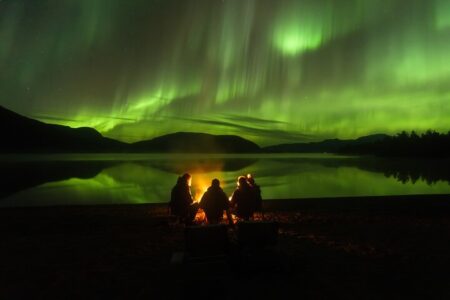
An excursion does not count toward the contribution: it is charged on the price of the night, not on the tour. If you spend a few days in Tromsø this winter, check the amount on your accommodation. For a northern lights trip during that stay, the card below gives the price we checked and the open dates. The outing lasts between six and ten hours.
Vågan and the Lofoten: one approval, a joint plan still under review
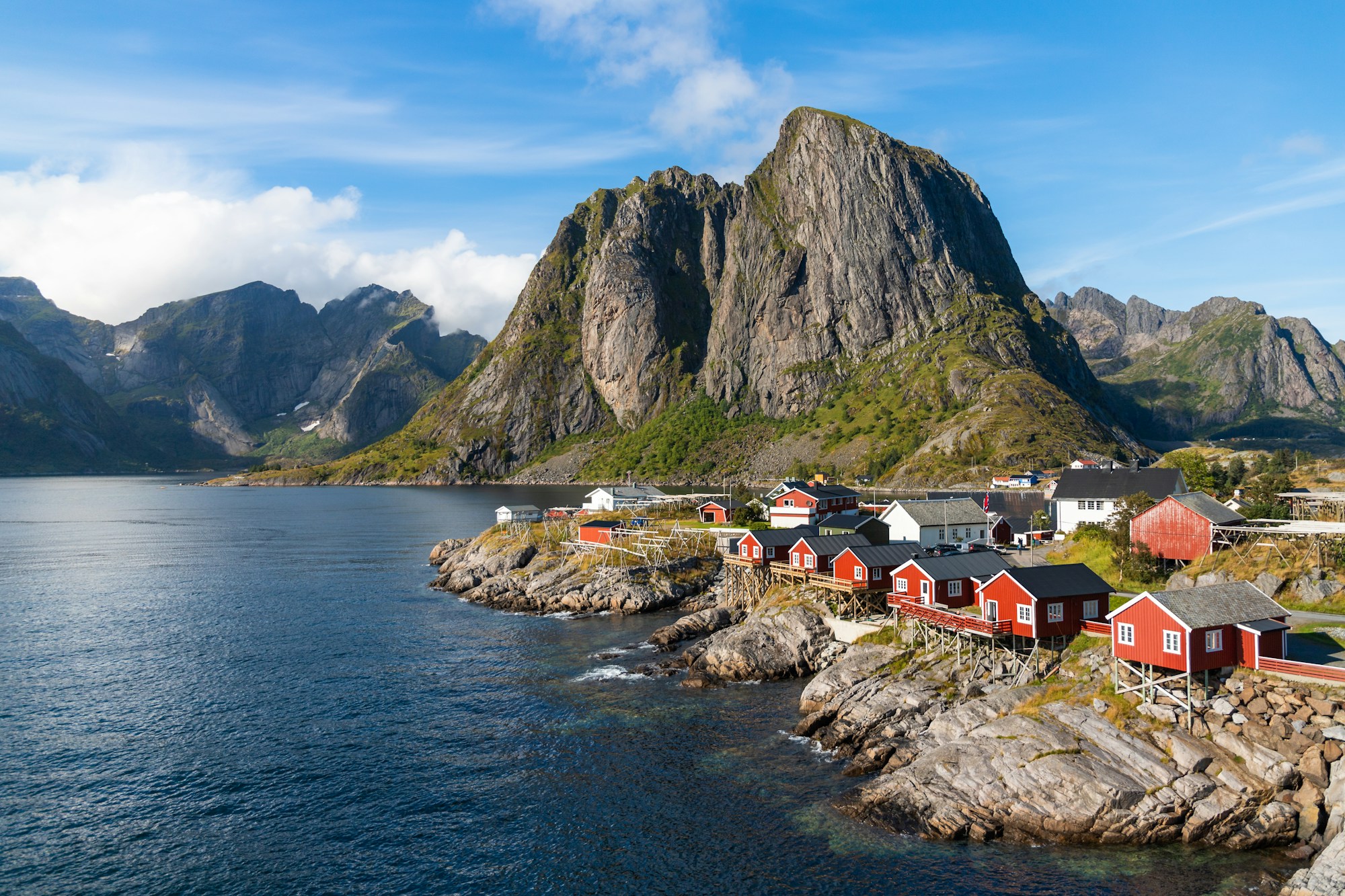
Vågan, approved, with a 3% rate in its draft
Vågan had its plan approved on 28 October 2026. Its draft local by-law states « 3% » of the amount excluding VAT, refers to the rate in the law, and provides for application to stays from 1 January 2027, for existing bookings as well as new ones. The date of adoption is still blank in the draft. The joint plan of the six Lofoten municipalities is still under review.
What to know about the Lofoten
- The 3% rate appears in a draft, not in an adopted by-law.
- Bookings made before 1 January 2027 are covered by the draft, subject to final adoption.
- A rorbu (a rented fisherman’s cabin): in our reading, it falls under « other commercial accommodation » (§ 2-1(4)), to be confirmed with the municipality.
Bodø, Lyngen, Karlsøy, Vega: what is under review
Among the files under review, Bodø is the one that publishes its own figure. Its hearing letter provides for a 3% contribution from 1 April to 30 September, with a plan applicable from 1 January 2027. This shows the room municipalities have: the rate stays the same, but the period of application changes. The consultation closed on 24 or 26 August 2026: the hearing letter sets the deadline at 24 August, while the draft plan for using the revenue gives 26 August, a date we read only in a search extract that we did not open.
Lyngen, Karlsøy and Vega are under review according to the NTB list of 28 October 2026. We did not find their rate. A secondary source, Travelermag, says a plan was submitted in September for Lyngen and Karlsøy: we do not rely on it as evidence, since we have not read an official document.
Bergen and Stranda: two different situations
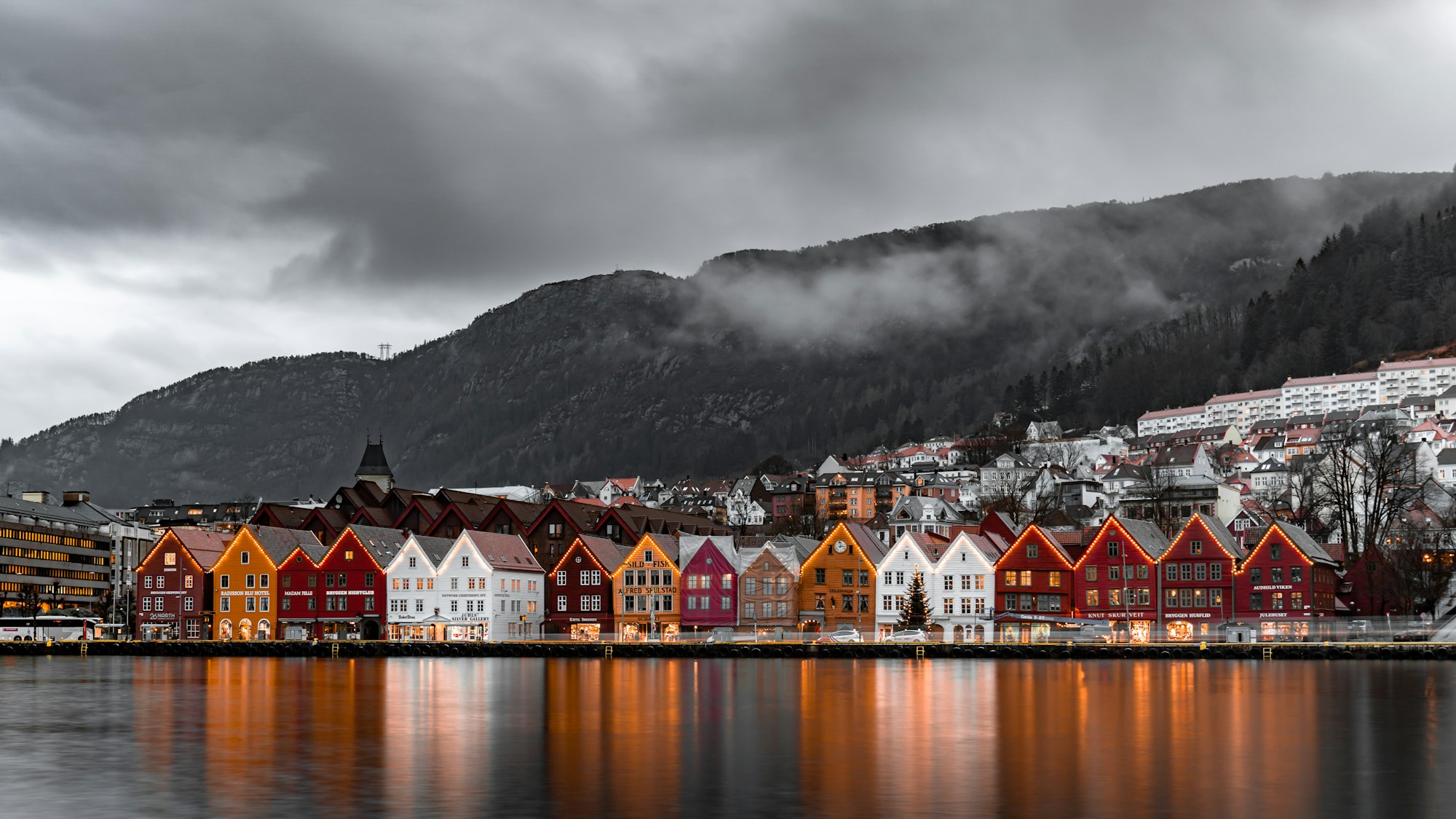
Bergen, a timetable for 2027
Bergen has not yet submitted a plan for approval. The city held a public exchange on 25 September 2026, received written submissions until 9 October 2026, and is aiming for an introduction during 2027. The rate for cruises has not been set. To plan the rest of your stay in the region, our guide Norway 2026: fjords, Lofoten and northern lights covers the main routes.
Stranda had its plan approved on 28 October 2026. Geiranger, whose traffic is at the heart of the municipality’s communiqué, lies within its territory. The communiqué gives no local rate, so we state none. Only Stranda’s local by-law, once published, will show the amount that applies.
What it costs: the 3% calculation
The rate applies to the price of the night excluding VAT. The calculation is therefore simple: 3% of the pre-VAT price of each night, multiplied by the number of nights. The table below applies this calculation at three price levels. It uses no municipal figure.
| Price of the night excluding VAT | Contribution per night (3%) | Over 21 nights |
|---|---|---|
| 1,200 NOK | 36 NOK | 756 NOK |
| 2,800 NOK | 84 NOK | 1,764 NOK |
| 6,500 NOK | 195 NOK | 4,095 NOK |
Source of the rate: Lovdata, § 2-3, checked on 5 November 2026. Pixidia calculation, for illustration only; the prices are not quoted rates.
The contribution is therefore not a fixed amount per person. It follows the price of the accommodation, so it weighs more on a luxury hotel than on a simple room. To compare with our guides on European tourist taxes, the Barcelona tourist tax and the one in Majorca both set an amount per night. Norway applies a percentage. For day-trippers and other European cases, see the European tourist tax comparison.
Booked in 2026, stay in 2027: what the law says
The contribution arises at the start of the stay (§ 2-1(5)). A stay booked in 2026 but starting after 1 January 2027 is therefore in principle covered, if the municipality has adopted its by-law. Vågan’s draft states this expressly. In our other sources, no municipality has said so in these terms.
There is no reason to pay a contribution for a stay in 2026. A host who added it now would be making a mistake. For a stay spanning 1 January 2027, the question to ask is simple: will the municipality apply the contribution to nights booked before that date?
Camping, boats, cruises: the special cases
Camping and private boats. Two secondary sources, AFAR and Travelermag, state that a traveller in a private motorhome, in a tent or on a private boat is exempt. The law itself does not mention camping. The status of a pitch rented at a commercial campsite has not been verified against the text: do not assume it is exempt, and ask the operator before you arrive.
Hotel boats. They are explicitly listed among the accommodation covered (§ 2-1(4)). A stay on a hotel boat is therefore within scope, subject to the other conditions.
Cruises. The law refers to a separate royal regulation (§ 3-1). A draft reported by the press provides for up to 100 kroner per passenger, per 24-hour period alongside the quay or per passenger disembarked. This amount has not been verified against the official text, and no firm date should be taken from it.
Svalbard. Longyearbyen falls under a separate text (§ 4-1). A proposal exists, but we could not verify its amount against the official text. Do not treat it as settled.
Depending on your travel profile
- Stay of fewer than 30 nights in a rental. This is the case the law covers. Ask for the amount before booking, then check the invoice. Who collects the tax? In our extracts, the law does not name the booking platforms. The draft by-law of Bodø entrusts calculation, collection and reporting to the « responsible persons » of the accommodation (reference to § 2-5 still to be checked). For a booking made through a platform, ask the municipality and your host: this point has not been verified against the text.
- Stay of 30 nights or more. It falls outside the scope, under the duration condition (§ 2-1(4)). A long stay in a rented home is therefore not concerned.
- Family or group travel. The text reasons in billed nights, not in numbers of travellers. The calculation is based on the price of the room or unit.
- Travelling by motorhome or tent. The exemption cited by secondary sources concerns personal equipment. Commercial pitches still need checking.
- Tight budget in 2027. The 3% rate is confirmed only by the draft for Vågan and the one for Bodø (1 April to 30 September). Elsewhere, ask your host for the amount in writing.
What other guides don’t tell you
Several articles and general answers mention a « maximum » rate or a reduction outside high season. Here are five points drawn from the text of the law and from official communiqués, checked on 5 November 2026.
- The rate is fixed and does not drop outside high season. The law sets 3% excluding VAT (§ 2-3) and leaves the municipality only the choice of months (§ 2-1(3)). An article from June 2025 mentions a reduction outside high season that does not appear in the law. Lovdata, Act no. 104 of 20 June 2025 (checked on 5 November 2026).
- The contribution covers the whole municipality, not zones. The scope is defined by the municipal territory (§ 2-1(2)). Lovdata (checked on 5 November 2026).
- The amount must appear separately on the invoice. The sales documentation must itemise the contribution (§ 2-1(6)). Lovdata (checked on 5 November 2026).
- No collection before the plan is approved. The plan must be approved before the tax takes effect (§ 2-2), and collection starts 1 January 2027 at the earliest, in approved municipalities. NTB, Stranda communiqué (checked on 5 November 2026).
- The guest’s presence counts. The contribution covers stays where the guest is present between midnight and 06:00, and that last fewer than 30 consecutive nights (§ 2-1(4)). Lovdata (checked on 5 November 2026).
Practical information
Three questions are enough before booking: will the contribution appear separately on the invoice? Does the municipality apply it to nights booked before 1 January 2027? Is the stay shorter than 30 consecutive nights?
The adoption date of Vågan’s local by-law, left blank in the draft. The plan Bodø is targeting for 1 January 2027. The introduction « during 2027 » announced by Bergen, whose cruise rate is not set.
The municipality sets the months of application and collects the contribution (§ 2-1(3) and § 2-5). Check its website before you travel, as the list in this article is dated 5 November 2026.
The amount must be itemised in the sales documentation (§ 2-1(6)). Keep your booking confirmation and invoice to justify the amount paid.
Frequently asked questions
Norway tourist tax: is it a national tax?
No. The law of 20 June 2025 allows municipalities to levy a contribution on overnight stays. It applies only to municipalities whose plan has been approved and which have adopted their local by-law. As of 28 October 2026, three municipalities had received this approval: Tromsø, Vågan and Stranda (source: Lovdata, §§ 2-1 and 2-2; NTB, 28 October 2026).
Which Norwegian towns will charge the tourist tax in 2027?
As of 5 November 2026, Tromsø, Vågan and Stranda are approved. Bodø, Lyngen, Karlsøy, Vega and the joint plan of the six Lofoten municipalities are under review, and Bergen is aiming for an introduction during 2027. The list is not exhaustive: check with the municipality of your destination before you travel (source: NTB, 28 October 2026; Bergen kommune).
How much is the tourist tax in Norway?
The contribution is 3% of the price of the night, excluding VAT. The rate is set by law and does not vary by season: the municipality only chooses the months of application. On a night at NOK 2,800 excluding VAT, it comes to NOK 84 (source: Lovdata, § 2-3 and § 2-1(3), checked on 5 November 2026).
Does the Norwegian tourist tax apply to camping?
The secondary sources AFAR and Travelermag indicate an exemption for a private motorhome, a tent and a private boat. The status of pitches rented at a commercial campsite has not been verified against the official text. Ask the operator before you arrive.
When does collection start?
At the earliest on 1 January 2027, and only in municipalities whose plan has been approved. The municipality must also have adopted its local by-law. The law came into force on 1 July 2026, but no night is taxed in 2026 (source: NTB, Stranda, 28 October 2026).
Does the tax apply to cruises?
They fall under a separate regulation made by the King (§ 3-1 of the law). A draft reported by the press provides for up to 100 kroner per passenger, an amount not verified against the official text. No firm date should be taken from this at present (source: The Local, 23 March 2026).
Does the tax appear on the invoice?
Yes, the law requires it: the amount must be itemised in the sales documentation (§ 2-1(6)). Ask your host for the separate amount before booking, and keep the invoice. If the amount does not appear, ask for it in writing and keep the reply.
Is a booking made in 2026 for a 2027 stay affected?
In principle yes, if the municipality has adopted its by-law, since the obligation arises at the start of the stay (§ 2-1(5)). The draft by-law of Vågan states that earlier bookings are covered. This point still needs confirming in each municipality.
Sources
- Lovdata, Act no. 104 of 20 June 2025 on the visitor contribution: official text, checked on 5 November 2026.
- NTB, Stranda kommune communiqué: approval on 28 October 2026, collection starting 1 January 2027 at the earliest.
- NTB, Vågan kommune communiqué: plan approval, same date.
- Plan for introducing the visitor contribution, Tromsø kommune: overnight stay figures, plan voted 24 June 2026.
- Bodø kommune, hearing letter: draft rate and period of application.
- Bergen kommune, use of the revenue: consultation and introduction timetable.
- The Local, 23 March 2026: draft cruise contribution, secondary source not verified against the text.
Sources checked on 5 November 2026. Points marked « not verified against the text » rest on secondary sources or on search results that were not opened.

Plan your trip with Pixidia
Pixidia learns how you travel and helps you build a trip that truly fits you and everyone coming along.
Open the planner